
Muna Al-Khaifi, GP Oncologist at Mount Sinai Hospital (Toronto), Sinai Health, presents this article focusing on cancer-related fatigue as a critical but often underrecognized toxicity across the cancer continuum. Drawing on current evidence, clinical guidelines, and emerging supportive care frameworks, the piece explores fatigue as a measurable and manageable clinical condition rather than an inevitable consequence of cancer treatment. It highlights the importance of routine screening, structured assessment pathways, and multimodal interventions-including exercise, psychosocial support, and integrative approaches-to improve patient outcomes, quality of life, and daily functioning throughout cancer care and survivorship.
Fatigue in Focus: Translating Evidence into Everyday Oncology Practice
Cancer-related fatigue (CRF) is one of the most common and debilitating symptoms experienced across the cancer continuum. Unlike normal fatigue, CRF is characterized by persistent physical, emotional, and cognitive exhaustion that is disproportionate to activity levels and not relieved by rest or sleep.
It affects an estimated 70-100% of people with cancer, with nearly half experiencing moderate-to-severe symptoms during active treatment.
Despite its prevalence and significant impact on quality of life, daily functioning, and treatment adherence, CRF remains underrecognized and undertreated. Many patients view fatigue as an unavoidable consequence of cancer and may not report symptoms unless specifically asked, while clinicians often face competing priorities, limited resources, and uncertainty regarding optimal assessment and management strategies. As a result, a substantial gap persists between evidence and routine clinical practice.
CRF should no longer be regarded as an inevitable consequence of cancer care. Growing evidence demonstrates that fatigue is a modifiable clinical condition that can be identified early and improved through systematic screening, individualized assessment, and evidence-based interventions such as exercise, psychosocial support, education, and symptom management. To support this shift in practice, the CRF Self-Management Support Practice Framework, endorsed by the Multinational Association for Supportive Care in Cancer, was developed to provide evidence and consensus-based guidance for health professionals. The framework promotes a structured, multidisciplinary approach to CRF management and serves as a practical resource for clinicians, educators, researchers, patients, and caregivers.
For Health Professionals, use the framework to:
- Deliver evidence-based self-management support for cancer-related fatigue (CRF).
- Guide assessment, management, and follow-up of patients experiencing CRF.
- Identify professional development and learning needs.
- Evaluate and improve current clinical practice.
- Enhance understanding of CRF, its impact, and the roles of multidisciplinary team members.
- Support self-directed learning and mentoring of colleagues new to CRF care.
By embedding routine screening, early intervention, and structured self-management support into oncology care, CRF can be managed proactively rather than accepted as an unavoidable burden of cancer treatment.
Why is Screening Important
CRF can occur before treatment initiation, worsen during therapy, and persist long into survivorship. A systematic review by Kang et al. demonstrated that moderate-to-severe fatigue affected 30.8% of patients before treatment, 46.1% during treatment, and nearly 40% after treatment completion. Current guidelines recommend the use of brief validated screening tools at key clinical timepoints.
The simplest and most practical tool is the 0-10 Numeric Rating Scale (NRS), where fatigue severity is categorized as:
- Mild: 1-3
- Moderate: 4-6
- Severe: 7-10
For more comprehensive evaluation, multidimensional tools such as the EORTC QLQ-C30, Brief Fatigue Inventory (BFI), FACIT-Fatigue, and PROMIS Fatigue Short Forms provide broader assessment of physical, emotional, cognitive, and functional domains. The EORTC QLQ-C30 is particularly valuable because it contextualizes fatigue within overall symptom burden and quality of life.
Treatment Interventions
Exercise and Physical Activity
Among all available interventions, physical activity has the strongest and most consistent evidence supporting its effectiveness in reducing A 2025 network meta-analysis by Zhou et al., which included 33 randomized controlled trials evaluating aerobic exercise, resistance training, yoga, Tai Chi, and combined exercise programs, demonstrated that resistance training and yoga significantly reduced fatigue severity compared with standard care. Across 11 clinical practice guidelines, exercise received a strong recommendation based on moderate-quality evidence, particularly low- to moderate-intensity aerobic and resistance training be done three times weekly for 12 weeks.
Current evidence supports:
- Moderate-intensity aerobic exercise.
- Resistance training targeting major muscle groups.
- Combined aerobic and resistance programs.
- Yoga and mindfulness-based movement therapies.
Exercise prescriptions should remain individualized based on treatment phase, symptom burden, comorbidities, and functional status. Combined aerobic and resistance programs appear to provide the greatest benefit across fatigue, physical function, and psychosocial outcomes. Furthermore, nurse-led multidisciplinary interventions incorporating exercise, psychological support, and behavior change strategies have demonstrated significant benefits in reducing cancer-related fatigue.
Psychosocial and Behavioural Interventions
Psychosocial interventions play an important role in CRF management, particularly given the close relationship between fatigue, emotional distress, insomnia, and maladaptive coping behaviors. Multiple randomized trials and meta-analyses show that CBT improves fatigue severity by helping patients restructure maladaptive beliefs, improve sleep quality, regulate activity patterns, and develop adaptive coping strategies.
Common evidence-based psychosocial approaches include:
- Mindfulness-based stress reduction (MBSR)
- Psychoeducation and self-management strategies
- Relaxation training and meditation
- Supportive counselling and group therapy
Complementary and Integrative Therapies
Complementary therapies are increasingly being incorporated into supportive oncology care for CRF.
Variable strength of evidence and recommendation
- Massage therapy has shown particularly promising results. A meta-analysis involving 667 patients demonstrated statistically significant improvements in fatigue symptoms, with reflexology and Chinese massage showing greater benefit than Swedish massage. Additional subgroup analyses suggested that sessions lasting 20–40 minutes twice weekly for 3–5 weeks produced the most favorable outcomes.
- Bright white light therapy (BWLT) has also emerged as a novel intervention targeting circadian rhythm disruption and sleep dysregulation. Randomized studies suggest that morning exposure to high-intensity fluorescent light may improve both fatigue severity and sleep quality in patients receiving active or palliative cancer care.
- Nutritional optimization remains another important component of CRF management, particularly among patients experiencing anorexia, cachexia, nausea, diarrhea, or treatment-related weight loss.
Pharmacologic Therapy
Pharmacologic therapy for CRF remains limited by inconsistent efficacy and insufficient high-quality evidence. Current guidelines do not recommend routine use of wakefulness-promoting agents such as modafinil or armodafinil because randomized trials have demonstrated mixed results and potential adverse effects. Psychostimulants including methylphenidate have also shown variable benefit across studies. Centeno et al. (2024) reported that methylphenidate was no more effective than placebo in improving CRF despite improvements observed in both treatment groups.
Short-term corticosteroids such as dexamethasone may provide symptomatic relief in advanced or end-of-life cancer settings where goals prioritize comfort and maintenance of function. American ginseng has also demonstrated modest benefit in selected studies, although clinicians must remain cautious regarding potential cardiovascular adverse effects and drug interactions. Overall, pharmacologic therapies should be considered adjunctive rather than primary treatment strategies and reserved for carefully selected patients who do not adequately respond to non-pharmacologic interventions.
Here Are My Thoughts
CRF should be approached with the same clinical seriousness as pain, nausea, or other treatment-related toxicities. The evidence now clearly supports routine screening, early intervention, and multimodal management throughout the cancer continuum.
- Start with screening
Fatigue assessment should become standard practice at diagnosis, during treatment, and throughout survivorship. Brief validated tools such as the NRS can be implemented rapidly within routine oncology visits, while more comprehensive instruments should be incorporated when symptoms persist or worsen.
- Follow a structured clinical pathway
- Routine screening.
- Comprehensive assessment for moderate-to-severe fatigue.
- Identification of reversible causes.
- Implementation of evidence-based non-pharmacologic interventions.
- Consideration of selective pharmacologic options when necessary.
- Continuous reassessment and longitudinal follow-up.
This systematic approach improves consistency and reduces the risk of fatigue being overlooked.
- Prioritize exercise and supportive care early
Exercise and supportive care should be introduced as early as possible, ideally before treatment begins through prehabilitation programs. Evidence consistently supports exercise as one of the most effective interventions for cancer-related fatigue (CRF), with benefits extending to physical function, psychological well-being, and quality of life. Establishing routine referral pathways to physiotherapy, rehabilitation, exercise oncology, psycho-oncology, nutrition, and supportive care services can help ensure patients receive timely, comprehensive support throughout their cancer journey.
- Provide Individualized, Patient-Centred Care
CRF is a complex and multifactorial symptom that varies greatly between individuals. Effective management requires interventions tailored to the patient’s treatment stage, symptom severity, comorbidities, psychosocial circumstances, preferences, and personal goals. Regular assessment and ongoing monitoring are essential to adapt care plans as patients’ needs evolve over time.
- Recognize Fatigue as a Manageable Clinical Condition
Fatigue should not be viewed as an unavoidable consequence of cancer that patients simply need to endure. Clinicians play a key role in validating patients’ experiences, routinely screening for fatigue, and educating patients about available evidence-based management strategies. Early recognition and systematic intervention can lead to meaningful improvements in symptom burden, daily functioning, treatment adherence, and overall quality of life.
References (Selected):
Kang YE et al. (2023). Prevalence of cancer-related fatigue based on severity: A systematic review and meta-analysis. Scientific Reports, 13, 12815. https://doi.org/10.1038/s41598-023-39046-0
Zhou S et al. (2025). Comparative efficacy of exercise types on cancer-related fatigue in cancer survivors: Systematic review and network meta-analysis. Cancer Medicine, 14(7), e70816. https://doi.org/10.1002/cam4.70816
Chen X et al. (2023). Effects of exercise interventions on cancer-related fatigue and quality of life among cancer patients: A meta-analysis. BMC Nursing, 22(1), 200.
Agbejule, O.A., Chan, R.J., Ekberg, S. et al. Cancer-related fatigue self-management: a MASCC-endorsed practice framework for healthcare professionals to optimally support cancer survivors. Support Care Cancer 31, 666 (2023). https://doi.org/10.1007/s00520-023-08130-6
Ayoson, J., Schneider, N., Rothschild, S.I. et al. Recommendations for cancer related fatigue in post-treatment survivorship care: a cross-sectional analysis of guidelines. J Cancer Surviv (2026). https://doi.org/10.1007/s11764-026-01973-y
Bhinder, J. K., Astray, D., Kennedy, S. K. F., Peera, M., Lee, S. F., Chow, E., Wong, H. C. Y., Haywood, D., Hart, N. H., & Al-Khaifi, M. (2026). Cancer-related fatigue in cancer survivors: an updated clinical practice review for healthcare providers. Supportive care in cancer : official journal of the Multinational Association of Supportive Care in Cancer, 34(3), 219. https://doi.org/10.1007/s00520-026-10379-6
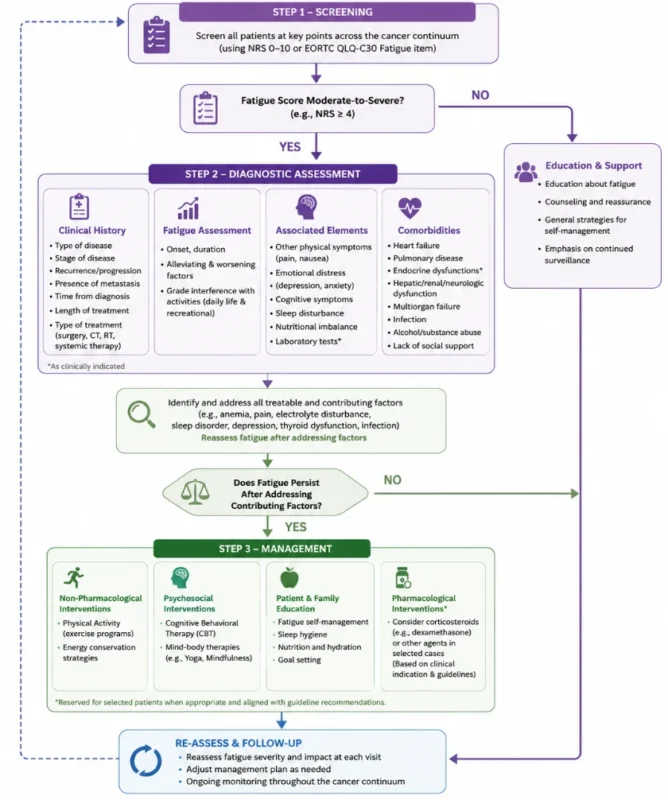
Figure 1. Clinical pathway for the screening, assessment, and management of cancer-related fatigue (CRF).
Table 1. Commonly used tools to screen for cancer related fatigue
| Tool Name | Tool Type | Domains Covered | Grade/Evidence | When to Use |
| 0–10 Numeric Rating Scale / One-Item Fatigue Scale | Single-item PRO | Fatigue severity | P | Initial assessment; routine screening at clinical visits |
| Distress Thermometer and Problem List | Single-item scale + checklist | General distress including fatigue | P | Initial screening or triage, especially in psychosocial oncology |
| EORTC QLQ-C30 | Multidimensional PRO | Includes 3 fatigue-specific items (need to rest, weakness, tiredness) | A | Active treatment, post-treatment, end-of-life |
| EORTC QLQ-FA12 | Multidimensional PRO | Physical, emotional, and cognitive fatigue | C | Active treatment, post-treatment, end-of-life |
| MD Anderson Symptom Inventory (MDASI) | Multidimensional PRO | Fatigue severity and interference | B | Screening during active treatment and follow-up |
| Brief Fatigue Inventory (BFI) | Patient-reported scale | Fatigue severity and functional interference (mood, walking, work, relationships, QOL) | B | Active treatment, immediate post-treatment, end-of-life |
| Cancer-Related Fatigue Scale | Multidimensional PRO | Physical, emotional, and cognitive fatigue | B | Active treatment, survivorship assessment |
| PROMIS Fatigue – Short Forms | Multidimensional PRO | Physical and mental fatigue impact | A | Immediate post-treatment, long-term survivorship |
| Fatigue Symptom Inventory (FSI) | PRO | Fatigue severity, frequency, diurnal variation, interference | B | Active treatment, immediate post-treatment, long-term survivorship |
| FACIT-F (Functional Assessment of Chronic Illness Therapy–Fatigue) | Multidimensional PRO | Physical, emotional, functional well-being, fatigue | A | Initial and ongoing assessment at any stage |
| Piper Fatigue Scale–Revised (PFS-R) | Multidimensional PRO | Behavioral, sensory, affective, cognitive/mood fatigue | A | Comprehensive assessment when a detailed fatigue profile is needed |
| PROMIS CAT (Computer Adaptive Test) | Computerized adaptive test | Fatigue impact and severity | B | Specialized settings; high-resource clinics or research |
| Multidimensional Fatigue Inventory (MFI-20) | Multidimensional PRO | General, physical, mental fatigue, motivation, activity | B | Broad clinical settings, particularly survivorship |
You Can Also Read: Muna Al-Khaifi: Addressing the Evolving Needs of Metastatic Cancer Survivorship