






Muna Al-Khaifi, GP Oncologist at Mount Sinai Hospital (Toronto), Sinai Health, presents this article examining the evolving landscape of survivorship care for individuals living with advanced and metastatic cancers. Drawing on recent evidence, emerging survivorship standards, and expert consensus frameworks, the piece highlights the growing recognition of metastatic cancer survivorship as a distinct and long-term clinical reality.
It explores the unique physical, emotional, social, and financial challenges faced by this population, as well as the urgent need to adapt traditional survivorship models to better reflect ongoing treatment trajectories and uncertainty. Emphasizing person-centered and equitable care, the article underscores advances in supportive care delivery, symptom management, psychosocial support, and integrated survivorship-palliative care approaches. Ultimately, it calls for system-level change, improved data collection, and dedicated research to ensure that individuals living with metastatic cancer receive comprehensive, sustained, and dignified care throughout their disease journey.
Addressing the Critical Survivorship Needs of Individuals Living with Metastatic Cancers
For decades, cancer survivorship has largely focused on people who complete treatment and move forward with life after cancer. But advances in treatment have created a new and rapidly growing reality: thousands of people are now living for years, with advanced or metastatic cancer.
These individuals often exist in a space between traditional survivorship and end-of-life care. They may not be cured, but they are not actively dying. They continue working, raising families, planning futures, and navigating ongoing treatments. Yet despite this growing population, survivorship care models have struggled to keep pace with their unique needs.
A Growing Population with Unique Needs
Unlike survivors treated for early-stage disease, people with metastatic or advanced cancer often experience a fundamentally different journey. They may move on and off treatment, receive multiple lines of therapy over many years, and live with uncertainty regarding disease progression.
This prolonged experience can create substantial physical, emotional, social, and financial challenges.
Research has identified a range of unmet supportive care needs:
- Persistent fear of disease progression.
- Ongoing treatment-related side effects.
- Functional decline over time.
- Financial toxicity from long-term treatment costs.
- Employment disruptions.
- Psychological distress and existential concerns.
- Complex healthcare navigation needs.
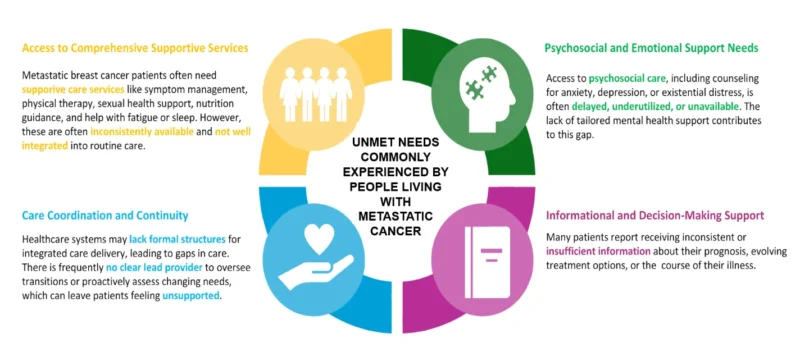
Figure 1. Systemic Gaps and Unmet Supportive Care Needs in Metastatic Cancer
Recognizing these gaps, researchers recently developed evidence-based survivorship care standards specifically for people living with advanced or metastatic cancer. Drawing on a systematic review of 81 studies and a scoping review of 17 survivorship, supportive care, and palliative care frameworks, an expert panel achieved more than 94.8% agreement on seven core standards of care and over 84.2% agreement on 45 practical recommendations. These standards emphasize person-centered, coordinated, evidence-based, equitable, sustainable, and data-driven approaches to improving quality of life and care delivery.
Beyond the statistics and frameworks are real people learning how to live with uncertainty every day. Many individuals with metastatic cancer describe feeling overlooked-too well to fit traditional palliative care models, yet not fitting conventional definitions of survivorship. They celebrate milestones, plan vacations, watch children and grandchildren grow, and continue contributing to their communities, all while carrying the weight of an incurable diagnosis. Recognizing metastatic cancer survivorship is about more than improving healthcare systems; it is about acknowledging the humanity, resilience, hopes, and challenges of those living longer with cancer. As survival continues to improve, ensuring that these individuals receive the support, resources, and recognition they deserve is no longer optional-it is essential.
The Case for Person-Centered and Equitable Care
At the heart of the new survivorship standards is the recognition that people living with advanced or metastatic cancer deserve care that is both person-centered and equitable. These individuals are not simply patients undergoing treatment; they are people with unique goals, values, priorities, and life circumstances. Person-centered care acknowledges their expertise in their own lived experience and supports them as active partners in healthcare decisions. The recommendations emphasize routine screening for supportive care needs, survivorship care planning, patient-reported outcome and experience measures, self-management support, shared decision-making, and assessment of financial concerns with appropriate referrals. Together, these approaches shift care beyond a disease-focused model toward one that recognizes the full realities of living with metastatic cancer.
Table 1. Principles of Person-Centered and Equitable Metastatic Cancer Care
Person-Centered Care |
Equitable Care |
| Routine screening for physical, emotional, social, and supportive care needs | Improved access to survivorship programs and supportive care services |
| Individualized survivorship care planning based on a person’s goals, values, and priorities | Identification and removal of structural barriers that contribute to disparities |
| Shared decision-making between patients, families, and healthcare teams | Increased opportunities for clinical trial participation among underserved populations |
| Use of patient-reported outcome and experience measures to guide care | Greater awareness of health inequities among healthcare providers |
| Self-management support and access to reliable information and resources | Policies and healthcare practices that promote equity and inclusion |
| Assessment of financial concerns and referral to appropriate support services | Access to high-quality care regardless of geography, income, ethnicity, or health literacy |
People living with metastatic cancer deserve access to high-quality survivorship care regardless of where they live, their socioeconomic status, ethnicity, health literacy, or ability to navigate complex healthcare systems. Existing disparities in cancer care can become even more significant when treatment continues for years, creating additional financial, social, and logistical burdens. Addressing these inequities requires improving access to survivorship services, expanding opportunities for clinical trial participation, identifying and removing structural barriers, increasing awareness of disparities among healthcare providers, and implementing policies that support vulnerable populations.
As the number of people living longer with metastatic cancer continues to grow, ensuring that survivorship care is both person-centered and equitable is not simply a goal-it is a necessity for delivering compassionate, high-quality care to all.
Here are My Thoughts: What Needs to Change?
As more people live longer with advanced and metastatic cancer, experts argue that urgent system-level changes are needed to ensure survivorship care reflects their realities and evolving needs. Key priorities include:
- Recognize metastatic cancer survivors as a distinct population
People living with advanced or metastatic cancer have unique physical, emotional, social, and practical needs that differ from those of individuals treated for early-stage disease. Care models and policies should explicitly acknowledge and address these differences.
- Improve data collection and understanding of the metastatic cancer population
Better epidemiological data are needed to accurately determine how many people are living with advanced and metastatic cancer, understand their outcomes, and inform healthcare planning, service development, and resource allocation.
- Identify and address unmet supportive care needs
More work is needed to understand and respond to the physical, emotional, social, practical, and financial challenges faced by people living with metastatic cancer, particularly among underserved and underrepresented populations.
- Reduce inequities and structural barriers to care
Survivorship services should be accessible to all individuals regardless of geography, socioeconomic status, ethnicity, health literacy, or other social determinants of health. Efforts should focus on identifying and removing barriers that limit access to care and support.
- Increase awareness and education among healthcare professionals and organizations
Greater recognition of metastatic cancer survivorship is needed across healthcare systems, cancer organizations, and policy settings to ensure care is aligned with the realities of living long-term with advanced disease.
- Develop integrated models of survivorship and palliative care
Rather than treating survivorship and palliative care as separate pathways, healthcare systems should create coordinated, person-centered models that address quality of life, symptom management, psychosocial well-being, and long-term support needs.
- Improve symptom management and quality of life interventions
Long-term treatment-related side effects can significantly impact daily functioning and well-being. Greater investment is needed in developing and evaluating interventions that effectively prevent, monitor, and manage symptoms.
- Strengthen behavioral and psychosocial support services
Fear of disease progression, uncertainty, existential distress, and social challenges are common among people living with metastatic cancer. Access to evidence-based psychological and behavioral support should be expanded and tailored to this population.
- Invest in dedicated research and funding for metastatic cancer survivorship
Continued research is needed to better understand the metastatic cancer experience, identify unmet needs, improve healthcare delivery, advance symptom management, and develop effective psychosocial interventions. Dedicated funding will be essential to build the evidence base required for high-quality, equitable survivorship care.
Together, these changes represent a shift toward recognizing that survivorship is not defined solely by cure. For many people living with advanced and metastatic cancer, survivorship means learning to live well with ongoing disease, and healthcare systems must evolve to support that reality.
References (selected)
- Al-Khaifi M, Bhinder JK, Patel A, et al. (2026). The critical intersection of survivorship and palliative care in people with metastatic breast cancer. Annals of Palliative Medicine, 15(1), 14. https://doi.org/10.21037/apm-25-77
- Alkhaifi M, Lee SF, Peera M, et al. (2025). Advancing survivorship care for metastatic cancer: Insights from standards and recommendations. Annals of Palliative Medicine, 14(2), 108–113. https://doi.org/10.21037/apm-24-144
- Hart NH, Nekhlyudov L, Smith TJ, et al. (2024). Survivorship care for people affected by advanced or metastatic cancer: Standards and practice recommendations. Supportive Care in Cancer, 32(5), 313. https://doi.org/10.1007/s00520-024-08465-8
- Jefford M, Nekhlyudov L, Smith AL, Chan RJ, Lai-Kwon J, Hart NH. (2025). Survivorship care for people affected by advanced or metastatic cancer: Building on recent standards and recommendations. ASCO Educational Book, 45(3), e471752. https://doi.org/10.1200/EDBK-25-471752
- Smith AL, Hart NH, Jefford M, Chan RJ. (2022). Survivorship research for people with metastatic or advanced cancer: A time for action. Asia-Pacific Journal of Oncology Nursing, 9(4), 185–186. https://doi.org/10.1016/j.apjon.2022.02.001
You Can Also Read: Muna Al-Khaifi: Redefining Survivorship Care – Key Lessons from ASCO 2026

Muna Al-Khaifi