





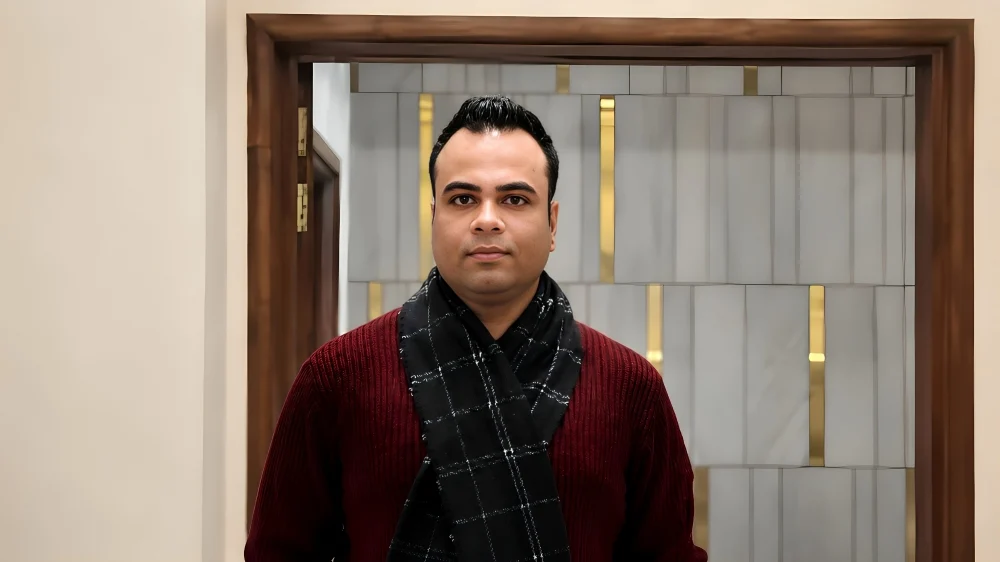
Muhammad Sharjeel K., Registrar Medical Oncology at Sir James Lyall Cancer Hospital and Research Institute, shared a post on LinkedIn:
“Last year, a young man came to us in the final days of his life. His family had watched videos by a self-proclaimed herbal practitioner claiming that a biopsy “spreads cancer.” Convinced that the cancer should never be “disturbed,” they delayed diagnosis until what had once been a highly treatable disease became terminal.
Just last week, a young woman in Sargodha lost her life within minutes after receiving an injection from an unqualified practitioner.
These are not isolated tragedies. They are symptoms of a much larger public health crisis.
As medical oncologists, we spend a significant part of every clinic not only treating cancer, but also undoing misinformation. Every day, patients and families arrive carrying myths spread by unqualified practitioners – both in roadside clinics and across social media. Many have been told that biopsies spread cancer, chemotherapy kills faster than cancer itself, or that herbal remedies can cure advanced malignancies. By the time they reach us, the window for curative treatment has often narrowed or disappeared.
As clinicians, our role is to care for patients, generate evidence, and advocate for better health. We cannot enforce regulations or shut down those who profit from misinformation. What we can do is document its impact scientifically.
I am proud to share that my colleagues and I have completed our first public health research project from the floor of Sir James Lyall Cancer Hospital and Research Institute, Faisalabad, in collaboration with leading cancer centers across Pakistan.
Our multicenter study examined the impact of qualified and social media “quackery” on cancer patients.
The findings are deeply concerning.
More than 40% of cancer patients reported seeking care from unqualified practitioners before reaching an oncology centre.
This resulted in substantial delays in diagnosis and evidence-based treatment.
Many patients who could have been cured if diagnosed at Stage I or II instead presented with Stage III or IV disease, when treatment options become more limited and survival is significantly reduced.
When these findings are projected nationally, the implications are staggering: an estimated 80,000 potentially preventable lives and more than 400,000 life-years may be lost every year because of delays driven by misinformation and quackery.
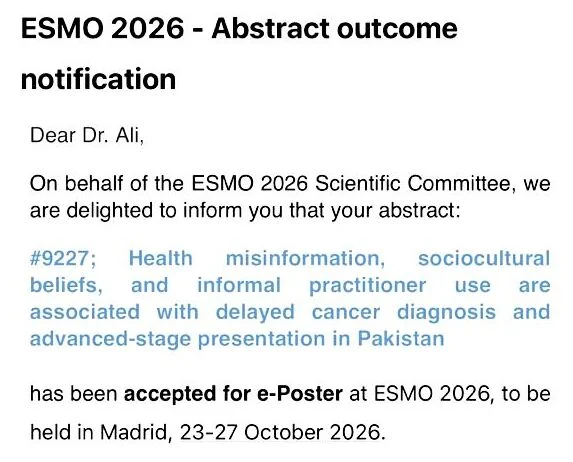
I am humbled that this work has been accepted for presentation at the ESMO – European Society for Medical Oncology Congress 2026 in Madrid, Spain. For our team, this is more than an academic milestone – it is an opportunity to bring the voices of Pakistani patients to one of the world’s most respected oncology forums and highlight a preventable public health challenge that deserves urgent attention.
Addressing this crisis requires coordinated action from policymakers, healthcare regulators, digital platforms, law enforcement agencies, healthcare professionals, and the public.”
Other articles about ESMO on OncoDaily.