





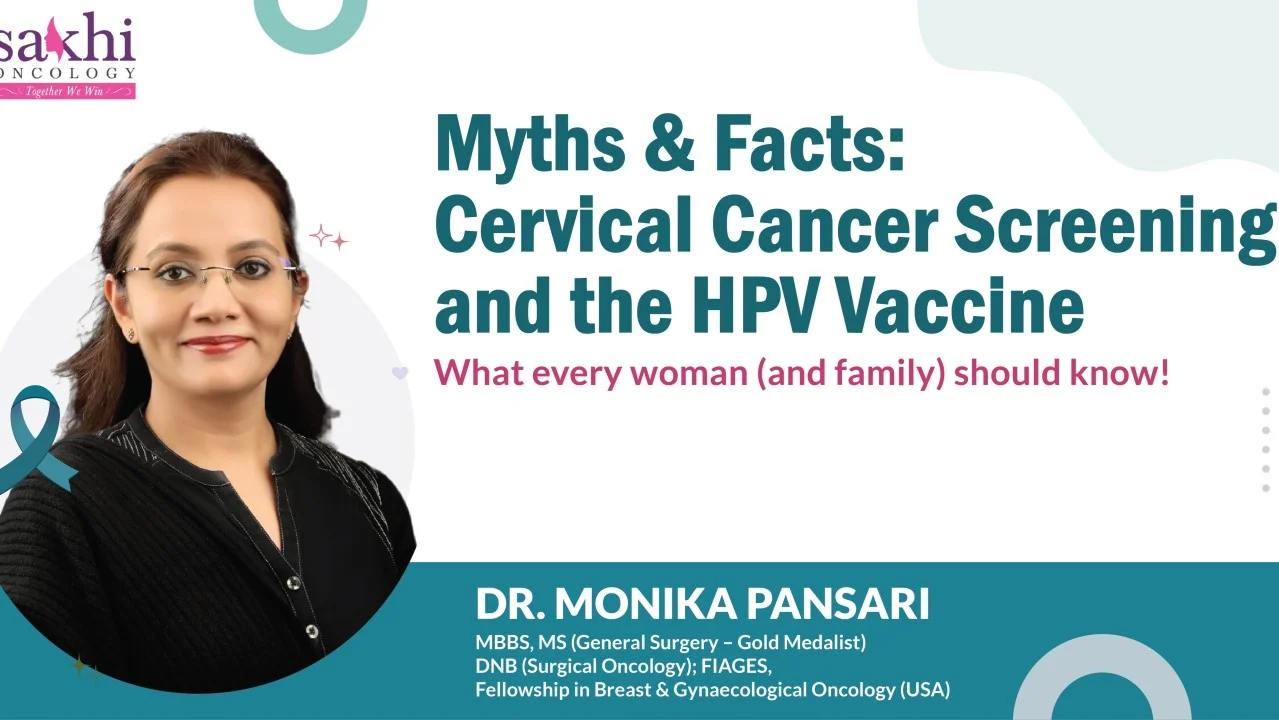
Monika Pansari, Senior Surgical Oncologist at Manipal Hospitals (MHEPL), shared a post on LinkedIn:
“Cervical cancer is one of the most preventable cancers, yet many women still miss screening or delay vaccination – often because of fear, misinformation, or confusion.
Let’s clear the air by addressing some of the most common myths and facts around cervical cancer screening and the HPV vaccine.
Myth 1: Cervical cancer happens only to older women
Fact: Cervical cancer can affect women of any adult age. While the risk increases after 30, precancerous changes often begin much earlier. That’s why screening is important even when you feel perfectly healthy.
Myth 2: If I don’t have symptoms, I don’t need screening
Fact: Early cervical changes usually have no symptoms at all.
By the time symptoms appear, the disease may already be advanced. Regular screening helps detect problems before cancer develops.
Myth 3: Pap smear is painful and unsafe
Fact: A Pap smear is a quick, simple, and usually painless test.
It may feel slightly uncomfortable for a few seconds, but it is completely safe and can be life-saving.
Myth 4: Only married women or sexually active women need screening
Fact: Cervical cancer is linked to HPV infection, which is very common and can spread even with limited exposure.
Screening is recommended based on age, not marital status.
Myth 5: One normal test means I’m safe for life
Fact: A single normal result is reassuring – but regular screening is essential.
Your doctor will advise the right interval depending on your age and test type.
Understanding HPV (Human Papillomavirus)
HPV is a very common virus. Most people will get it at some point in their life – often without knowing it.
In most cases, the body clears the virus naturally.
However, persistent infection with certain high-risk HPV types can lead to cervical cancer over time.
Myth 6: HPV vaccine is only for teenagers
Fact: The vaccine works best when given early, but it can also benefit young adults.
Your doctor can guide you on whether vaccination is suitable for you.
Myth 7: HPV vaccine encourages unsafe behaviour
Fact: The HPV vaccine is about cancer prevention, not behaviour.
It protects against virus types that cause cervical cancer and other cancers, nothing more, nothing less.
Myth 8: HPV vaccine causes serious side effects
Fact: The HPV vaccine has been used globally for years and is extensively studied.
Most side effects are mild, such as soreness at the injection site or low-grade fever.
Myth 9: Vaccinated women don’t need screening
Fact: Even after vaccination, screening remains essential.
The vaccine protects against the most common cancer-causing HPV types, but not all.
The Big Picture: Prevention is Powerful
Cervical cancer prevention works best when we combine:
- Regular screening
- HPV vaccination
- Awareness and timely medical guidance
Together, these steps can prevent most cervical cancer cases.
A Gentle Reminder
Taking care of your health is not selfish – it’s responsible.
If you are due for screening or have questions about the HPV vaccine, speak to your doctor and take that first step.
Early action saves lives.
Dr. Monika Pansari
MBBS, MS (General Surgery – Gold Medalist)
DNB (Surgical Oncology); FIAGES,
Fellowship in Breast and Gynaecological Oncology (USA).”
More posts featuring Monika Pansari.