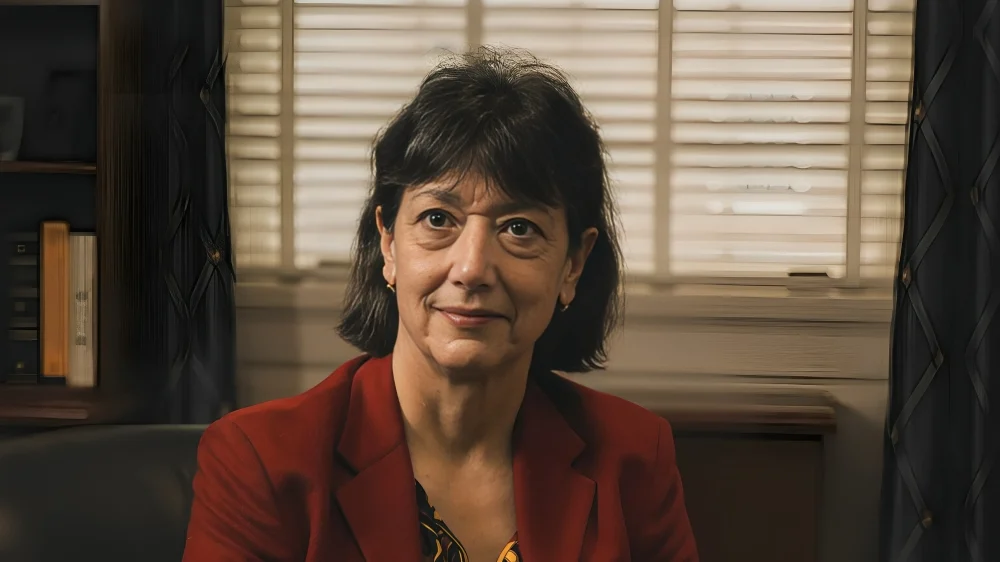
Monica Bertagnolli, President at National Academy of Medicine, shared on LinkedIn:
“Scientists earn public trust by exercising strict discipline in how they approach problem solving. A scientist generates evidence by forming hypotheses, testing them against available data, and revising conclusions when the data demand it. This process is iterative. As new data emerge, this process is repeated, allowing the scientist to make confident progress toward reliable answers.
The scientist in public service is asked to do something genuinely difficult: hold to the evidence even when it is inconvenient to power, unpopular with colleagues, or costly to entrenched interests.
When scientists step into public service – advising government agencies, leading regulatory bodies, or guiding public health policy – they carry that discipline into an arena governed by very different pressures created by elections, budgets, institutional reputations, and the interests of industries and other constituencies with a stake in the outcome.
The scientist in public service is asked to do something genuinely difficult: hold to the evidence even when it is inconvenient to power, unpopular with colleagues, or costly to entrenched interests. This is the challenge that scientists take on when they contribute scientific insights that inform important decisions made by those who have the power to act. Unfortunately, history shows that the individuals who insist on evidence over expedience sometimes pay a cost, personally or professionally. Public service asks scientists to accept that risk as part of the job, because the alternative is worse: a public health and regulatory apparatus that tells people what is convenient rather than what is most likely true.
Dr. Fauci directed the National Institute of Allergy and Infectious Diseases from 1984 to 2022. His major accomplishments include pioneering the field of human immunoregulation, turning previously fatal inflammatory diseases into manageable conditions, making foundational discoveries in HIV/AIDS pathogenesis, and helping architect the global PEPFAR initiative that saved an estimated 26 million lives.
However, during the U.S. response to COVID-19, Dr. Fauci became a lightning rod for criticism. He was praised by many for furthering the research that saved lives by enabling rapid vaccine development and guiding public health messaging during a rapidly evolving crisis. Simultaneously, he became the target of intense political attacks, conspiracy theories, and serious threats of violence and was called to testify at multiple congressional hearings during which his ethics and credibility were attacked.
Many important scientific questions remain concerning SARS-CoV-2 and the deadly pandemic it created. Did it arise from a research-related laboratory incident, or did it begin naturally through animal-to-human spillover? What could have been done better to respond to the deadly health crisis it produced, and – perhaps most importantly – what must we do now to be ready for the next threat? These questions remain genuinely disputed among scientists, historians, and policymakers.
In his most recent congressional hearing, ostensibly convened to publicly address some of these issues, Dr. Fauci made a choice to invoke his Fifth Amendment right rather than answer questions. Perhaps this was the predictable result of turning a scientific dispute into a legal one: once the stakes are prosecution rather than genuine interest in scientific debate, the rules of engagement change based on our legal framework. This serves neither accountability nor scientific understanding. A hearing room optimized for partisan political engagement elicits silence or talking points, not the kind of careful, nuanced, evidence-weighing testimony that would help resolve a genuinely uncertain question.
The damage from episodes like these is not limited to the individuals involved. It extends to the entire scientific community, including scientists who have not yet chosen a career path. Tony Fauci has not been shown to have acted negligently in his scientific judgments, yet has faced years of hearings, subpoenas, and the kind of sustained public vilification usually reserved for wrongdoers. The message is that a scientist in a highly visible public role, who was required to communicate uncertainty and revise guidance as data changed, has absorbed a level of personal, legal, and physical risk for reasons that have more to do with political advantage than with identifying any deficiency in the science itself.
The public sector will lose exactly the people most capable of speaking plainly about hard evidence, precisely because those are the people most likely to say something someone in power does not want to hear.
That message lands hardest on people who have the least standing to absorb it. A tenured researcher can, with difficulty, weather a smear campaign. A graduate student, postdoctoral fellow, or early-career scientist deciding whether to pursue a doctorate, join a regulatory agency, or advise a health department is weighing a much more fragile calculation. If the visible lesson from public life is that speaking an inconvenient scientific truth can end a career, invite legal jeopardy, or expose someone to public harassment and threats regardless of whether their science holds up, many talented people will simply choose a quieter, better-protected path – industry research, academia insulated from public engagement, or a field with a lower public profile altogether.
The public sector will lose exactly the people most capable of speaking plainly about hard evidence, precisely because those are the people most likely to say something someone in power does not want to hear. Over time, the institutions meant to give the public trustworthy, independent scientific guidance will be left with a thinner bench, disproportionately staffed by those who have learned to hedge, defer, or stay silent rather than risk becoming the next cautionary example.
Nonpartisan, evidence-based public service is not a nicety; it is the mechanism by which societies act upon a new understanding of what promotes health and avoid repeating avoidable harms. When that mechanism holds, people receive medical and policy guidance they can trust, regardless of who holds power. When it breaks down because scientific conclusions bend to whichever political or financial interest is currently ascendant, or when legitimate scientific criticism is dismissed as mere partisanship, the damage rarely stays confined to institutions. It lands on patients, on families, and on communities who relied on that guidance to make decisions about their health and their lives.
Protecting scientists’ ability to follow evidence wherever it leads, holding them accountable through fair and rigorous scrutiny rather than political theater, and protecting the public from the cost of ignoring sound evidence altogether remains one of the more difficult and important commitments a democratic society can make.”
New Analysis Challenges the Claim That COVID-19 mRNA Vaccines Improve Immunotherapy Outcomes