





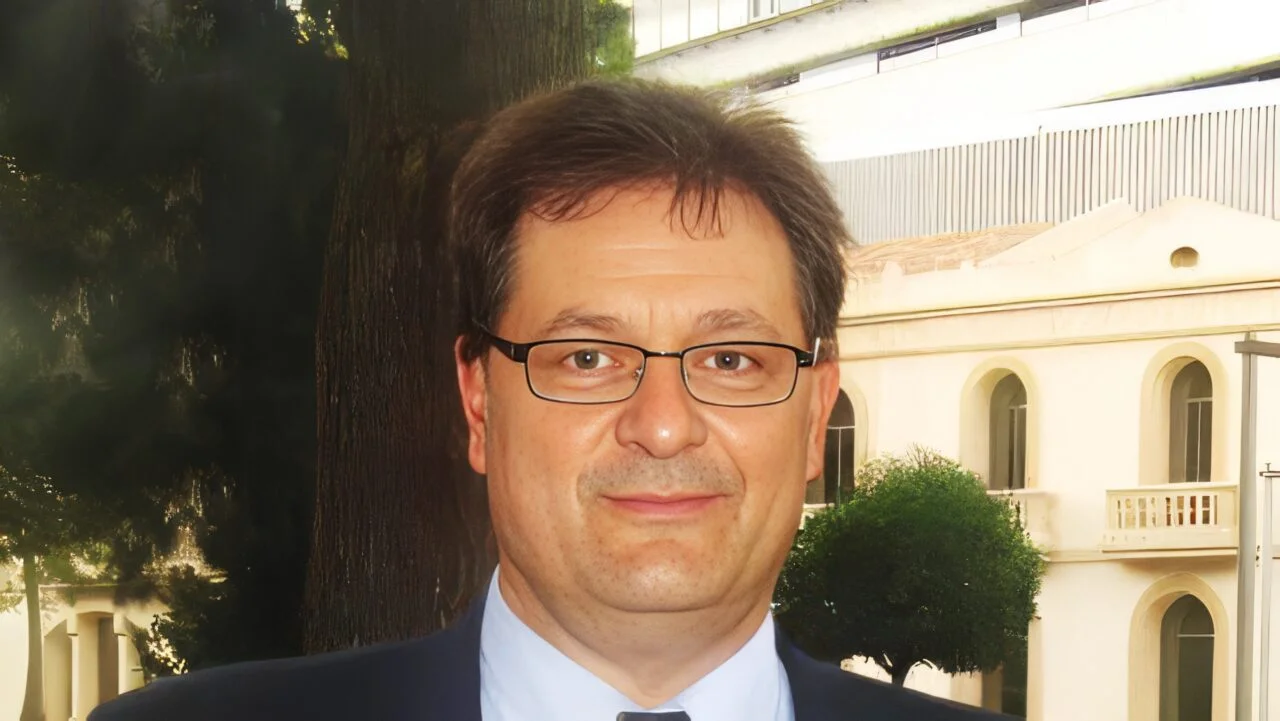
Miguel Bronchud, Co-Founder and Advisory Board at Regenerative Medicine Solutions, shared a post on LinkedIn:
“Diffuse intrinsic pontine glioma (DIPG) and other diffuse midline gliomas (DMGs) are the leading cause of solid-tumour-related death in children – horrific diseases that can shatter families and parents across the world.
Midline Gliomas of children – despite many therapeutic clinical trials over the years-retain notorious therapeutic resistance and near-universal lethality.
A major clinical challenge limiting the efficacy of conventional therapeutic approaches, and recognized in original definitions of the disease, is the extensive infiltration of healthy brain parenchyma.
Malignant tissue silently spreads across the child’s brain!
This distributed, brain-wide pattern of tumour progression, including to distant brain regions such as the frontal and temporal poles, is insufficiently explained by current models of tumour evolution.
Recent work has established DMG integration and communication with otherwise healthy neural circuits through both paracrine signalling (brain-derived neurotrophic factor (BDNF) and neuroligin-3 (NLGN3)) and bona fide, electrophysiologically functional neuron-to-glioma synapses across a diverse neurotransmitter repertoire.
Neurotransmitters include glutamatergic, calcium-permeable AMPA receptor-mediated; cholinergic M1–M3 receptor-mediated; and GABAergic GABAA receptor-mediated neuron-to-glioma synapses.
In animal models, depolarization of glioma cell membranes drives tumour growth through voltage-dependent mechanisms that remain to be fully elucidated.
The consequent glioma cell membrane depolarization drives tumour proliferation. In the healthy brain, activity-regulated secretion of BDNF promotes adaptive plasticity of synaptic connectivity and strength.
Kathryn R Taylor et al. (Nature. 2023) showed that malignant synapses exhibit similar plasticity regulated by BDNF. Signalling through the receptor tropomyosin-related kinase B16 (TrkB) to CAMKII, BDNF promotes AMPA receptor trafficking to the glioma cell membrane, resulting in increased amplitude of glutamate-evoked currents in the malignant cells.
Neuronal cell activity itself can affect tumor growth as long-range cholinergic projections from the midbrain pedunculopontine and laterodorsal tegmental nuclei, respectively, promote the circuit-specific growth of pontine and thalamic DMG in preclinical models.
Using a wiring diagram of the human brain (the ‘human connectome’), tumour network mapping enables researchers to look beyond individual tumour locations and map their connected brain circuitry. Using imaging and clinical data a research team – largely coordinated from Great Ormond Street London (the hospital that survived thanks to Peter Pan) – have now developed a method called ‘tumour network mapping’.
This enabled them to identify a distributed pattern of networks associated with tumour progression and patient survival. They found that tumours with stronger connectivity to a specific brain network were associated with shorter overall survival, independent of tumour location and treatment received.
The researchers also demonstrated that tumour growth over time followed the path of this brain network, suggesting that DMG spreads along connected neural circuits.
Some children with DMG undergo surgery to partially remove or obtain a sample of their tumour. Using generously donated patient tissue, investigators were able to perform genetic analyses that revealed fundamental biological differences between tumours with high and low connectivity to the DMG network.”
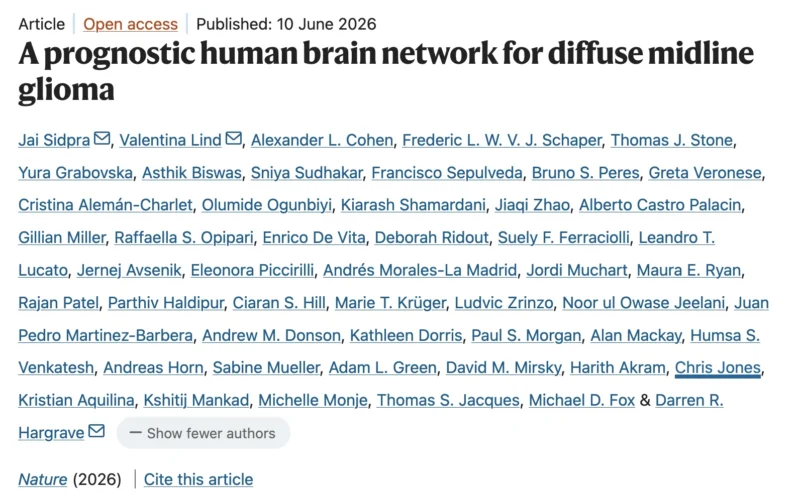
Title: A prognostic human brain network for diffuse midline glioma
Authors: Jai Sidpra, Valentina Lind, Alexander L. Cohen, Frederic L. W. V. J. Schaper, Thomas J. Stone, Yura Grabovska, Asthik Biswas, Sniya Sudhakar, Francisco Sepulveda, Bruno S. Peres, Greta Veronese, Cristina Alemán-Charlet, Olumide Ogunbiyi, Kiarash Shamardani, Jiaqi Zhao, Alberto Castro Palacin, Gillian Miller, Raffaella S. Opipari, Enrico De Vita, Deborah Ridout, Suely F. Ferraciolli, Leandro T. Lucato, Jernej Avsenik, Eleonora Piccirilli, Andrés Morales-La Madrid, Jordi Muchart, Maura E. Ryan, Rajan Patel, Parthiv Haldipur, Ciaran S. Hill, Marie T. Krüger, Ludvic Zrinzo, Noor ul Owase Jeelani, Juan Pedro Martinez-Barbera, Andrew M. Donson, Kathleen Dorris, Paul S. Morgan, Alan Mackay, Humsa S. Venkatesh, Andreas Horn, Sabine Mueller, Adam L. Green, David M. Mirsky, Harith Akram, Chris Jones, Kristian Aquilina, Kshitij Mankad, Michelle Monje, Thomas S. Jacques, Michael D. Fox, Darren R. Hargrave
Other articles featuring Miguel Bronchud on OncoDaily.