Microsoft for Nonprofits shared a post on LinkedIn:
“World Cancer Day on February 4 is a reminder that behind every health statistic is a person – a name, a family, a story. Led by the Union for International Cancer Control (UICC), the day raises global awareness of cancer, encourages prevention, and mobilizes action to confront the rising burden of this disease.
This year’s theme, United by Unique, invites the world to place people at the center of cancer care and to explore new ways of making a meaningful difference. It reminds us that cancer is never just a medical diagnosis; it’s a deeply personal journey shaped by identity, community, culture, faith, fear, hope, and love.
For me, United by Unique comes to life through the extraordinary leaders I’ve had the privilege of working with across Australia. They show what becomes possible when humanity leads – and ethically developed technology underpins the mission. When we honor the uniqueness of every person affected by cancer, we unlock a different approach to innovation: one that is human-centered, values-driven, and grounded in dignity.
Across the country, organizations are reimagining how cancer care can be delivered, proving that people-first AI isn’t about replacing care; it’s about deepening it. It’s delivering clarity in moments of fear, connection in moments of isolation, and equity in moments where gaps have left too many behind.
This is how we build a future where cancer care becomes not only more advanced, but more compassionate, more personalized, more equitable and ultimately, more hopeful.
AI driving speed to clarity: Children’s Cancer Institute Australia

I first met Professor Mark Cowley of the Children’s Cancer Institute Australia at Microsoft’s Global Nonprofit Leaders Summit where I learned about The Zero Childhood Cancer program. What struck me immediately was his sense of urgency. He spoke about parents waiting for answers, clinicians absorbing the weight of those families’ fears, and the pressure of days when treatment decisions cannot wait.
“Through AI‑enabled genome analysis, our team is helping shorten the distance between diagnosis and understanding. By simplifying what can often be an overwhelming diagnostic journey, we’re enabling earlier, more confident insights and moving the system toward care that can scale without losing the deeply personal support every family deserves. Faster clarity gives families something solid to hold onto during the most frightening moments of their lives. It accelerates the path to treatment and provides direction at a time when everything can feel uncertain.” – Professor Mark Cowley, Deputy Director Enabling Platforms and Collaboration at Children’s Cancer Institute Australia.
Mark’s work shows how AI can accelerate medical innovation – from genome analysis to emerging breakthroughs like blood tests that could support prevention and earlier detection. These advances depend on AI’s ability to help researchers recognize subtle signals hidden within massive datasets, signals that might otherwise go unnoticed.
At its core, Mark’s mission is equitable care: ensuring every child, regardless of geography or circumstance, has access to the same clarity, the same insights, and the same chance at life. His urgency reflects a leader who knows that eliminating childhood cancer demands not only scientific excellence, but the courage to think differently for every family impacted.
Global progress through shared insight: Cancer Council NSW

I met Dr. Kirstie McLoughlin at an event hosted by Microsoft in support of the Cancer Council Australia’s Biggest Morning Tea, and her belief that breakthroughs happen when ego steps aside and collaboration steps forward stayed with me. She spoke about ovarian cancer – a disease that is uncommon and chronically understudied – not through statistics, but through the lived experiences of the women behind them.
Fewer studies mean fewer data points, fewer clinical trials, and fewer opportunities to understand the diversity of women affected across subtypes, ages, cultures, and ethnic backgrounds. Her work sits within a global ovarian cancer research consortium spanning Australia, the UK, Canada, and beyond – a community defined by expertise and united by shared purpose.
“For me, AI isn’t replacing scientific judgment, it’s another tool we can use. It’s giving me, and researchers like me, our time back. It creates the space to think, explore, and test new ideas. It helps me write code faster, analyze vast and complex datasets, and uncover patterns that can support earlier detection and better outcomes for women who have waited far too long for progress.” – Dr. Kirstie McLoughlin, Research Fellow, Cancer Council NSW
Kirstie’s vision is grounded in one truth: AI must improve communication and enable the freedom to think differently. AI also has an opportunity to break down barriers across languages, institutions and cultures, so collaboration can happen faster and more fairly. And when communication improves, so does representation – ensuring that women from diverse backgrounds, including those in low-income countries and communities long missing from the clinical record, are finally seen in the data.
Technology that strengthens human connection: Cancer Council Victoria
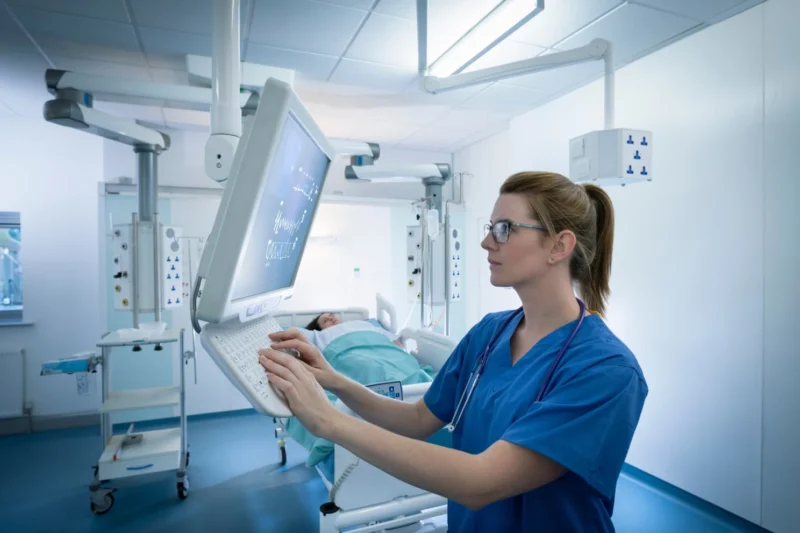
Cancer Council Victoria has always been about people. When I sat down with their Chief Information Officer, Mike Osborne, what resonated with me wasn’t the technology – it was the clarity of their mission: prevent cancer, empower people, save lives. It shapes every technical decision his team makes.
Mike’s optimism comes from what technology can unlock. His team maintains a vision board filled with possibilities – from prevention and early detection to ongoing support – all anchored in how people truly seek help today.
“We’re working with Microsoft on one of our earliest AI focus areas at Cancer Council Victoria: supporting the supportive care helpline, a service for anyone affected by cancer – people newly diagnosed, their families, friends, and carers. By lifting administrative tasks out of the way, AI gives counsellors and carers something technology can never manufacture: time and presence. Space to truly listen. Space to steady a family in crisis. Space to be human. What we’re introducing isn’t a replacement for care; it’s a way to strengthen it.” – Mike Osborne, Chief Information Officer, Cancer Council Victoria
Along those lines, in one of Cancer Council’s smoking prevention programs, they uncovered something unexpected: many teenagers feel more comfortable opening up to an AI chatbot than calling an adult when trying to stop vaping. Mike and his team are shaping a nonjudgmental AI chatbot that mirrors the tone, warmth, and language young people respond to, giving them a private, approachable entry point into real support – “delivered with compassion, never shame.”
At Cancer Council Victoria, United by Unique becomes tangible: technology shaped by people, for people. Tools that honor individuality, protect dignity, and widen access to care. Mike’s world guides us towards a future of cancer support that isn’t defined by algorithms, but by the values we choose to amplify.
Connection as care: Pancare Foundation
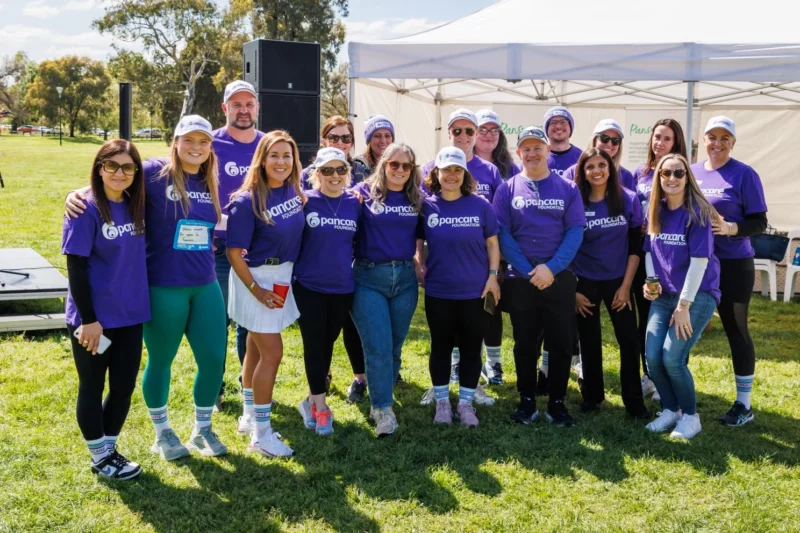
At Pancare Foundation, Bernie Muscat Pancare , Head of Operationsexplains that their focus is people: individuals waking to a diagnosis that changes everything, families navigating fear, and the quiet bravery it takes to ask for help.
Their work sits within upper gastrointestinal cancers – an area where survival rates remain low and late-stage diagnoses are common. In this landscape, support can shape not just the next day, but the next hour.
During the pandemic, as Melbourne entered prolonged lockdowns, Pancare refused to let distance become another barrier. With the help of their Microsoft partner, Business Works, they redesigned their operations with urgency and empathy. Digital tools became extensions of human presence: counsellors connecting across screens, support groups continuing even when no one could gather, and families in remote areas finally seeing a face – and being seen in return.
Pancare’s people were the heroes. Technology simply made connection possible.
Their work embodies United by Unique: every interaction shaped by culture, family, circumstance, and emotion. Pancare shows what happens when compassion is scaled with intention, when care is designed around dignity, and when innovation amplifies humanity rather than replacing it.
Honoring every story
All of these stories resonate deeply with our mission at Microsoft Elevate: ensuring people thrive in the era of AI.
These are just a few of the incredible individuals and organizations that I have the pleasure of working with that are using technology to honor the individuality of every patient, every family, every researcher, and every community. Together, they show us the future of cancer care: a future where dignity is never an afterthought. Where equity is built in from the start. Where collaboration stretches across borders. Where innovation serves humanity – not the other way around.
This is how we become United by Unique – and how we turn technology into a force for hope, connection, and human possibility.
By Anita S., Microsoft Elevate Lead, Asia.”
On this World Cancer Day, check out Global OncoThon 2026, uniting global leaders to improve cancer care