Marinka Zitnik, Associate Professor at Harvard University, shared a post on LinkedIn:
“New Nature Portfolio Medicine paper: A pan-cancer foundation model predicts immunotherapy response and reveals the biology behind it.
Roughly a quarter of patients with cancer respond durably to immune checkpoint inhibitors. The rest endure toxicity and cost with little benefit, and existing tools, TMB, PD-L1 staining, remain unreliable across cancer types and drugs
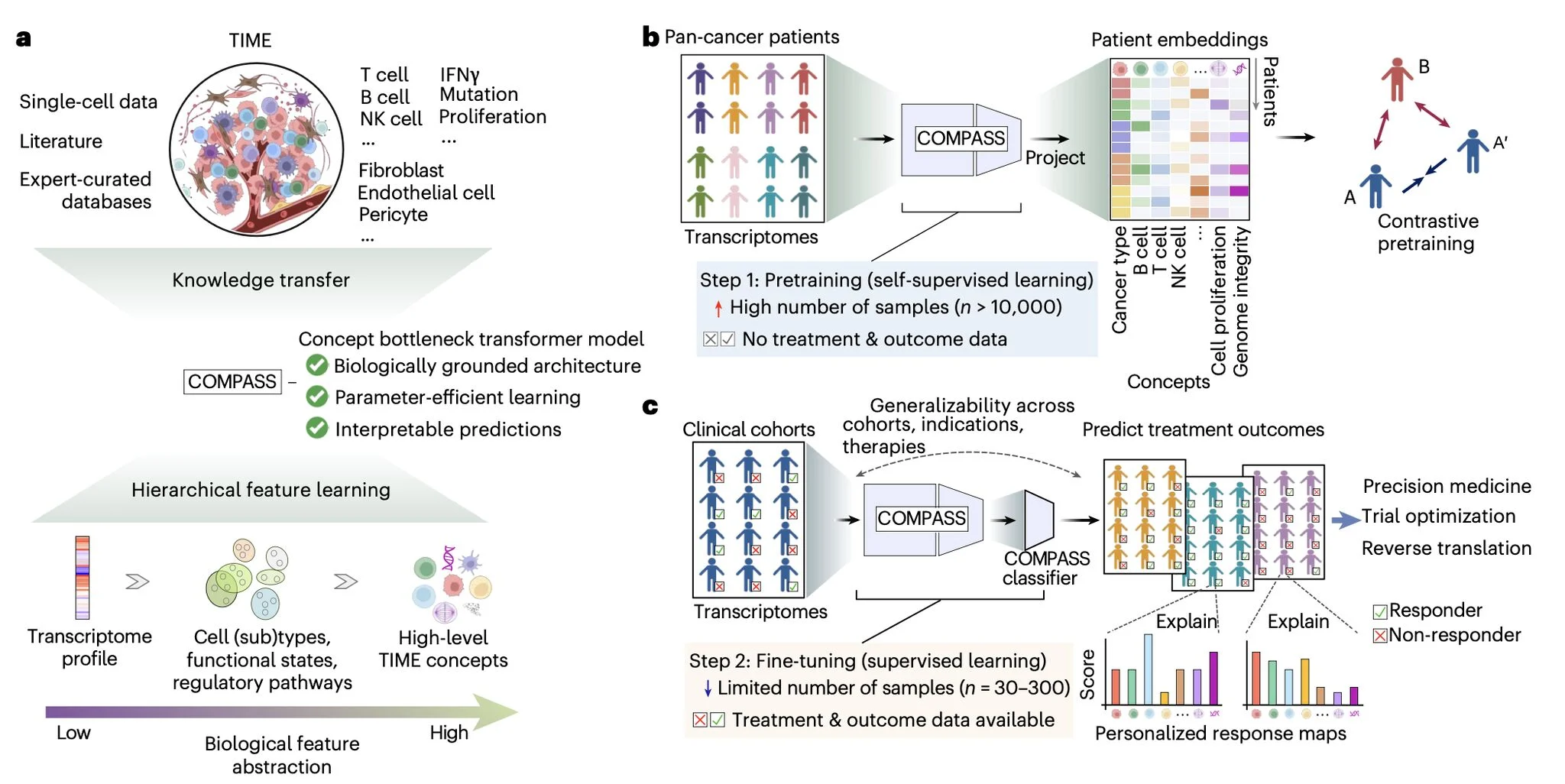
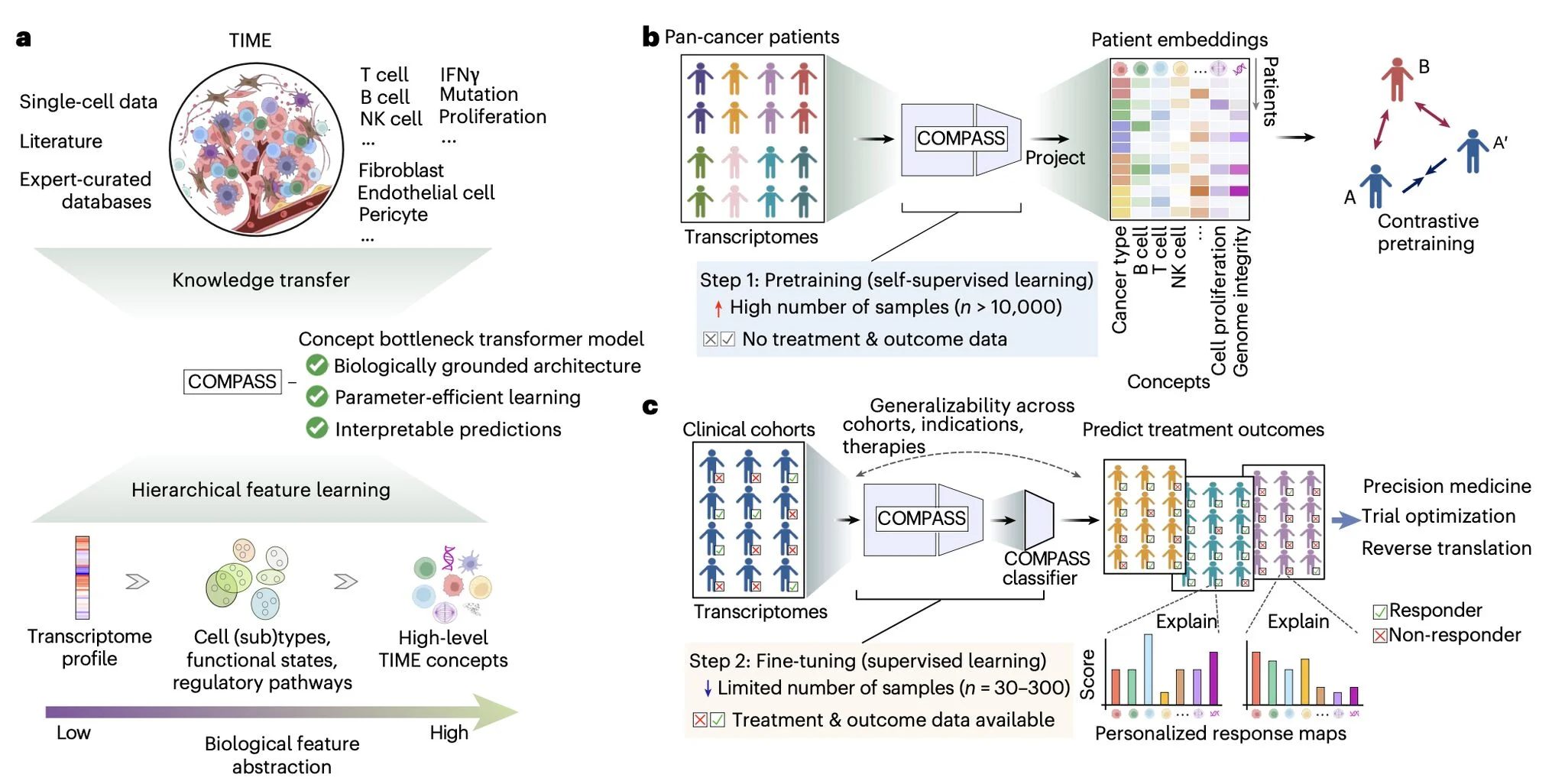
Concept bottleneck architecture for tumor immune microenvironment
COMPASS encodes each tumor transcriptome, then routes it through a transformer bottleneck aggregated into interpretable immune and stromal concepts before predicting response. It reasons through human-readable biology instead of latent features
Self-supervised pretraining, then cohort-specific fine-tuning
COMPASS is pretrained on 10,184 tumors across 33 cancer types to learn generalizable tumor-immune representations before any treatment outcome, then tuned on clinical cohorts, with strategies from zero-shot inference to full updates, calibrated to cohort size
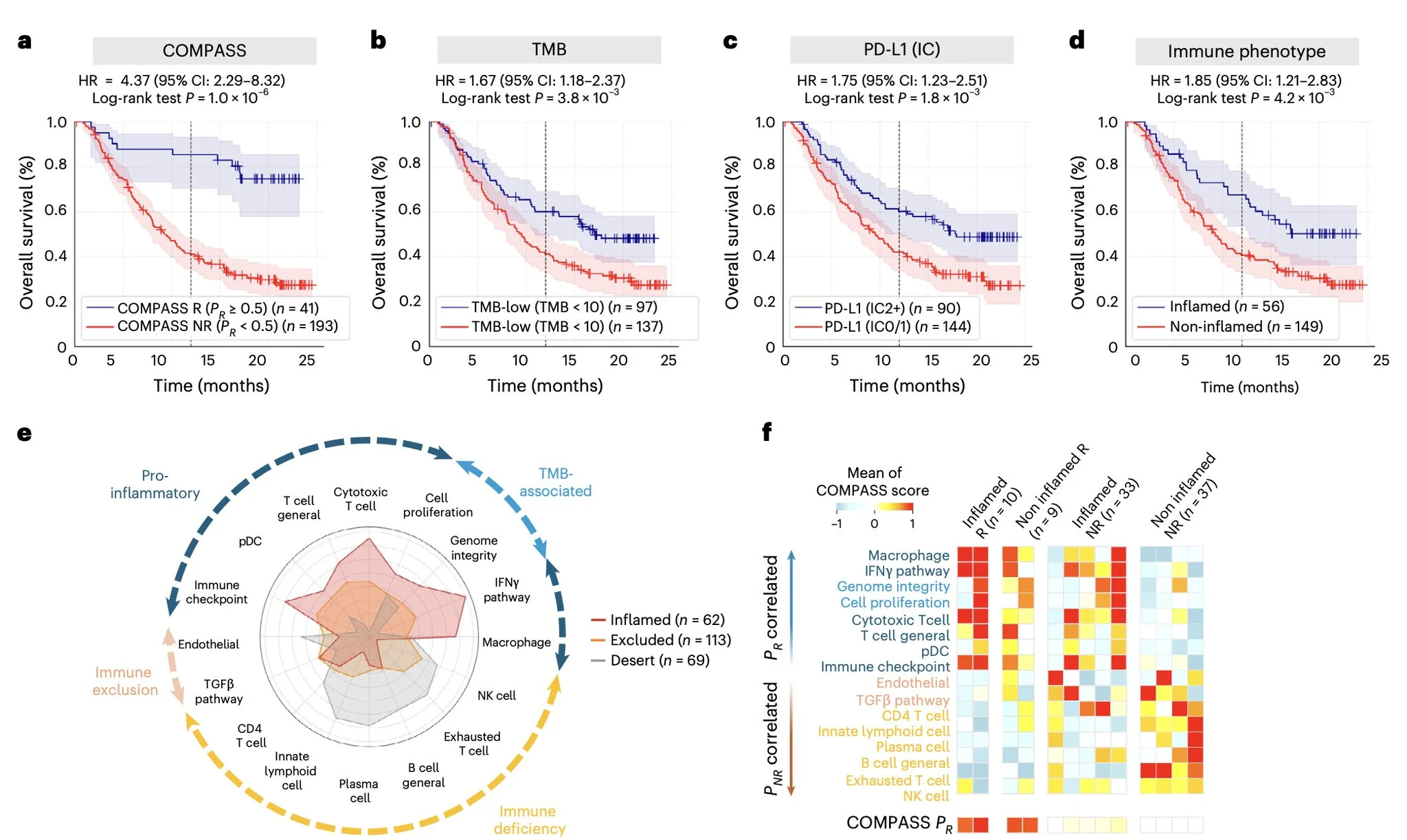
Outperforms 22 biomarkers and predictive models
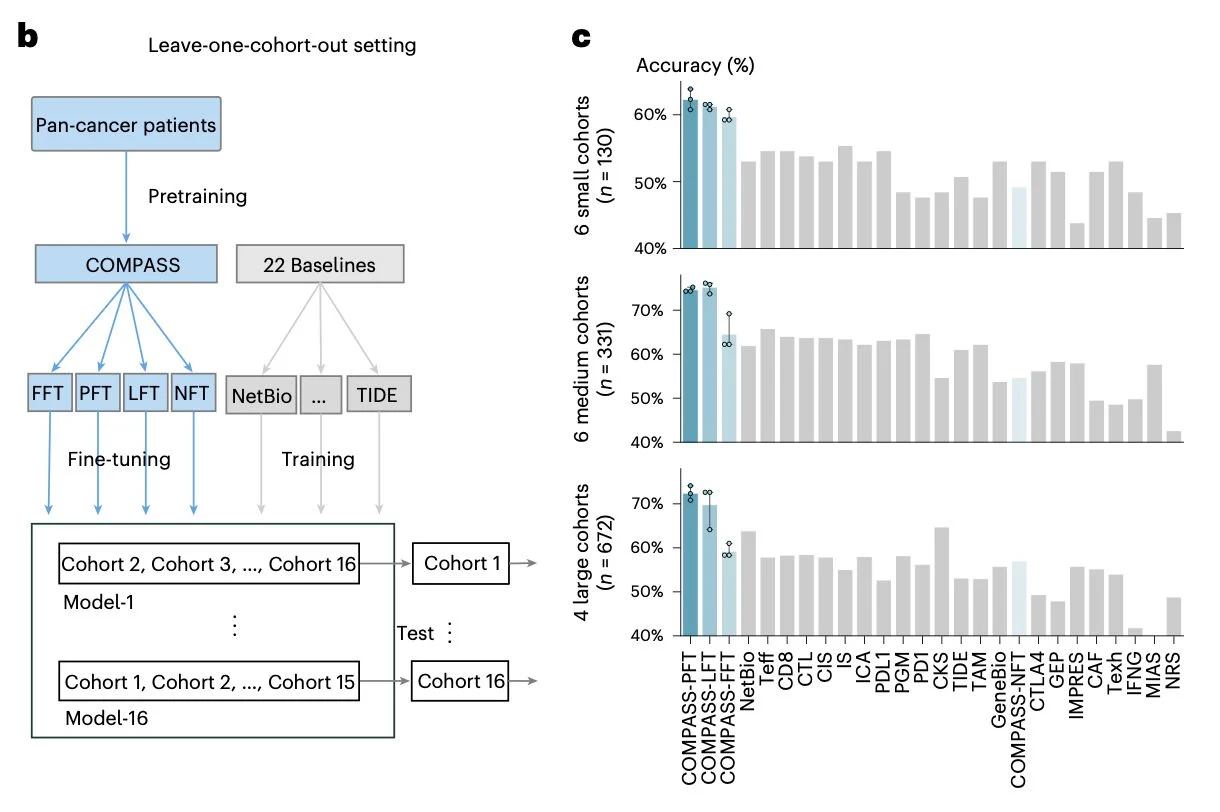
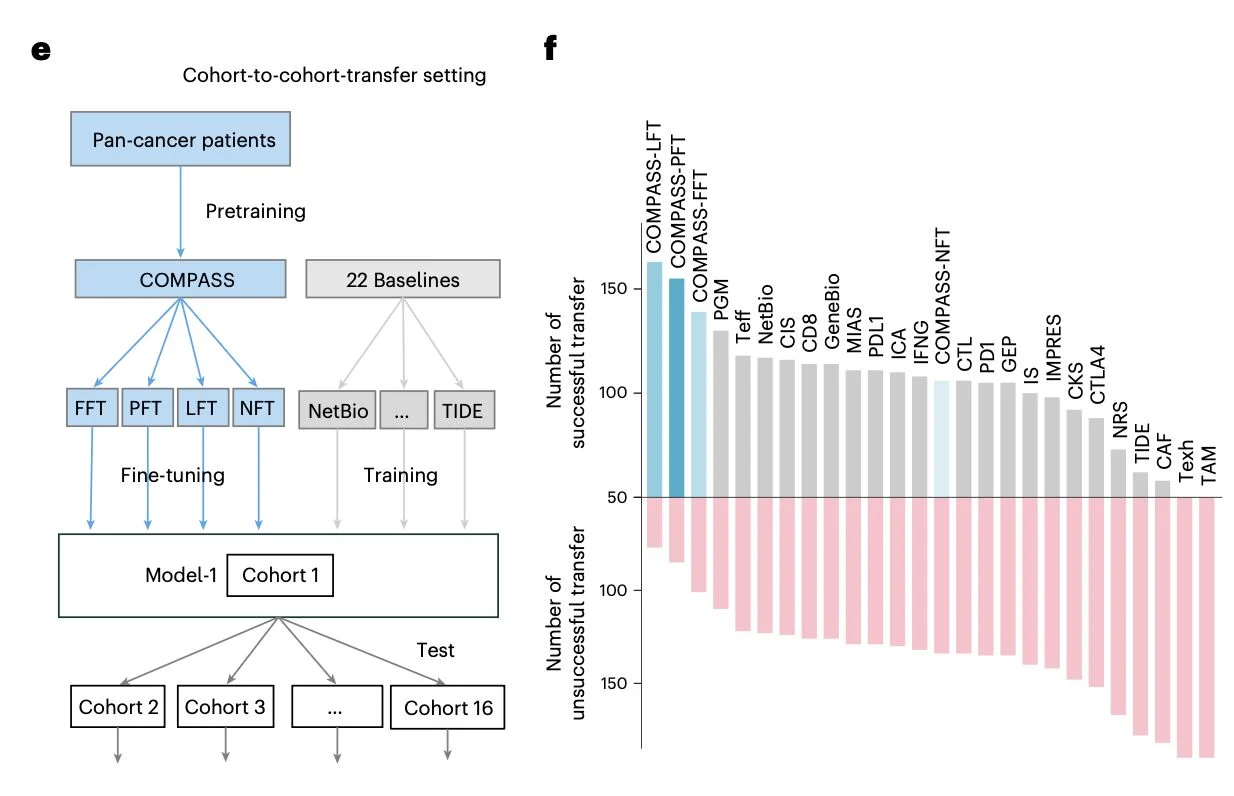
In leave-one-cohort-out evaluation, COMPASS beat 22 methods, with the highest generalization rate in cohort-to-cohort transfer
Generalizes across cancer types, therapies, and checkpoint targets
Withholding an entire cancer type, drug class, or checkpoint target during training, performance held up on the excluded category. It predicted combination therapy response when trained only on monotherapy cohorts
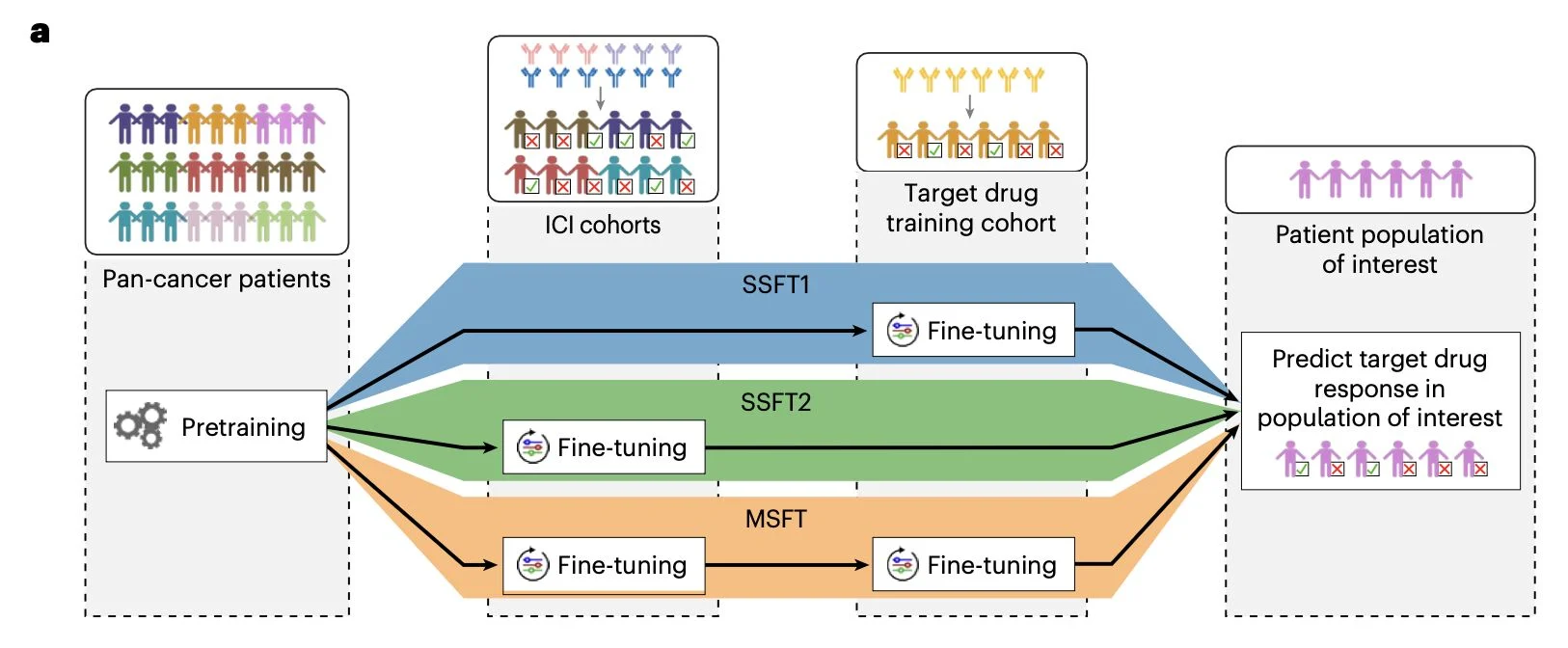
Multi-stage fine-tuning for early-phase trial design
Early trials enroll small populations with limited target-specific data, complicating indication selection. Pretraining on pan-cancer data, then general ICI cohorts, then a single target drug, outperformed single-stage approaches for atezolizumab, pembrolizumab, and nivolumab, which could help trial runners prioritize indications before large efficacy data exist
Survival stratification beats TMB and PD-L1 immunohistochemistry
In a held-out phase 2 atezolizumab trial in metastatic urothelial carcinoma, COMPASS-classified responders survived longer than non-responders (HR = 4.7), exceeding TMB and PD-L1 scoring
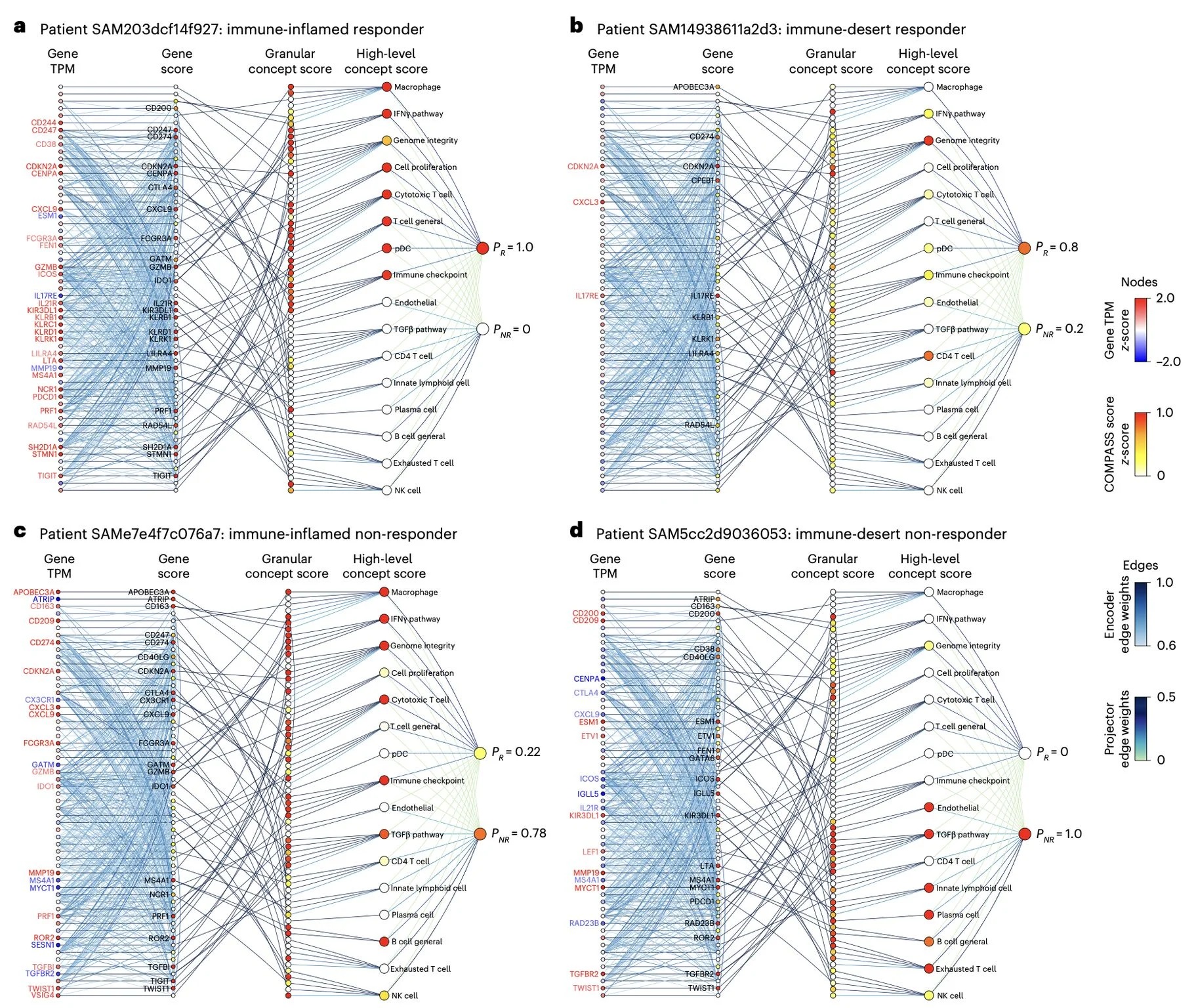
Personalized response maps uncover resistance within immune phenotypes
Tracing predictions through its concept hierarchy, COMPASS identified resistance mechanisms among immune-inflamed non-responders, including TGFβ-driven immunosuppression, vascular exclusion, and CD4+ T cell and B cell deficiency, resolving cases where phenotyping alone would have predicted response incorrectly.”
Title: Generalizable AI predicts immunotherapy outcomes across cancers and treatments
Authors: Wanxiang Shen, Intae Moon, Thinh Nguyen, Michelle Li, Yepeng Huang, Nitya Nair, Daniel Marbach, Marinka Zitnik
Read the Full Article on Nature Medicine
Other articles featuring Marinka Zitnik on OncoDaily.