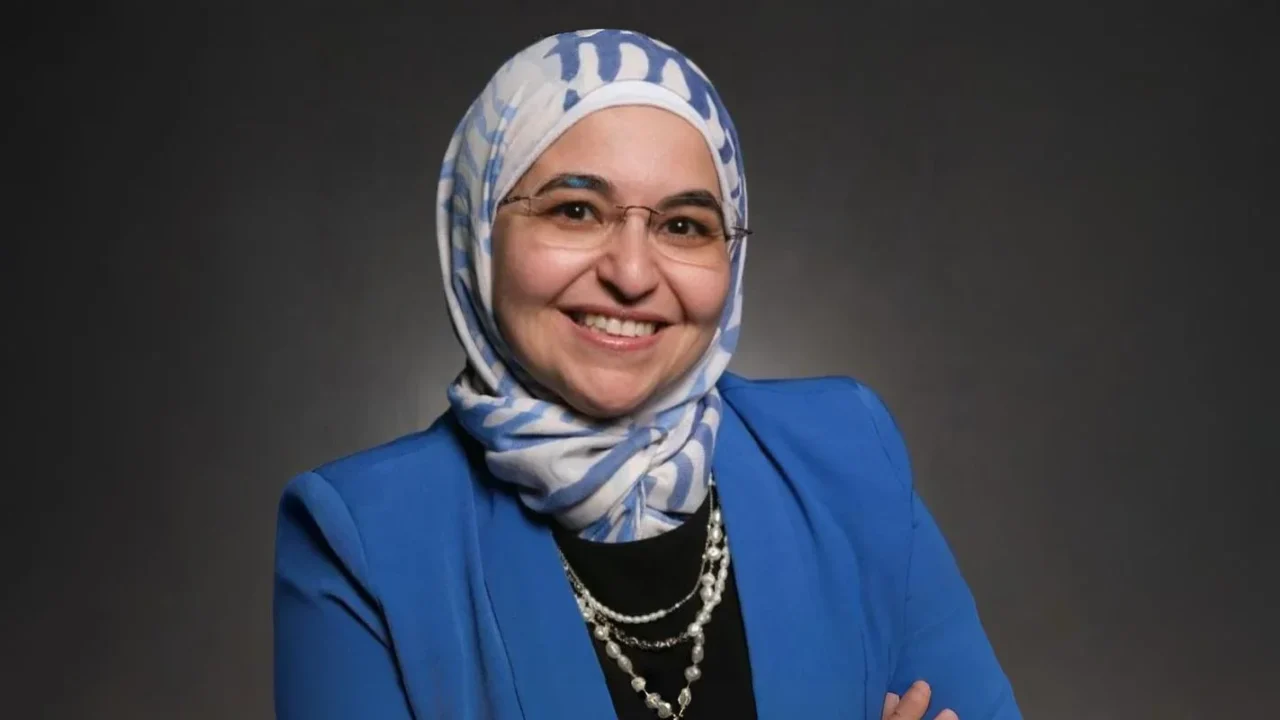
Maria Hafez, Assistant Professor at St. Luke’s University Health Network, shared a post on LinkedIn:
“ASCO26 Breast Update (2/series)
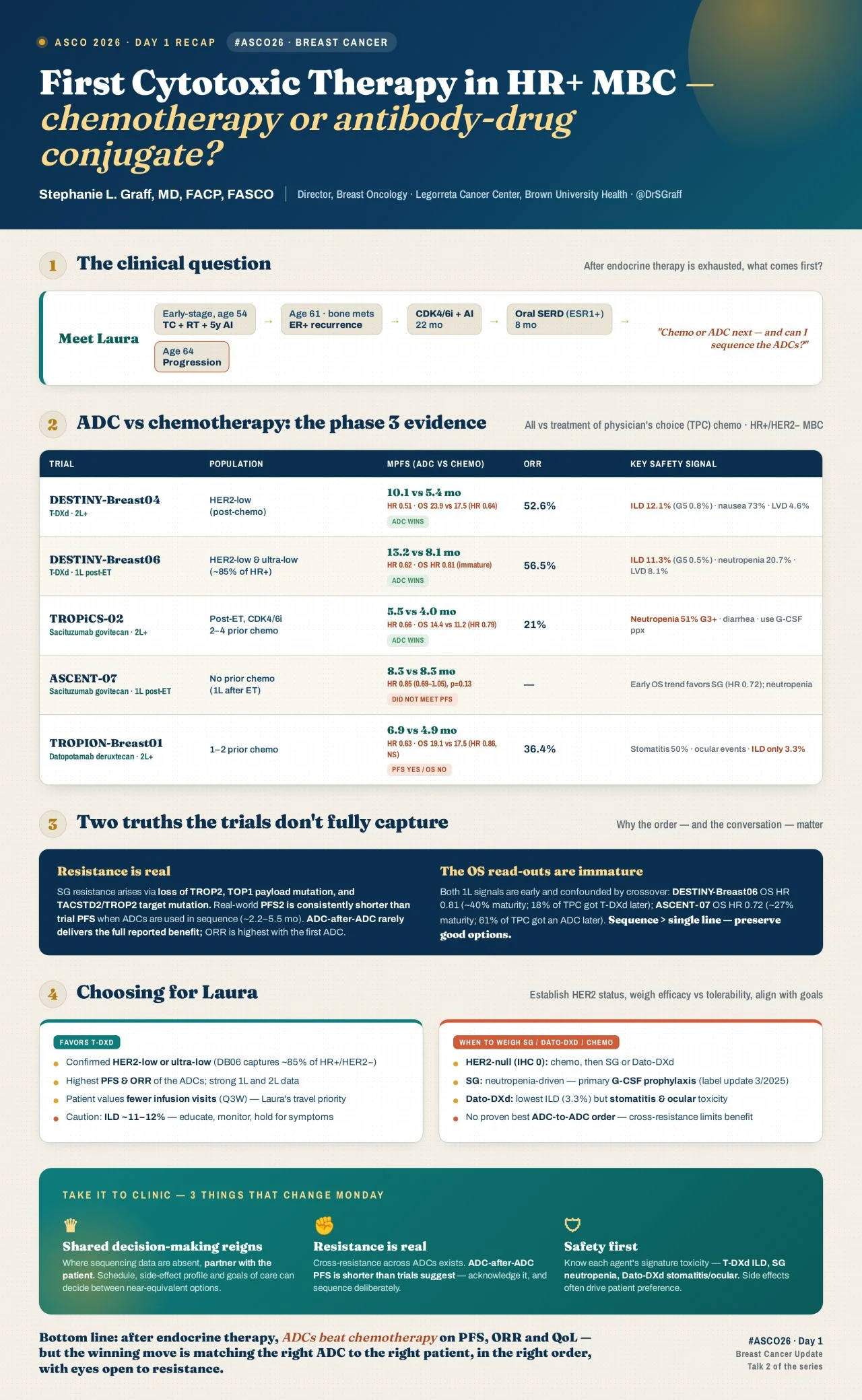
‘First Cytotoxic Therapy: Chemotherapy or Antibody-Drug Conjugate?’ Stephanie Graff (Legorreta Cancer Center, Brown University Health)
Once endocrine therapy is exhausted in HR+/HER2−MBC, what comes first, chemo or an ADC? Dr. Graff walked us through ‘Laura,’ a patient progressing after CDK4/6i + AI and an oral SERD, and the trials that frame her next move.
ADCs consistently beat physician’s-choice chemo:
- DESTINY-Breast04 (T-DXd, 2L, HER2-low): mPFS 10.1 vs 5.4 mo (HR 0.51); OS 23.9 vs 17.5 mo
- DESTINY-Breast06 (T-DXd, 1L post-ET, HER2-low + ultra-low, ~85% of HR+): mPFS 13.2 vs 8.1 mo (HR 0.62)
- TROPiCS-02 (sacituzumab govitecan, 2L+): mPFS 5.5 vs 4.0 mo (HR 0.66); OS 14.4 vs 11.2 mo
- TROPION-Breast01 (datopotamab deruxtecan, 2L+): mPFS 6.9 vs 4.9 mo (HR 0.63); OS not met (HR 0.86)
- ASCENT-07 (SG, 1L post-ET): PFS 8.3 vs 8.3 mo — did not meet significance (HR 0.85); early OS trend favored SG
Two truths the trials don’t fully capture:
Resistance is real: TROP2 loss, TOP1 payload mutations, TACSTD2/TROP2 target mutations. Real-world ADC-after-ADC PFS runs shorter than trial PFS (2.2–5.5 mo). The order matters. 1L OS data are immature and confounded by crossover; sequence strategy > any single line.
Choosing for Laura: confirm HER2 status first – T-DXd has the strongest efficacy and a travel-friendly Q3W schedule (mind ILD ~11–12%); SG needs G-CSF prophylaxis; Dato-DXd has the lowest ILD (3.3%) but stomatitis/ocular toxicity.
Take-home: Shared decision-making reigns. Resistance is real. Safety first. When the data are silent, the patient’s goals and tolerances decide.”
Other articles featuring Maria Hafez on OncoDaily.
You can also read: