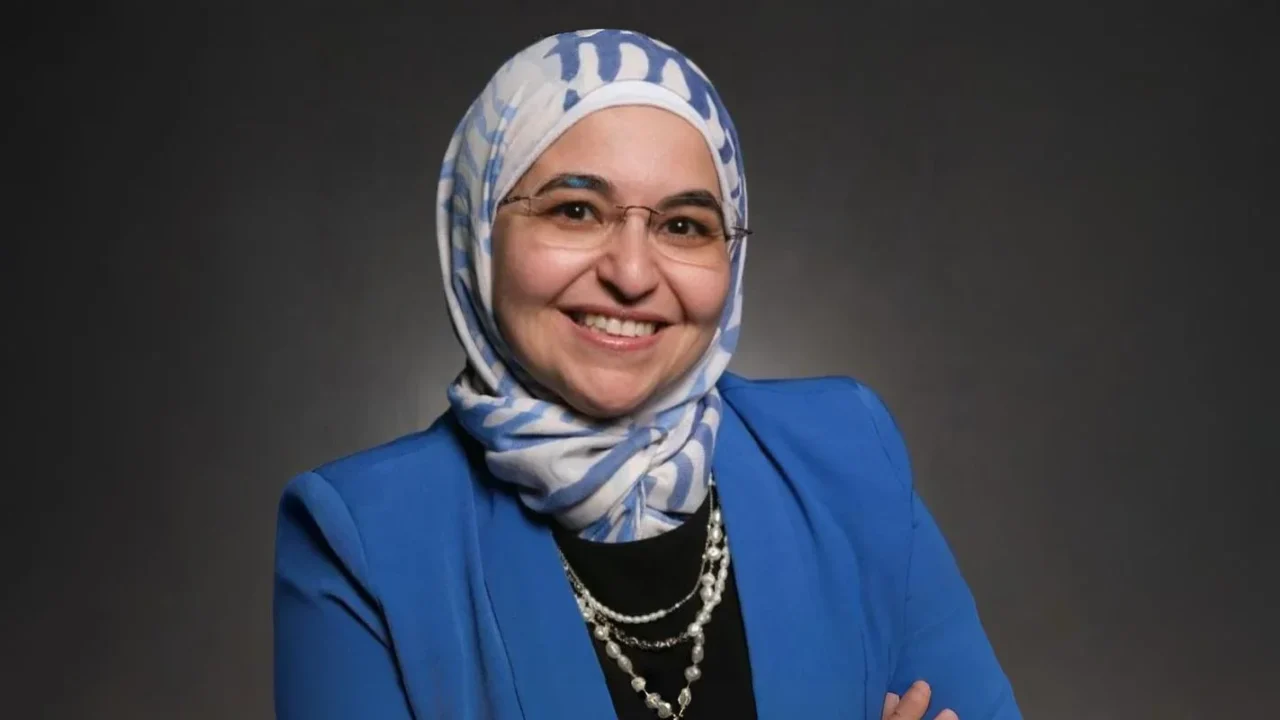
Maria Hafez, Assistant Professor at St. Luke’s University Health Network, shared a post on LinkedIn:
” ASCO26 Day 1 – Breast Cancer Update
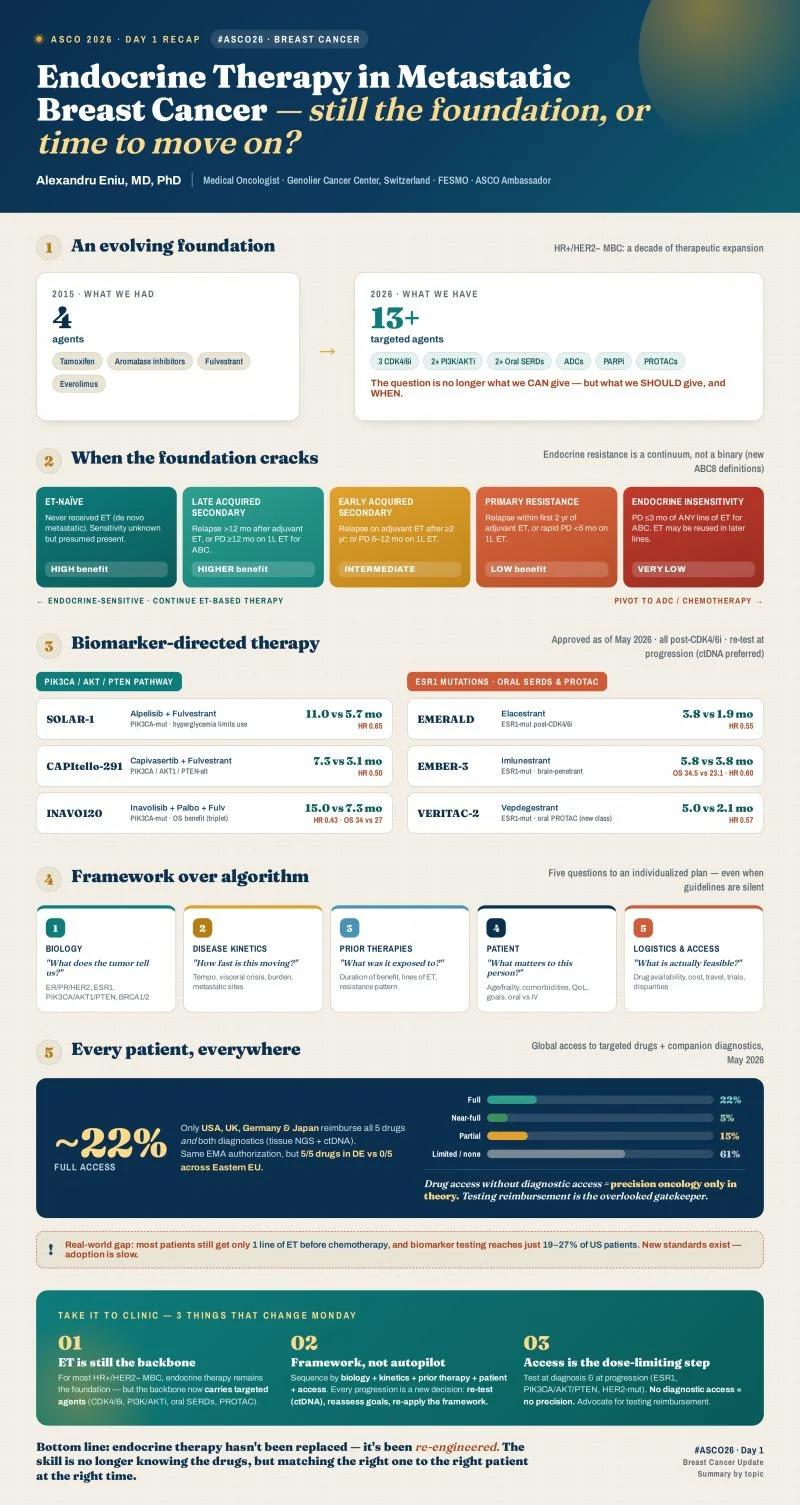
“Endocrine Therapy in Metastatic Breast Cancer: Still the Foundation, or Time to Move On?” Alexandru Eniu, MD, PhD (Genolier Cancer Center, Switzerland · FESMO · ASCO Ambassador)
The verdict: endocrine therapy hasn’t been replaced, it’s been re-engineered. In a decade we went from 4 agents (2015) to 13+ targeted agents (2026), and the real challenge has shifted from what we CAN give to what we SHOULD give, and WHEN.
Key points I’m taking back to clinic
- ET is still the backbone for most HR+/HER2− MBC, but the backbone now carries CDK4/6i, PI3K/AKT inhibitors, oral SERDs, and the first PROTAC (vepdegestrant).
- Resistance is a continuum, not a binary (new ABC8 definitions): ET-naïve → late acquired → early acquired → primary → endocrine insensitivity. Where the patient sits predicts ET benefit and when to pivot to ADC/chemo.
- Biomarker-directed options matter: INAVO120 (Inavolisib + palbo + fulv) showed an OS benefit in PIK3CA-mut early secondary resistance; capivasertib (CAPItello-291) broadened the PI3K/AKT/PTEN target; imlunestrant (EMBER-3) brought an OS signal + brain penetrance in ESR1-mut.
- Framework over algorithm: Biology → Disease kinetics → Prior therapy → Patient → Access. Every progression is a new decision, re-test (ctDNA preferred), reassess goals, re-apply the framework.
- Access is the dose-limiting step. Only 22% of patients globally have full access to all 5 drugs + diagnostics. Drug access without diagnostic access = precision oncology in theory only.
The takeaway that stuck with me: the skill is no longer knowing the drugs, it’s matching the right one to the right patient at the right time.”