Liang Cheng, Director of Anatomic Pathology and Director of Molecular Pathology at Lifespan Academic Medical Center and Vice Chair for Translational Research at the Warren Alpert Medical School of Brown University, shared a post on LinkedIn:
“It is a great honor to have contributed three articles to the Special Issue on Molecular Testing in Urologic Malignancies in Urologic Oncology, edited by Dr. Sinchita Roy-Chowdhuri. Our papers highlight how molecular diagnostics – ranging from urine-based assays and RNA sequencing to tissue-based next-generation sequencing – are reshaping the diagnostic, prognostic, and therapeutic landscape of genitourinary cancers. I am deeply grateful for the opportunity to work with outstanding colleagues on this special issue and for their exceptional scholarship, collaboration, and teamwork.
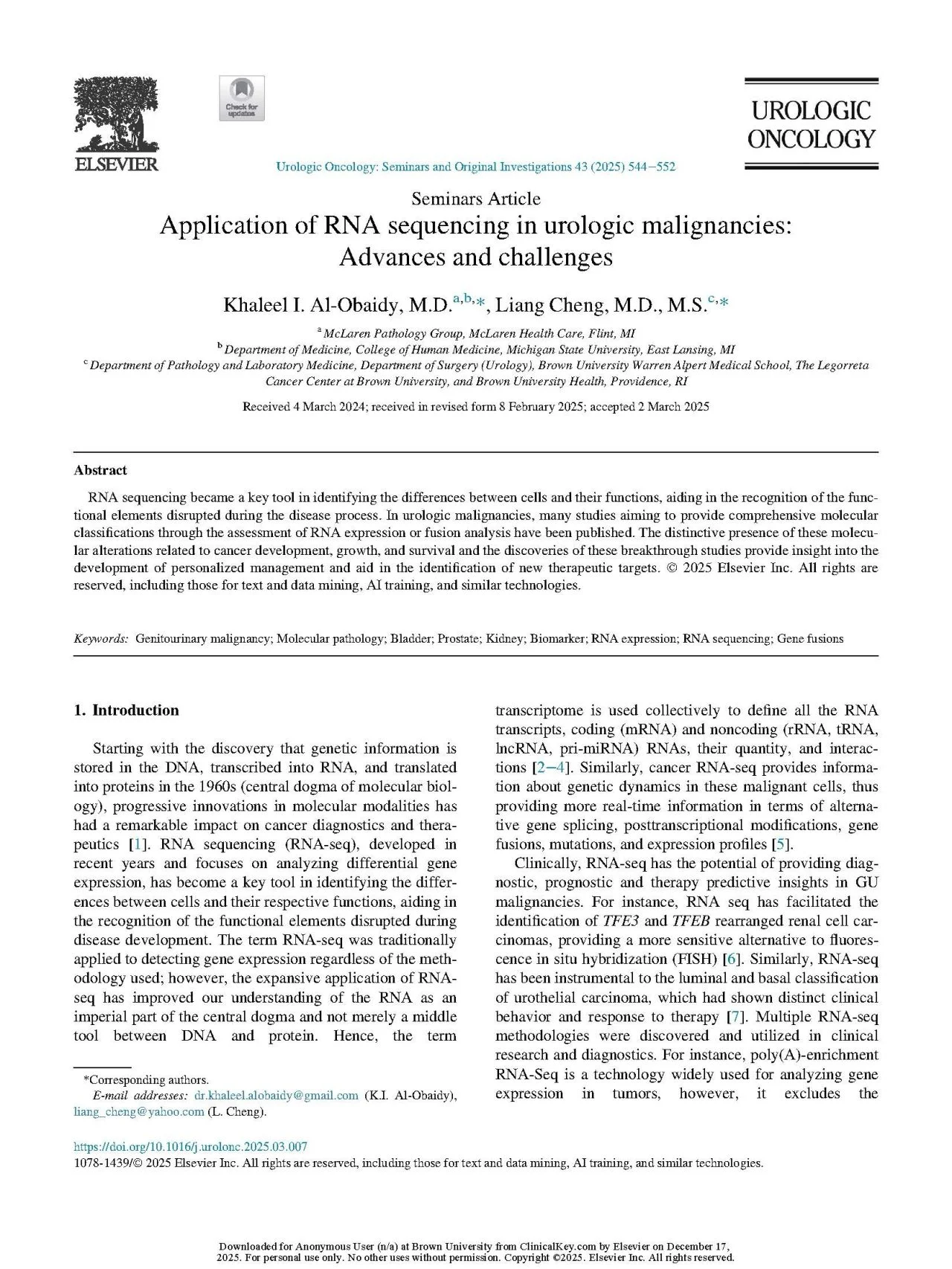
In the first article, Dr. Khaleel Al-Obaidy reviews the application of RNA sequencing in urologic malignancies, detailing how transcriptomic profiling has transformed tumor classification, fusion detection, biomarker discovery, and therapeutic stratification across bladder, prostate, and renal cancers. The review also addresses practical challenges of RNA-seq implementation and compares emerging platforms, highlighting how RNA-based diagnostics increasingly complement – and in some settings surpass – traditional DNA-based approaches (Al-Obaidy K & Cheng L. Application of RNA sequencing in urologic malignancies: Advances and challenges.
Title: Application of RNA sequencing in urologic malignancies: Advances and challenges
Authors: Khaleel I Al-Obaidy, Liang Cheng
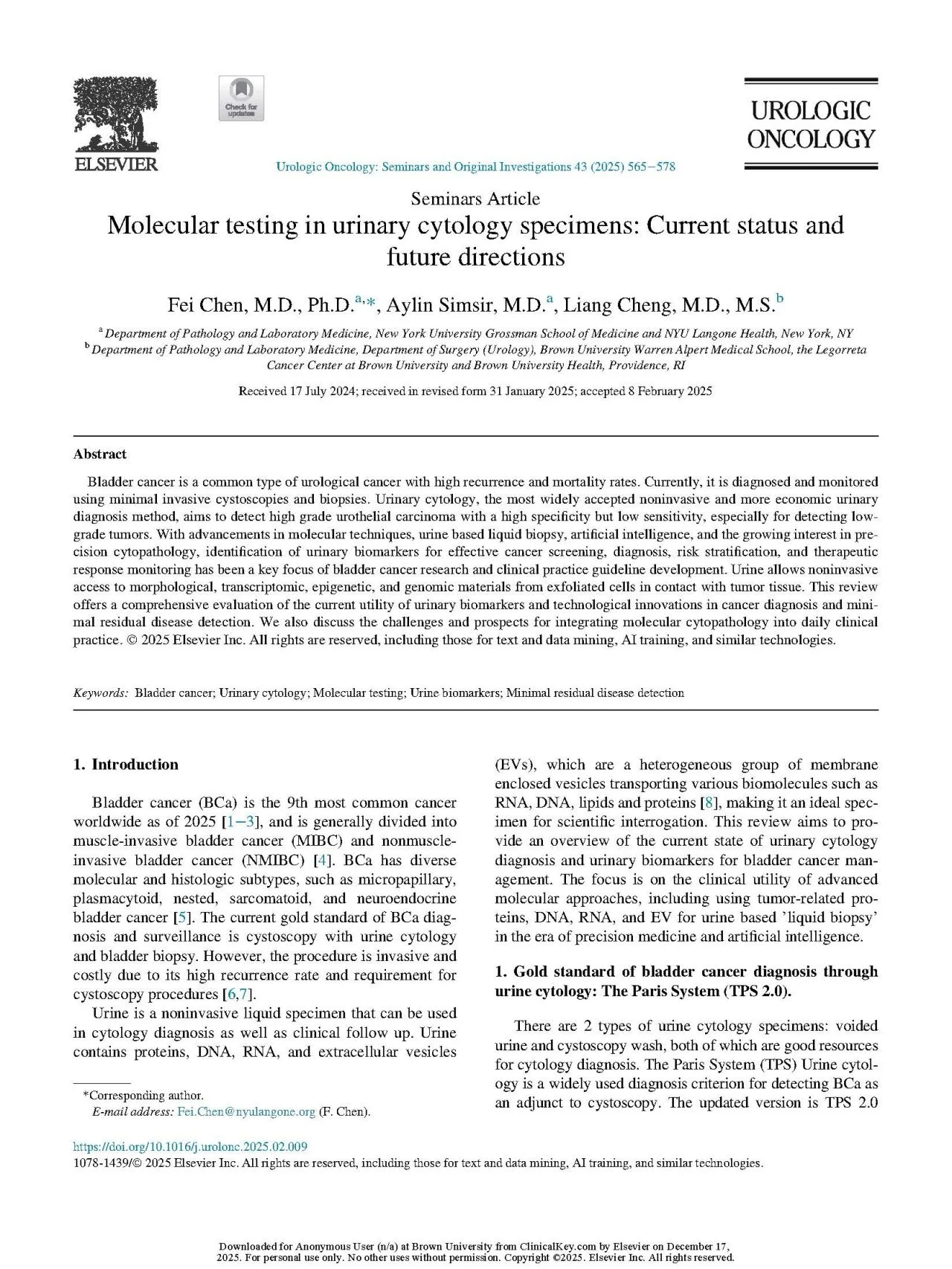
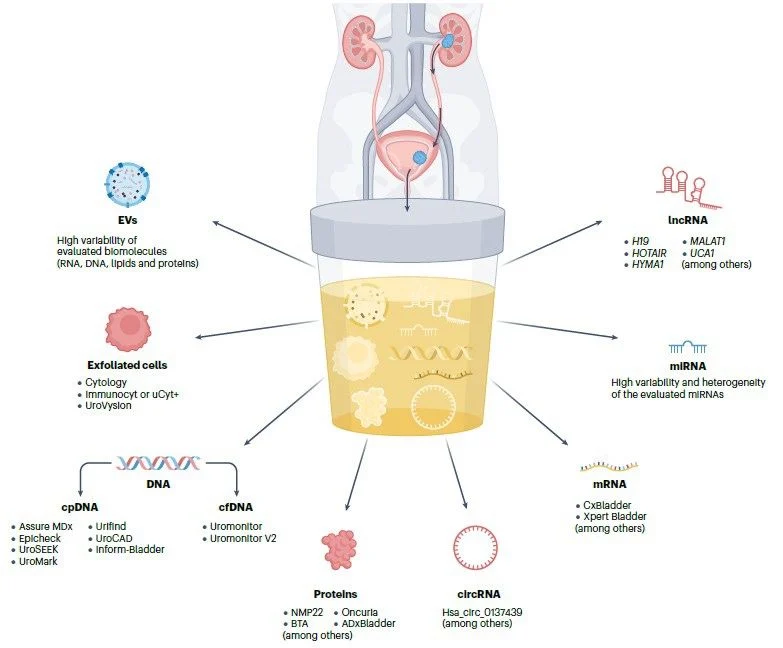
In another important review, Dr. Fei Chen and colleagues provide a comprehensive overview of molecular testing in urinary cytology specimens, emphasizing urine as a powerful, noninvasive substrate for precision oncology. The article summarizes current and emerging DNA-, RNA-, methylation-, and extracellular vesicle–based assays, discusses their clinical utility in bladder cancer detection and surveillance, and outlines future directions including minimal residual disease detection and integration with artificial intelligence. This work underscores the expanding role of urine-based liquid biopsy in routine urologic practice (Chen F, Simsir A, Cheng L. Molecular testing in urinary cytology specimens: Current status and future directions.
Title: Molecular testing in urinary cytology specimens: Current status and future directions
Authors: Fei Chen, Aylin Simsir, Liang Cheng
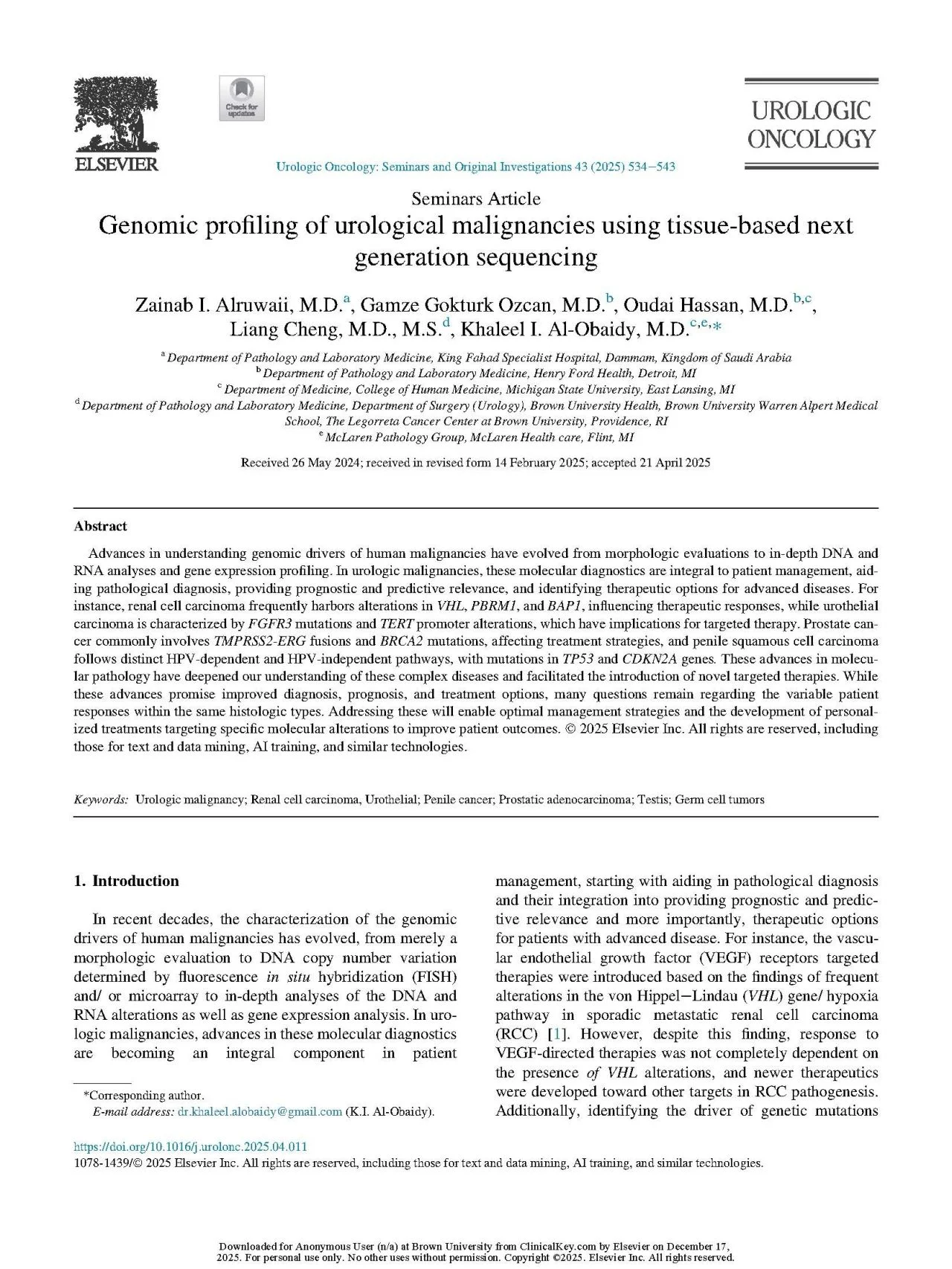
The third review, by Drs. Khaleel Al-Obaidy, Zainab Alruwaii, and colleagues, focuses on tissue-based next-generation sequencing for genomic profiling of urologic malignancies. This article synthesizes current knowledge of actionable genomic alterations across renal cell carcinoma, urothelial carcinoma, prostate cancer, and rarer GU tumors, highlighting how NGS informs diagnosis, prognosis, targeted therapy selection, and clinical trial enrollment. The authors also discuss limitations of tissue-based testing and the importance of thoughtful integration with complementary molecular modalities (Alruwaii Z, Ozcan GG, Hassam O, Cheng L, Al-Obaidy K. Genomic profiling of urological malignancies using tissue-based next generation sequencing. Urol Oncol 2025;43:534-543. PMID: 40410007).”
Title: Genomic profiling of urological malignancies using tissue-based next generation sequencing
Authors: Zainab I. Alruwaii, Gamze Gokturk Ozcan, Oudai Hassan, Liang Cheng, Khaleel I. Al-Obaidy
More posts featuring Liang Cheng on OncoDaily.