
Kefah Mokbel, Professor of Medicine at Cardiff University School of Medicine, shared on LinkedIn:
“Higher estimated lifetime oestrogen exposure was linked to slower biological ageing and longer life expectancy after menopause
In a BJOG study of 112,381 postmenopausal women, Yi Xiang and colleagues used reproductive history to estimate lifetime oestrogen exposure. They analysed data from UK Biobank and the US National Health and Nutrition Examination Survey (NHANES).
At age 45, women in the highest quarter of the total oestrogen exposure index had a longer estimated life expectancy. The difference was about 8 months in UK Biobank and 16 months in US NHANES. Higher scores were also associated with less accelerated biological ageing.
The cancer findings add context. In UK Biobank, all three exposure indices were linked to a higher incidence of breast cancer, and two were linked to a higher incidence of endometrial cancer.
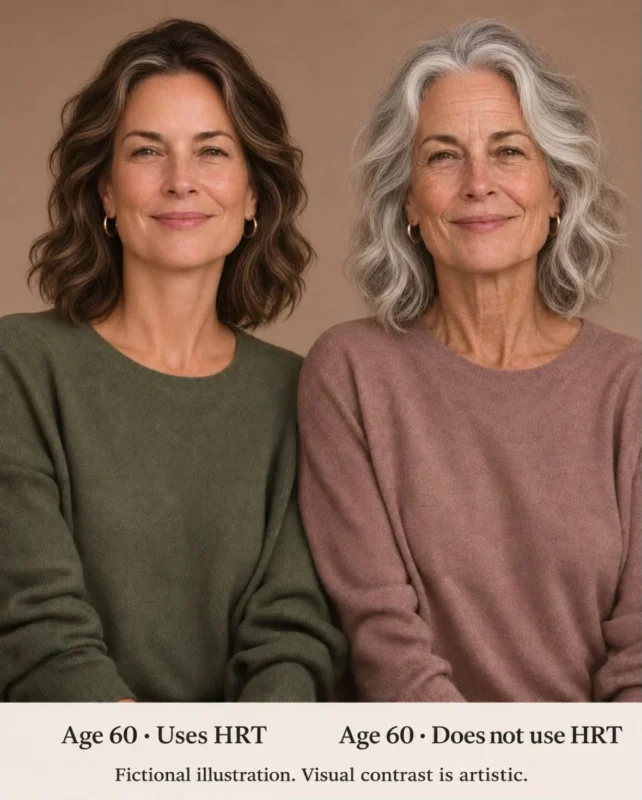
The twins in the image are fictional. Their difference in appearance is an artistic choice. The study used reproductive history to estimate lifetime oestrogen exposure and leaves open whether HRT changes how women look or age.
Read the study in BJOG.”
You can also read: Muna Al-Khaifi Explores OncoMenopause: Advancing Menopause Care After Cancer