





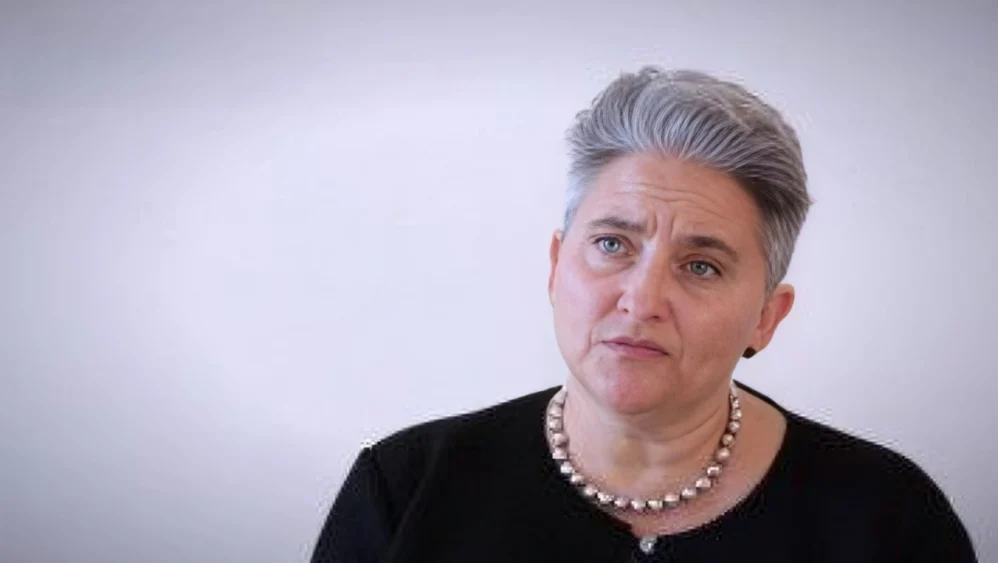
Julie S. Torode, Director of Strategic Partnerships, Patient and Community Engagement, Institute of Cancer Policy at King’s College London, shared a post on LinkedIn:
“In 2023, Australia published a national strategy to eliminate cervical cancer by 2035. The priorities identified focus strongly on equity because while the national incidence rate is relatively low (6·3 cases per 100 000 women), incidence and mortality are higher in some groups, such as Aboriginal and Torres Strait Islander people, people living in very remote areas, and people living in lower socioeconomic areas.
Cervical cancer incidence in Aboriginal and Torres Strait Islander women is 11·7 cases per 100 000 women, approximately twice the national. Fantastic modelling work by Megan Smith and Lisa Whop et al. published this week show that a projected 2047 date for achieving the elimination threshold of 4/100.000 cases per annum or less could be pulled forward to 2036 with concerted efforts to address systematic barriers.
The driver for this impact is improvement in cervical cancer screening and treatment services. A key learning for all planners for cervical cancer elimination.”
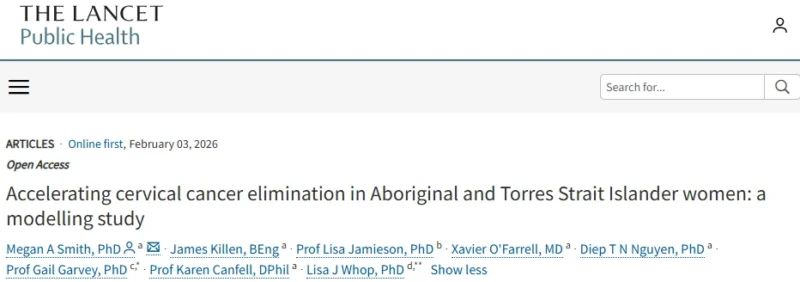
Title: Accelerating cervical cancer elimination in Aboriginal and Torres Strait Islander women: a modelling study
Authors: Megan Smith, James Killen, Lisa Jamieson, Xavier O’Farrell, Diep T N Nguyen, Gail Garvey, Karen Canfell, Lisa Whop
Read the Full Article in The Lancet Public Health.
More posts featuring Julie S. Torode.