





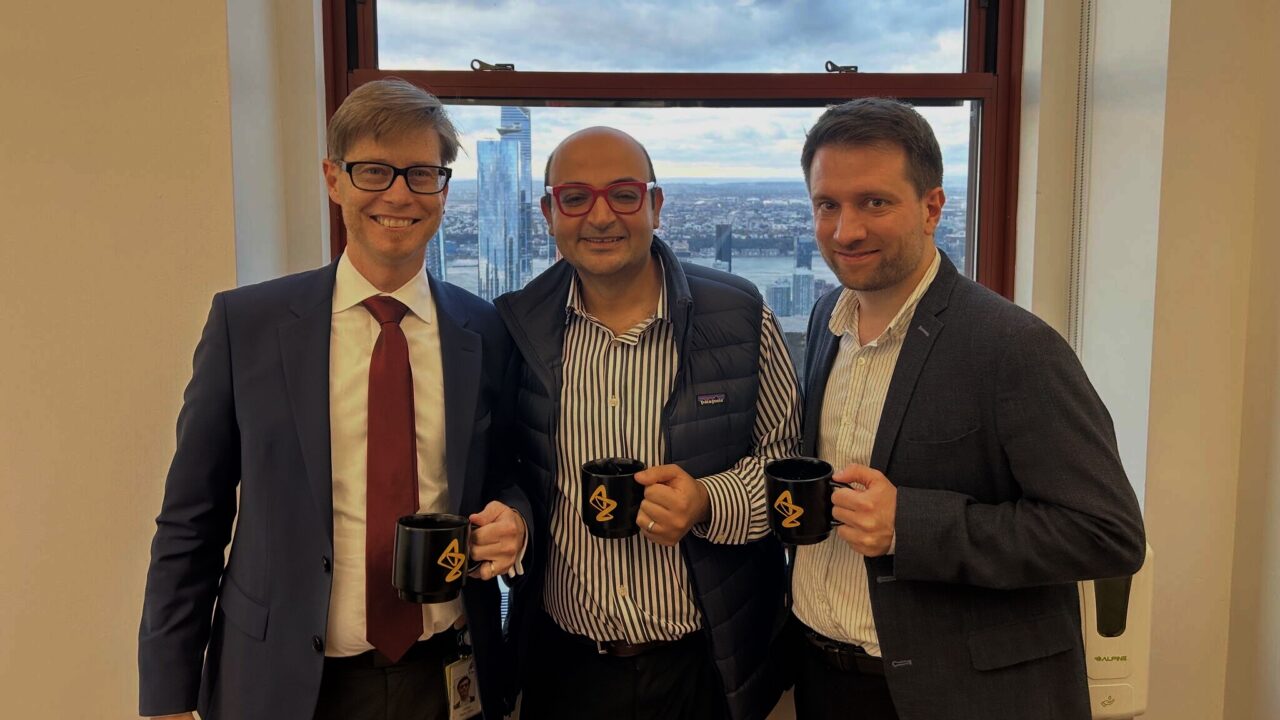
Jorge Reis-Filho, Chief of AI for Science Innovation, Enterprise AI Unit at AstraZeneca, shared a post on LinkedIn:
“I have spent time reflecting on the conversations and debates that shaped my perception of AI in the pharmaceutical and healthcare landscape in 2025. Across every event, the message was consistent. AI is no longer an emerging idea: it is a defining force reshaping how we discover, develop, and deliver therapies for patients. As the automation of tasks through agentic AI becomes a reality, we are empowered to derive deeper insights and to render predictions that were previously out of reach.
I feel privileged to lead AI Science Innovation for RnD at AstraZeneca. Our strategic approach is rooted in the implementation of state of the art, domain specific unimodal and multimodal foundation models. These are reinforced, fine tuned, and augmented by our key differentiator: our data. These models are orchestrated by a fit for purpose and benchmarked agentic framework.
This approach is directly addressing critical questions fundamental to the transformation of clinical development:
- improving patient selection based on multimodal but parsimonious approaches;
- accelerating and de-risking the transition from Phase 1/2 to Phase 3 clinical trials;
- developing novel combination regimens to increase the likelihood of Phase 3 success.
Looking back, there were many memorable events that helped define my thinking. One highlight was undoubtedly the inaugural ESMO AI Congress in Berlin. The convergence of oncology, pathology, and frontier AI served as direct evidence that the impact of AI in oncology is happening now.
I would also like to express my deepest gratitude to Faisal Mahmood, Jakob Nikolas Kather, Thomas Clozel, Danielle Bitterman, Thomas Fuchs, and Christina Curtis. Our ongoing conversations have provided the necessary clarity and rigor to expand my perspective on what is possible at the intersection of AI and medicine. This external perspective has been complemented by the intellectual synergy within Oncology RnD at AstraZeneca.
Bridging the gap between frontier AI architecture and clinical application requires a shared commitment to rigor: the collaboration across our teams has been the engine behind our ability to translate these technologies into impactful solutions.
The most substantive advances I witnessed in 2025 were compounded rather than incremental. It is evident that the next stage of AI will be defined by integrated reasoning systems that operate across modalities and understand biological context.
Within a foreseeable time horizon, I am confident that we will be approaching a point where domain-specific artificial super intelligence will become a reality, acting as a de-facto innovator and empowering researchers in unprecedented ways.
As I look ahead to 2026, working with a cross-therapeutic area team to drive innovative and impactful AI solutions at AstraZeneca, I could not be more enthusiastic. I look forward to working alongside our unique talent and partners in AI and sharing the progress being made along the way.”

More posts featuring Jorge Reis-Filho.
