Jeremie Calais, Director, Clinical Research Program at UCLA Nuclear Medicine and Theranostics, shared a post on LinkedIn about a paper he co-authored with colleagues published in the Journal of Nuclear Medicine:
“What if PET imaging could help predict toxicity risk under LuPSMA therapy?
We already know PSMA PET helps predict tumor response to LuPSMA therapy.
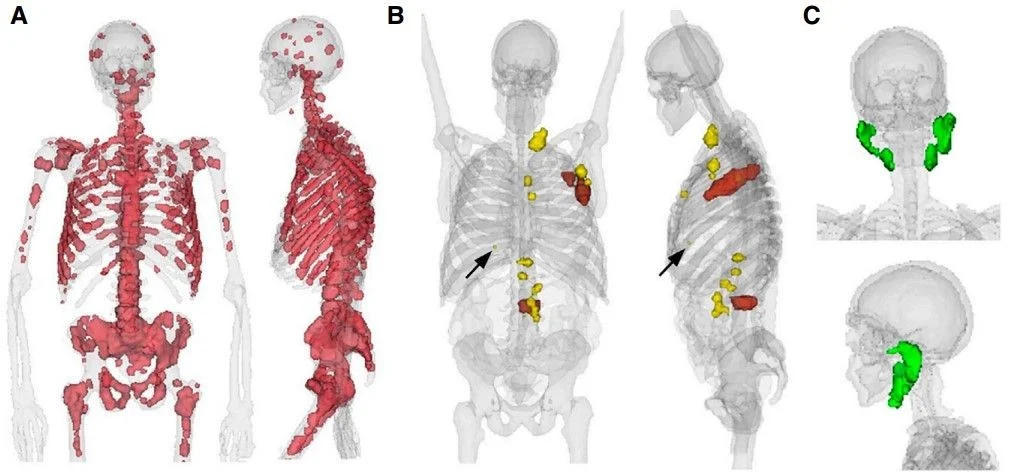
This study on 61 patients shows that quantitative PSMA PET parameters (volumes and SUV) also carry predictive information for toxicity and side-effect profiles – helping anticipate who benefits most and who is at higher risk.
Key takeaways
- More bone tumor volume → earlier hematologic toxicity
- Higher PSMA expression in bone metastases → less hematologic toxicity
- Higher whole-body tumor volume → earlier pain worsening
- Higher whole-body PSMA expression → preserved quality of life and delayed pain
- Higher salivary gland PSMA expression → worse xerostomia over time
Toward personalized medicine with PET imaging, radioligand therapy, and theranostics.”
Title: Linking Baseline PSMA PET–Derived Parameters to Toxicity, Adverse Events, Pain, and Quality of Life in Patients Treated with [177Lu]Lu-PSMA-617: A Single-Center Retrospective Study
Authors: Vishnu Murthy, Koichiro Kimura, Lela Theus, Andrew Nguyen, Tristan R. Grogan, Ojaswita Lokre, Timothy Perk, Matthew B. Rettig, Alexandra Drakaki, John Shen, Pan Thin, Kathleen Nguyen, Stephanie Lira, Rejah Marie Nabong, Linda Gardner, Brian D. Gonzalez, Andrei Gafita, Johannes Czernin, and Jeremie Calais
You can read the Full Article in the Journal of Nuclear Medicine.
More posts featuring Jeremie Calais.