






Imad Karam, Hematology and Oncology Chief Fellow at SUNY Downstate College of Medicine, shared a post on LinkedIn:
“Dual blockade in PTEN-deficient prostate cancer: CAPItello-281
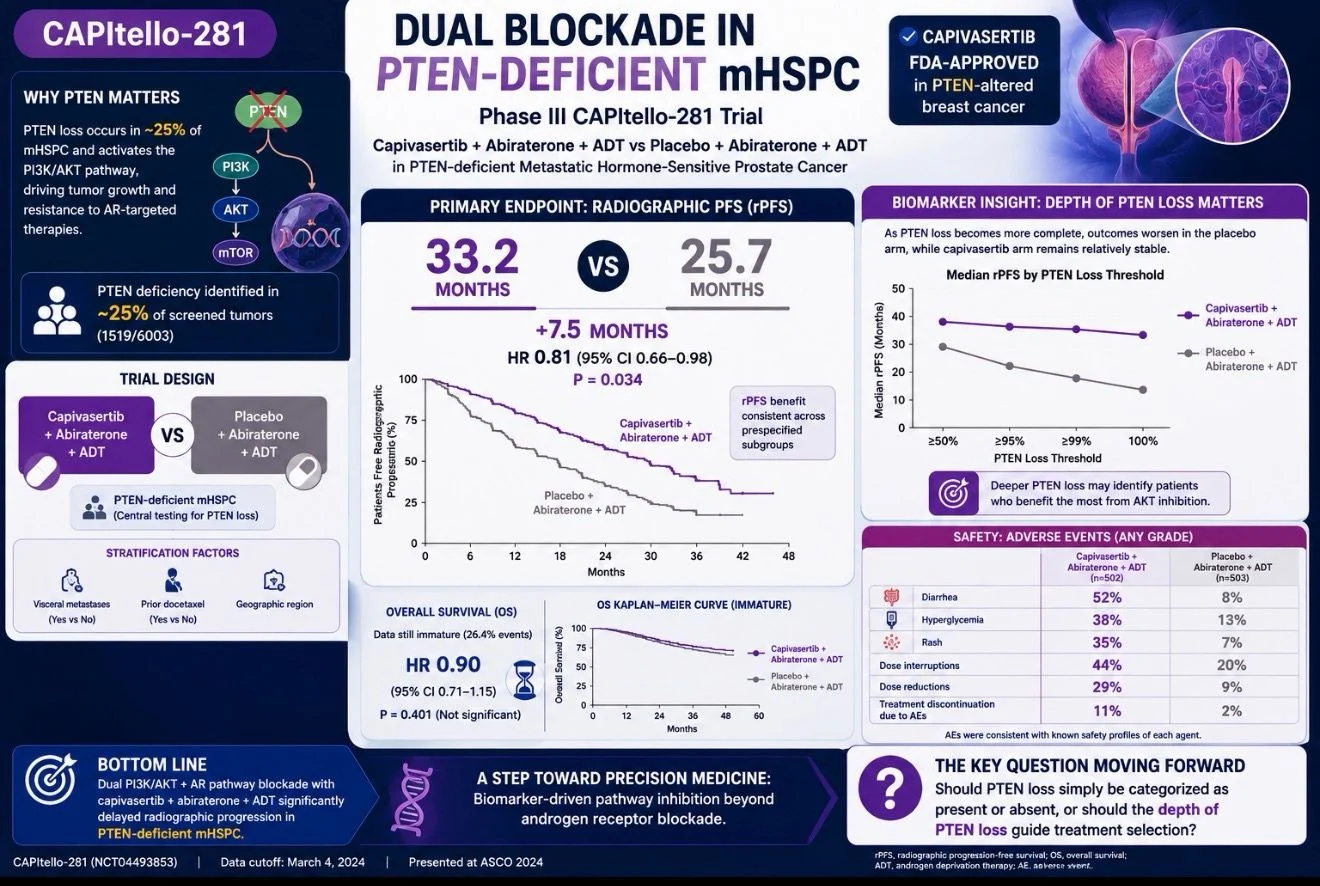
PTEN loss occurs in approximately 25% of patients with metastatic hormone-sensitive prostate cancer (mHSPC) and activates the PI3K/AKT pathway, providing a potential mechanism of resistance to androgen receptor-targeted therapies.
The phase III CAPItello-281 trial evaluated capivasertib plus abiraterone plus ADT versus placebo plus abiraterone plus ADT in patients with PTEN-deficient mHSPC.
PTEN deficiency identified in ~25% of screened tumors (1519/6003)
- Improved radiographic progression-free survival:
• 33.2 months vs 25.7 months
• HR 0.81 (95% CI 0.66–0.98; P=0.034) - An intriguing biomarker signal emerged:
As PTEN loss became more complete (≥95%, ≥99%, 100%), outcomes worsened in the placebo arm while remaining relatively stable with capivasertib, suggesting that the degree of PTEN loss may further refine patient selection. - Overall survival remains immature:
• HR 0.90 (95% CI 0.71–1.15)
• No significant OS benefit yet - Expected toxicities were higher with capivasertib:
• Diarrhea: 52% vs 8%
• Hyperglycemia: 38% vs 13%
• Rash: 35% vs 7%
Capivasertib is already FDA-approved in PTEN-altered breast cancer, and CAPItello-281 extends the precision oncology story into prostate cancer, highlighting the growing role of biomarker-driven pathway inhibition beyond androgen receptor blockade alone.”
More posts about Prostate Cancer.