





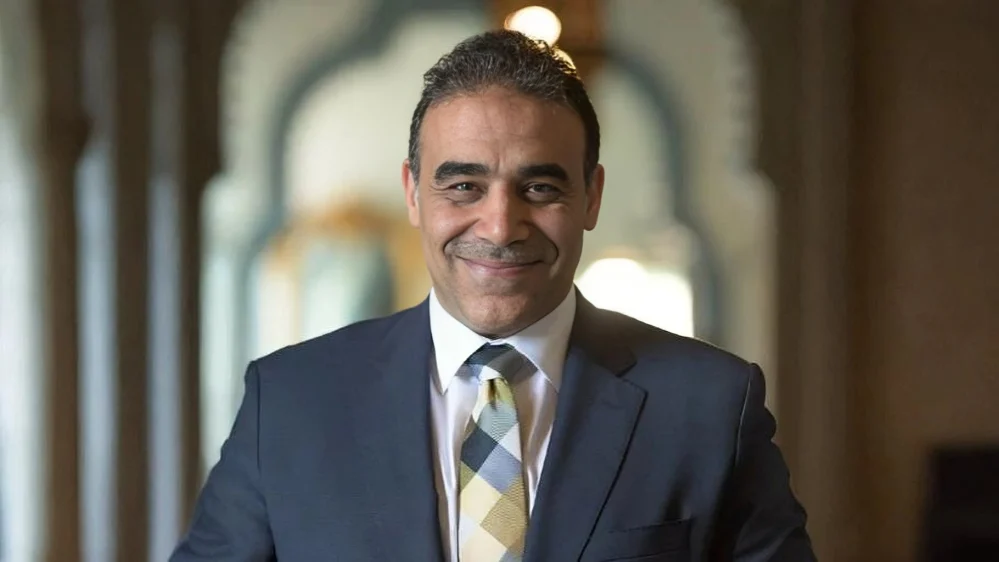
Hesham ElGhazaly, Professor of Clinical Oncology at Ain Shams University and President of the Executive Board of the Egyptian Cancer Society, shared a post on LinkedIn:
“When better data change the story… Reflections on Egypt’s GLOBOCAN 2024
Before drawing conclusions, one scientific principle deserves emphasis:
GLOBOCAN 2024 should not be directly compared with GLOBOCAN 2022 as a measure of temporal change.
Each edition integrates newer cancer registry data, mortality records, demographic updates, and a complete recalibration of the estimation models.
Consequently, differences between editions reflect not only changes in disease burden but also improvements in the quality of available evidence.
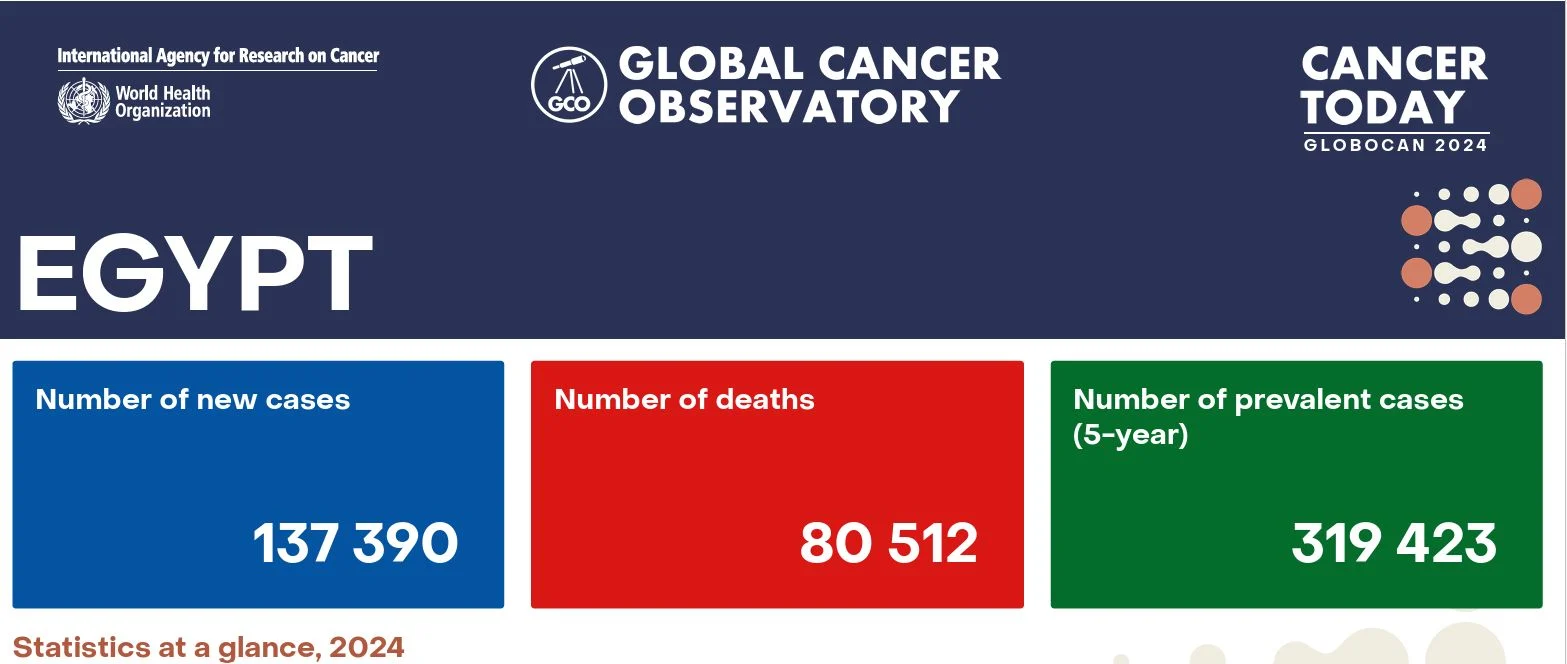
Perhaps the most debated observation is that GLOBOCAN 2024 reports lower overall cancer incidence and mortality estimates for Egypt than the previous edition.
This should not be interpreted as evidence that cancer has suddenly become less common. Rather, it reminds us that better data generate better estimates.
Improved cancer registries, more complete mortality reporting, and recalibrated statistical models may have corrected previous overestimation while simultaneously providing a more accurate picture of Egypt’s cancer burden.
GLOBOCAN 2024 Egypt’s story is still encouraging.
The continued decline in hepatocellular carcinoma (HCC) demonstrates that Egypt’s Hepatitis C elimination program has become a global example of how controlling an infectious disease can reshape the future burden of cancer.
The sustained reduction in bladder cancer reflects another long-term public health success, illustrating the lasting impact of schistosomiasis control and decades of epidemiological transition.
Meanwhile, the continued increase in breast cancer incidence deserves a more thoughtful interpretation than simple concern. Population ageing and lifestyle changes undoubtedly contribute, but so do greater public awareness, expanded screening initiatives, and improved access to diagnosis.
Egypt is undergoing two important transitions simultaneously…
The first is a transition in cancer control, driven by prevention, early detection, multidisciplinary care, and expanding access to treatment.
The second is a transition in cancer intelligence, driven by stronger registries, higher-quality data, and more reliable epidemiological evidence.
Neither can succeed without the other.”
Other articles featuring Hesham ElGhazaly on OncoDaily.