Herbert Loong, Track Co-Chair: WCLC 2027: Metastatic NSCLC – ADCs and Cytotoxic Therapy at International Association for the Study of Lung Cancer, Fellow in the Royal College of Physicians (London), shared a post on LinkedIn:
“Why do so many ‘promising’ phase II results in leiomyosarcoma (LMS) fail once they’re randomized?
I had the opportunity to discuss on the challenges and opportunities of early-phase trials in LMS at yesterday’s National Leiomyosarcoma Foundation (NLMSF) International Roundtable in Milan , from the perspective of a practising oncologist running a Phase 1 unit.
Here were the key messages:
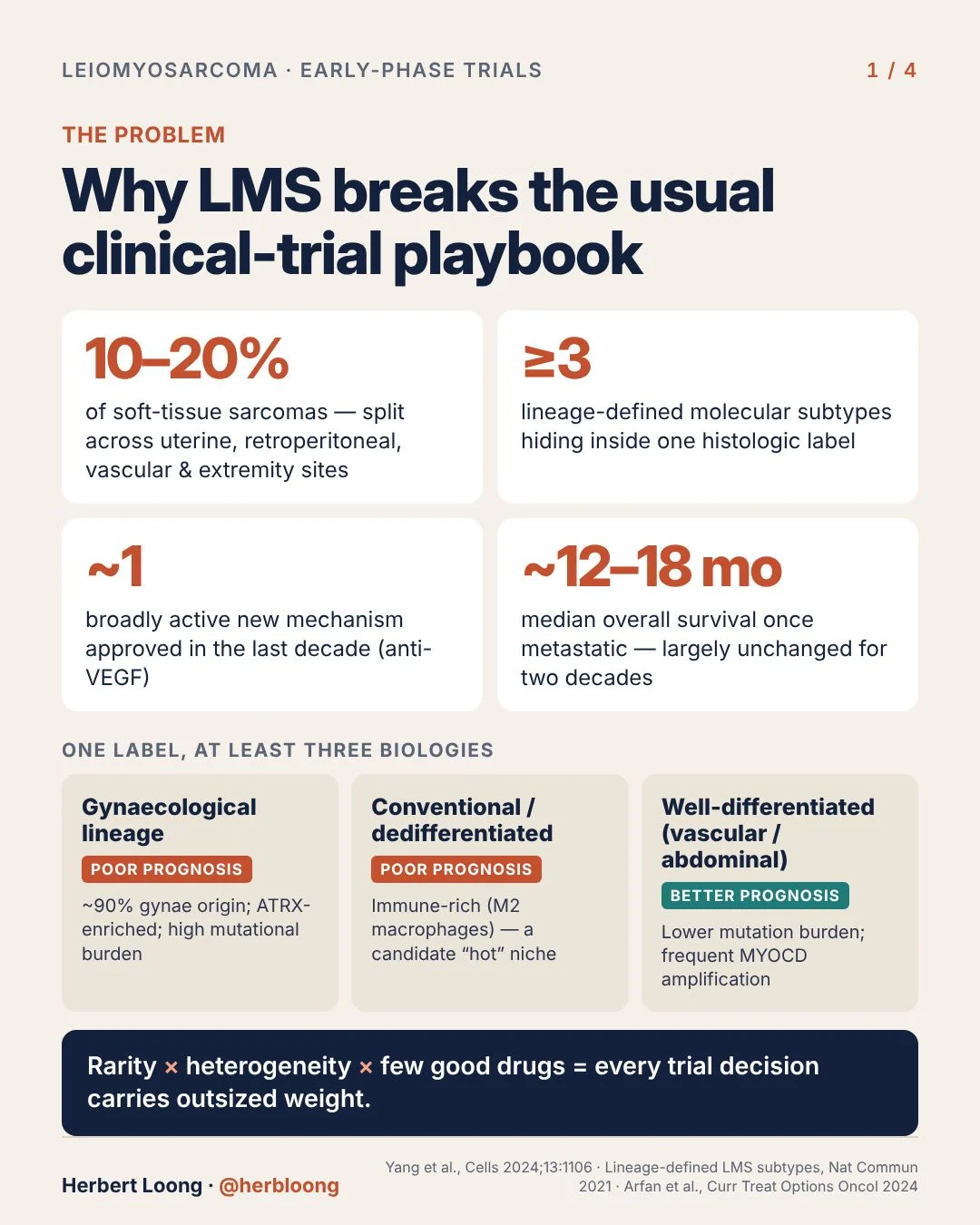
The problem. LMS makes up 10–20% of soft-tissue sarcomas, but it is spread across uterine, retroperitoneal, vascular and extremity sites. Under one histologic label are at least three distinct biologies with different prognoses. Median survival once metastatic (~12–18 months) has barely moved in two decades.
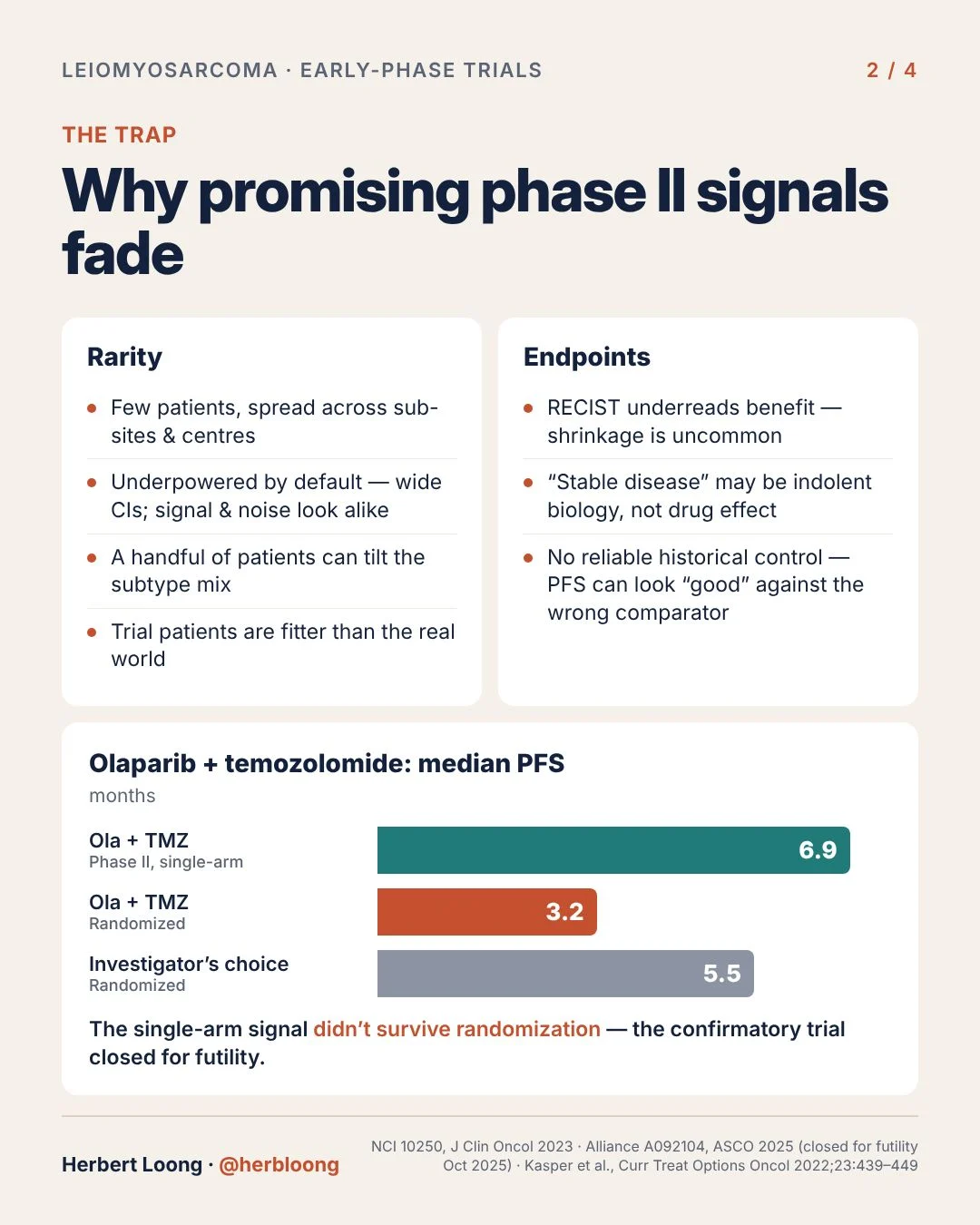
The trap. Small numbers, subtype imbalance and selection bias make trials underpowered by default. RECIST underreads benefit in a slow-growing disease, and ‘stable disease’ may reflect indolent biology rather than drug effect. A cautionary example is olaparib plus temozolomide: median PFS was 6.9 months in a single-arm phase II, but 3.2 months vs 5.5 months with investigator’s choice once randomized. That trial closed for futility.
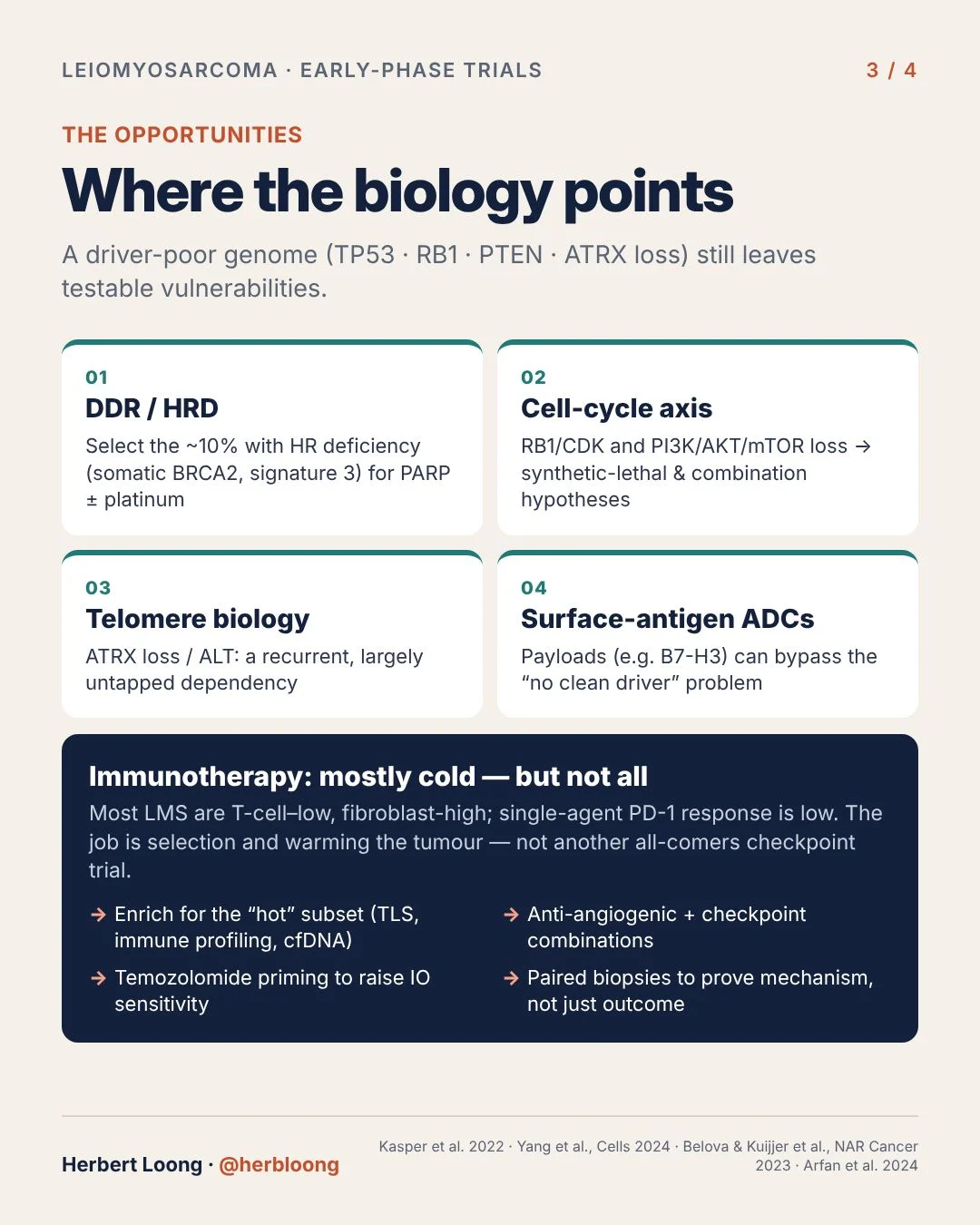
The opportunities. The genome is driver-poor, but vulnerabilities remain:
~10% have homologous-recombination deficiency (PARP ± platinum)
the cell-cycle and PI3K/mTOR axes
ATRX loss / telomere biology
surface-antigen ADCs
Most LMS are immune-cold, but a ‘hot’ subset exists. The task is selecting those patients and warming the tumour, not another all-comers checkpoint trial.
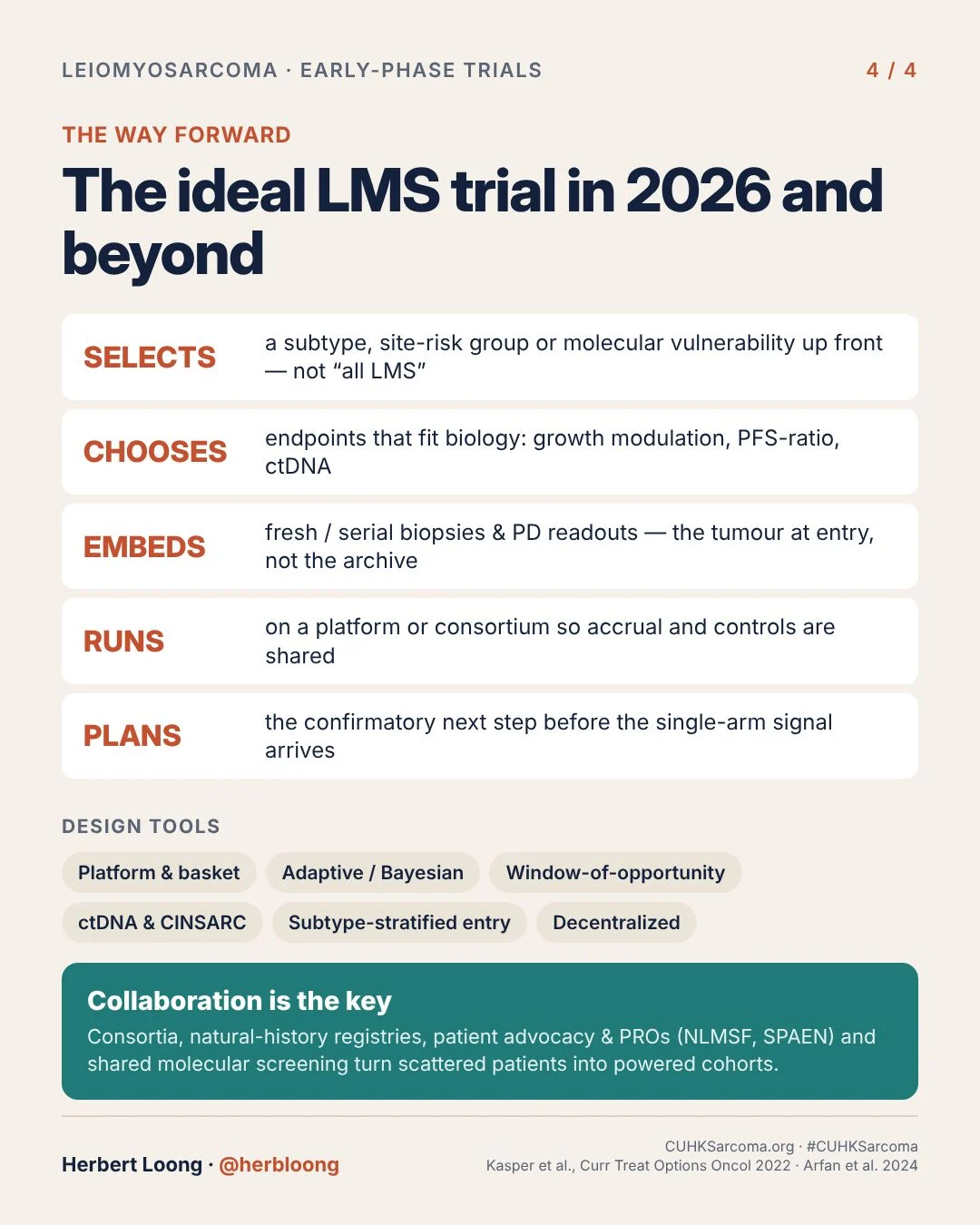
The way forward. The ideal LMS trial in 2026 and beyond:
selects a subtype or vulnerability up front
chooses endpoints that fit the biology (growth modulation, PFS-ratio, ctDNA)
embeds fresh biopsies
runs on shared platforms
plans its confirmatory step from day one
None of this works in isolation. Consortia, registries, patient advocates (NLMSF, SPAEN) and shared molecular screening are how we turn scattered patients into powered cohorts.
I’d welcome thoughts from colleagues in sarcoma and early drug development: what has worked in your trials?
Summary in the 4 cards.”
Other posts featuring Herbert Loong on OncoDaily.