





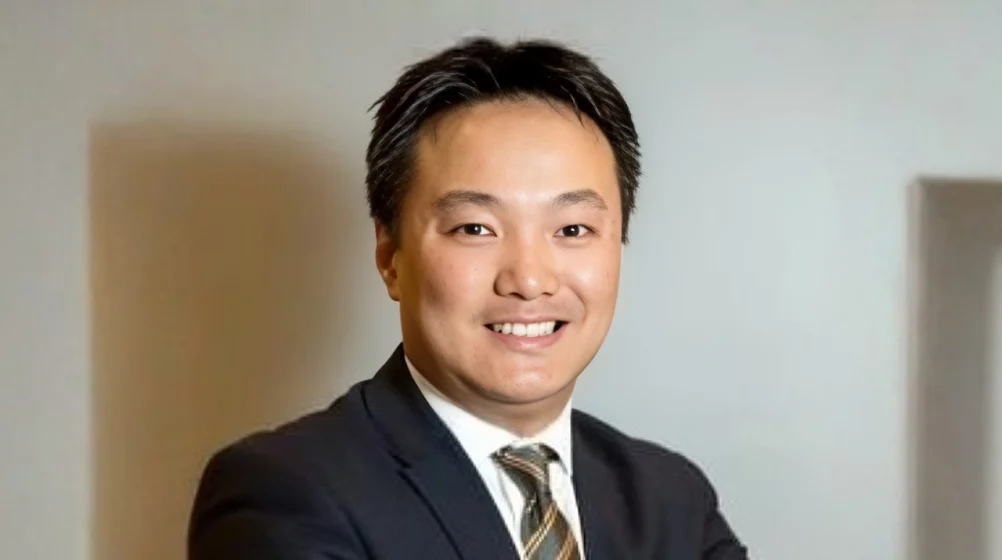
Herbert Loong, Clinical Associate Professor at The Chinese University of Hong Kong, Advisor at Greater Bay Area International Clinical Trial Institute (GBAICTI), shared on LinkedIn:
“‘Chemo brain’ doesn’t end when treatment does.
Led by Yin Ting Cheung and her PhD student Panpan Xiao, together with other colleagues in CUHK Pharmacy and Prof Chi-kong Li, our group has just published a new study in the Asia-Pacific Journal of Oncology Nursing — the first in a Chinese population to map how cognitive complaints shape everyday life for adolescent and young adult (AYA) cancer survivors.
Cancer at ages 15–39 lands at exactly the moment careers, independence, and higher-order thinking are meant to be peaking. So what happens to the mind after treatment really matters. The team studied 421 survivors in Hong Kong (mean age 31.5, 3+ years post-diagnosis) and compared them with community controls using the CCSS-Neurocognitive Questionnaire.
Key findings:
- Up to 1 in 4 survivors reported significant cognitive complaints — in emotional regulation (24.7%), task efficiency (23.5%), organization (20.2%), and memory (18.1%) — well above expected rates.
- Rather than treating everyone as one group, the study used latent class analysis to uncover three distinct phenotypes: no/mild complaints, complaints concentrated in higher-order thinking, and a ‘global’ profile with difficulties across every domain.
- The phenotype predicted real-world function. Compared with the no/mild group, survivors in the “global cognition” class had far higher odds of role limitations — at home (OR 7.81) and at work or school (OR 5.43).
Cultural context matters, too. In collectivist, family-centric settings, stigma and filial obligation can lead survivors to under-report subtle deficits — a reminder that Western norms don’t simply transfer.
The takeaway: cognitive complaints aren’t a single thing. Phenotyping them can help flag which survivors need early cognitive rehabilitation, workplace and school accommodations, and family support — before difficulties become entrenched.
Sincere thanks to Prof. Cheung, Panpan, and the whole CUHK Pharmacy team — and to every patient who made this work possible.”
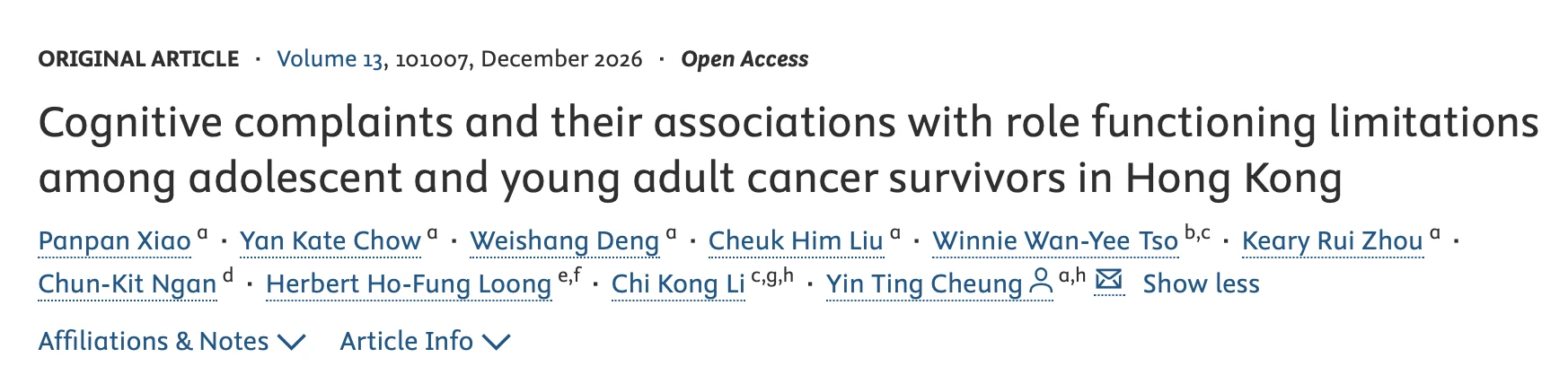
Title: Cognitive complaints and their associations with role functioning limitations among adolescent and young adult cancer survivors in Hong Kong
Authors: Panpan Xiao, Yan Kate Chow, Weishang Deng, Cheuk Him Liu, Winnie Wan-Yee Tso, Keary Rui Zhou, Chun-Kit Ngan, Herbert Ho-Fung Loong, Chi Kong Li, Yin Ting Cheung.
Read the Full Article on Asia-Pacific Journal of Oncology Nursing
Other posts featuring Herbert Loong on OncoDaily.