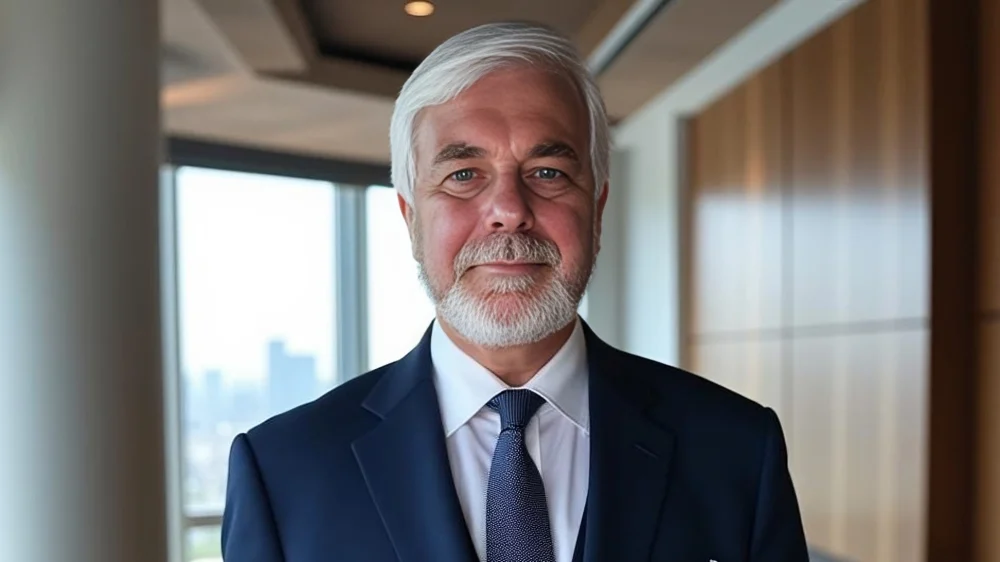
Hans Casteels, Cancer Survivor, shared a post on Substack:
“There is a particular burden placed upon people after cancer treatment, as though surviving were not enough and one must now provide quarterly evidence that the survival is being used responsibly. You are told to live fully, cherish every moment, seize the day, follow your dreams, repair your relationships, travel somewhere involving linen trousers, and develop a meaningful appreciation for sunsets. Apparently the cancer was merely the opening act. The real challenge is becoming the sort of person who can look at a Tuesday afternoon and extract from it a life lesson, a spiritual awakening, and perhaps a tasteful photograph for social media.
Before cancer, a Tuesday was allowed to be a Tuesday. You could go to the grocery store, discover that avocados had once again been priced as luxury minerals, come home, reorganize a drawer, and consider the day largely complete. After cancer, however, Tuesday becomes borrowed time, and borrowed time has acquired the administrative atmosphere of a bank loan. It must be invested wisely. It must produce returns. It must not be frittered away on crossword puzzles, hockey games, naps, or standing in the garage trying to remember why you came into the garage. Somewhere, an invisible committee is reviewing your survivorship and noting that you have not been to Tuscany.
The phrase ‘borrowed time’ is itself suspicious. Borrowed from whom, exactly? Is there a celestial loan officer keeping track? Will someone eventually appear at the door and say,
‘Mr. Casteels, according to our records, you received an additional seven years, three months, and eleven days, but spent forty six afternoons watching cycling and at least twelve hours sorting screws by size. We are afraid this constitutes misuse of existential credit.’
The idea sounds profound only because nobody examines it too closely. Once examined, it begins to resemble most human wisdom, which is to say a decorative sentence covering a large amount of anxiety.
The pressure begins almost immediately. People tell you that cancer has given you a new appreciation for life. This is often stated by people who have not had cancer but have seen several inspirational refrigerator magnets. Cancer, in their telling, is a stern but ultimately helpful life coach. It strips away the trivial, reveals what matters, and encourages you to embrace each dawn. This is an appealing theory provided you ignore the pain, fear, damaged organs, ruined sleep, lost income, altered relationships, and the possibility that dawn is occurring after another night of getting up four times to urinate.
There is also the expectation of transformation. You are supposed to emerge from treatment wiser, calmer, more grateful, and less concerned with petty irritations. This is nonsense. Many people emerge from treatment tired, suspicious, slightly incontinent, and even more irritated by poor customer service. Cancer does not necessarily turn a person into a sage. Sometimes it merely turns a person into someone who knows where every washroom is located within a twenty kilometre radius. This is useful knowledge, but it will not be quoted by the Dalai Lama.
The demand to live fully can become one more impossible treatment protocol. It has no clear dosage, no agreed endpoint, and a formidable list of side effects, including guilt, restlessness, and the belief that one is failing at survival. Should you be travelling? Perhaps. Should you be reconciling with estranged relatives? Possibly, although some relatives are estranged for sound engineering reasons. Should you be creating art, volunteering, meditating, learning Italian, growing organic vegetables, writing letters to your grandchildren, and gazing across lakes with an expression of noble acceptance? This sounds less like living and more like a very demanding adult education program.
The trouble is that once you have been told time may be short, every ordinary choice begins to feel morally significant. Reading a mediocre novel is no longer merely reading a mediocre novel. It is consuming irreplaceable life. Watching two episodes of a television series becomes an ethical crisis. Taking a nap may feel like throwing away an afternoon personally granted by the universe. Even doing nothing becomes difficult because you are now intensely aware that you are doing nothing, which requires more concentration than most forms of work.
This is how cancer manages to colonize time even after treatment ends. During treatment, life is divided into appointments, scans, blood tests, injections, results, and waiting rooms decorated by someone with a personal hostility toward colour. After treatment, cancer remains in the calendar as a silent auditor. It asks whether each day is meaningful enough. It sits beside you while you drink coffee and suggests that perhaps you should be climbing a mountain. It watches you clean the garage and wonders whether you have learned anything about mortality.
But what if reorganizing the garage is exactly what you want to do? What if there is deep satisfaction in throwing out seventeen dried paint cans, discovering a socket wrench believed lost since 2009, and arranging garden tools in a manner that briefly implies control over the universe? Why should this count as lesser living? Human beings have always had a peculiar weakness for confusing spectacle with meaning. Travel is meaningful. Sunsets are meaningful. Reconciliation is meaningful. Yet sitting quietly with a dog, making soup, sharpening knives, planting beans, or finally fixing the cabinet door that has hung crooked for six years is somehow considered insufficiently profound.
The cancer patient is encouraged to make memories, as though ordinary life does not produce them. This usually means going somewhere expensive and standing in front of something old. There is nothing wrong with travel, but the idea that life is more fully lived near the Mediterranean than near a Canadian hardware store is marketing, not philosophy. Some of the best moments in life are almost aggressively unimpressive. A conversation at the kitchen table. A grandchild saying something absurd. A dog asleep with complete confidence that civilization has been properly organized around her comfort. A piece of toast with good butter. None of these activities will impress the invisible committee, which is one reason they matter.
There is also a quiet cruelty in asking sick people to perform gratitude. They must not only survive but be seen to appreciate survival correctly. They should smile more readily, complain less frequently, and regard every inconvenience as a precious reminder that they are alive. This would be easier if being alive did not continue to involve insurance forms, construction noise, political stupidity, and telephone menus designed by people serving several consecutive life sentences in hell. Gratitude may be real, but it is not constant, and demanding that it become constant turns it into another obligation.
The truth is that nobody lives fully all the time. This phrase describes no actual human life. People live intermittently, distractedly, inconsistently, and often while looking for their glasses. They have magnificent afternoons and pointless mornings. They waste time, find time, lose time, and spend an astonishing amount of it trying to remember passwords. Cancer does not repeal this condition. It merely makes people more aware of it, which is not always the gift outsiders imagine.
Perhaps the better response is to reject the entire performance. Time does not have to be maximized. It does not have to justify itself. A day is not a failure because nothing memorable happened. An afternoon spent reading, resting, cooking, cleaning, wandering, or staring through a window is not stolen from life. It is life. The ordinary does not become unworthy simply because death has entered the conversation.
There is courage in refusing to turn survival into a productivity contest. There is freedom in deciding that borrowed time, if that is what we insist on calling it, may be spent without explanation. You may travel or stay home. You may reconcile or preserve a perfectly sensible silence. You may write a book, build a shed, learn the piano, watch bad television, or spend three hours sorting screws into jars. You are not required to become inspirational merely because something terrible happened to you.
The great privilege is not living fully. Nobody knows what that means, and anyone claiming otherwise is probably selling a retreat. The privilege is living honestly. Some days will be luminous. Some days will be tedious. Some days will involve medical fear, household chores, laughter, grief, and a trip to Canadian Tire, all before lunch. None of this needs to be elevated into a lesson.
An uneventful Tuesday is not a moral failure. It does not need a sunset, a revelation, or a passport stamp. It only needs to belong to you. After everything cancer has already taken, that may be the one thing worth defending most fiercely: the right to spend whatever time remains badly, beautifully, meaninglessly, gratefully, irritably, quietly, and entirely on your own terms.
If I May… If this essay made you pause, laugh, or feel slightly less guilty about spending an afternoon doing absolutely nothing remarkable, please consider helping us do something very concrete for the neonatal intensive care unit where my daughter works. We are raising funds for two new bassinets, each costing about $30,000, because the smallest patients in the hospital do not need inspirational slogans about living fully. They need warmth, safety, skilled hands, and equipment that works. I do not charge for these essays, but a donation to the NICU would help turn a few minutes of borrowed reading time into something that may give a newborn much more of it.
The essays will remain free. The bassinets, unfortunately, are not.
You can also read:
Muna Al-Khaifi: Why Cancer Survivorship Must Begin at Diagnosis