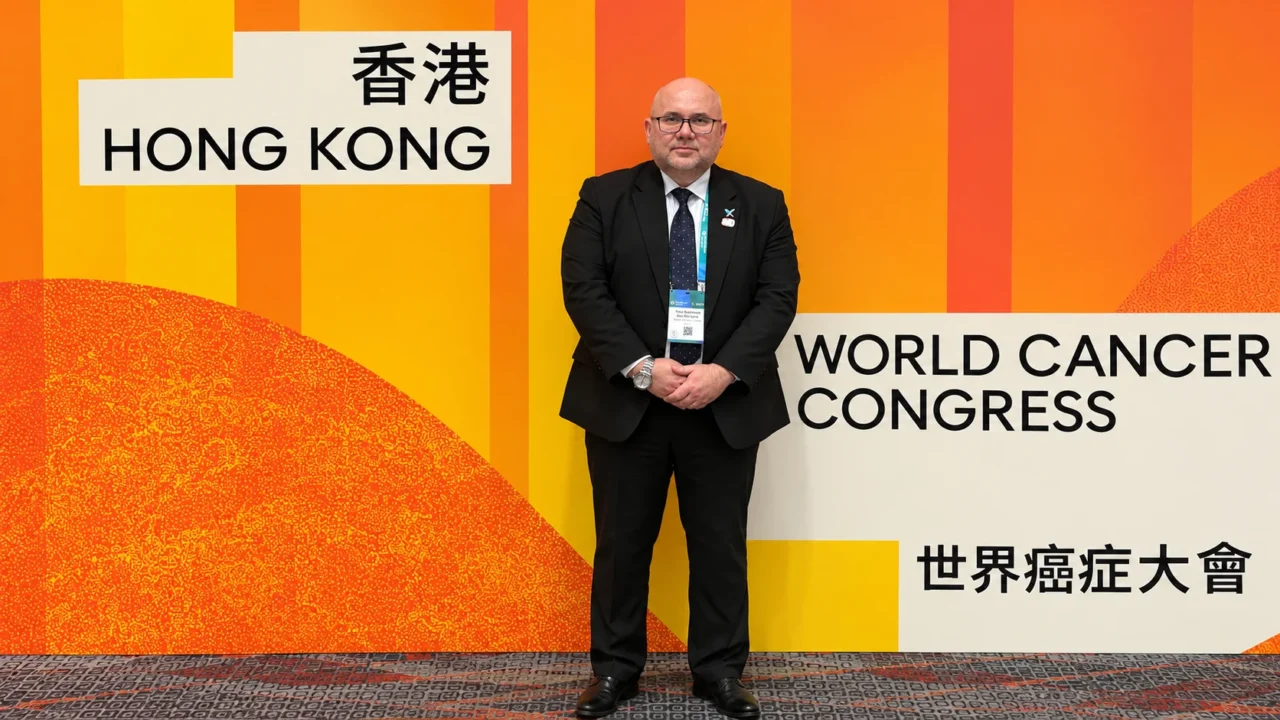
Hadi Mohamad Abu Rasheed, Scientific Advisor and Director of Programs at Qatar Cancer Society, shared on LinkedIn:
“Are we facing a shortage of cancer-control knowledge – or a shortage of implementation?
This was one of the questions I kept returning to after the UICC World Cancer Congress 2026 in Hong Kong.
The global challenge is significant. WHO and IARC estimate around 20.6 million new cancer cases annually, with the number projected to approach 35 million by 2050.
At the same time, our knowledge has never been stronger. We have better prevention evidence, screening approaches, precision oncology, digital health, AI and increasingly sophisticated treatments.
So the policy question is changing.
It is no longer only. “What works?”
We also need to ask: Can we implement it equitably? Can we finance it? Can we sustain it? Can we measure whether it worked — and whether it improved outcomes that matter to people?
The new World Cancer Declaration 2025–2035 provides ambitious global targets and principles. But declarations become meaningful only when they translate into governance, financing, workforce, data, accountability and action.
For me, this is increasingly where cancer policy, implementation science and people-centred care meet.
Ambition gives us direction. Implementation determines impact.”
You can also read: Mary Nafula: World Cancer Congress – Advocate Events Insights