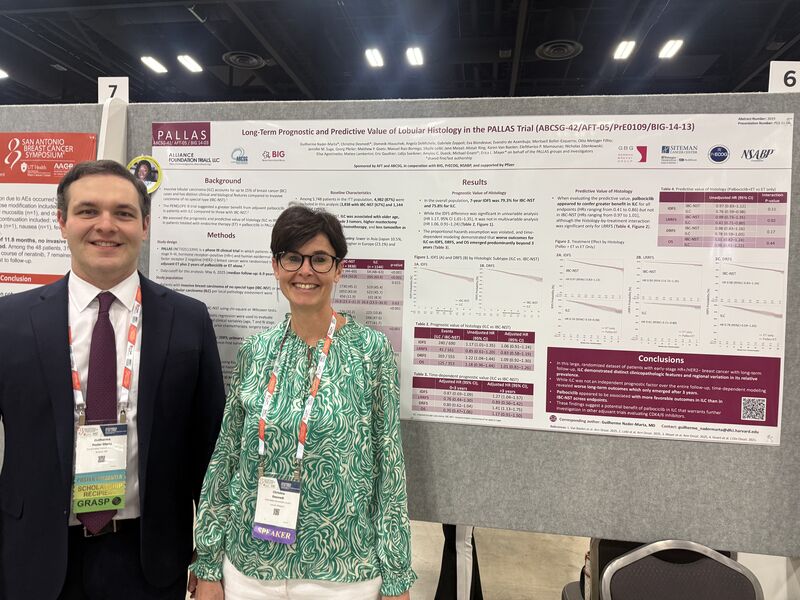
Guilherme Nader Marta, Advanced Clinical Fellow at Dana-Farber Cancer Institute, shared on LinkedIn:
“At this year’s San Antonio Breast Cancer Symposium, I had the opportunity to present 2 complementary analyses focused on invasive lobular breast cancer, addressing both biological and clinical questions.
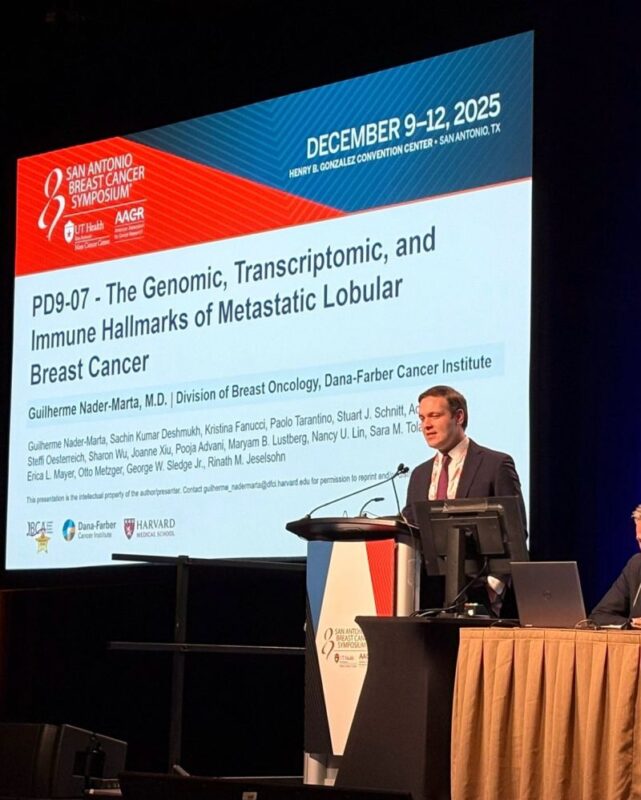
One study, conducted in collaboration with Caris Life Sciences, leveraged a large multi-omic dataset to characterize the genomic, transcriptomic, and immune features of metastatic disease. The analysis demonstrated a high prevalence of potentially actionable genomic alterations, alongside a distinct molecular profile compared with “ductal” tumors. We also observed differences across immune-related features, including patterns of immune infiltration and checkpoint gene expression, highlighting the biologic heterogeneity of metastatic lobular breast cancer and the need to take histology into consideration in translational analyses.
The second analysis was based on the prospective PALLAS trial and examined long-term outcomes according to histology. These data suggest that lobular breast cancer follows a different clinical trajectory over time and raise the hypothesis that this subtype may derive differential benefit from adjuvant CDK4/6 inhibition. Importantly, similar signals were previously observed in the PENELOPE-B trial, where a greater benefit of palbociclib was suggested among patients with lobular histology, lending consistency to these observations across independent datasets.
The discussions around these analyses highlighted both the progress made and the important questions that remain regarding histology-specific treatment effects.
I was honored to receive the Lobular Breast Cancer Alliance Inc. Research Merit Award and the SABCS Young Investigator Award. I am very grateful for this recognition, which reflects the work of many collaborators, mentors, and colleagues, as well as the patients who make this research possible!”
More from Guilherme Nader Marta.