Giuseppe Caruso, Medical Consultant at The European Institute of Oncology, shared on LinkedIn:
“An interesting New Issue in Gynecologic Oncology journal
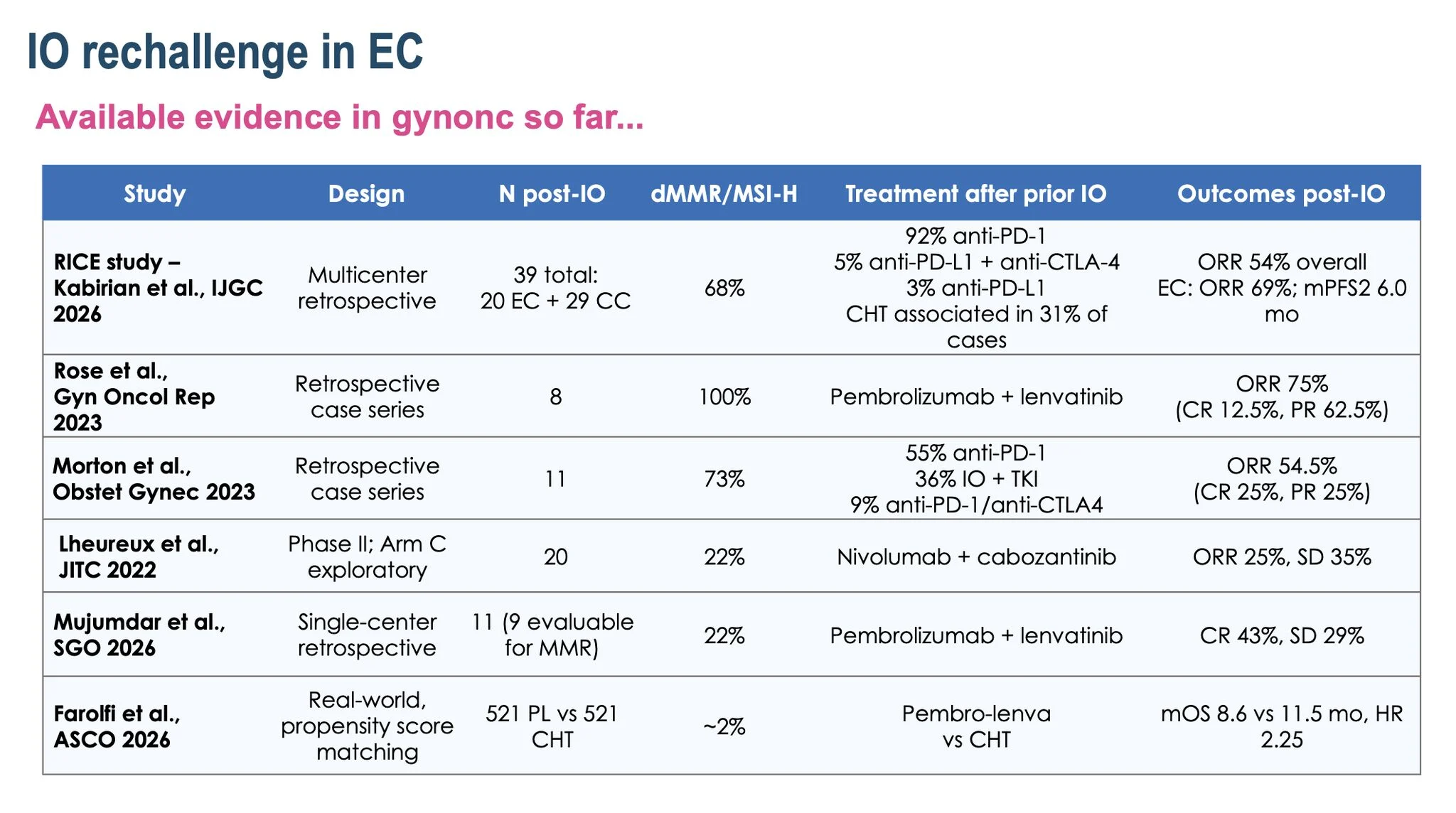
With a very important topic, IO rechallenge. It’s great to see the academic community working so hard to collect evidence, even if it’s still mostly retrospective.
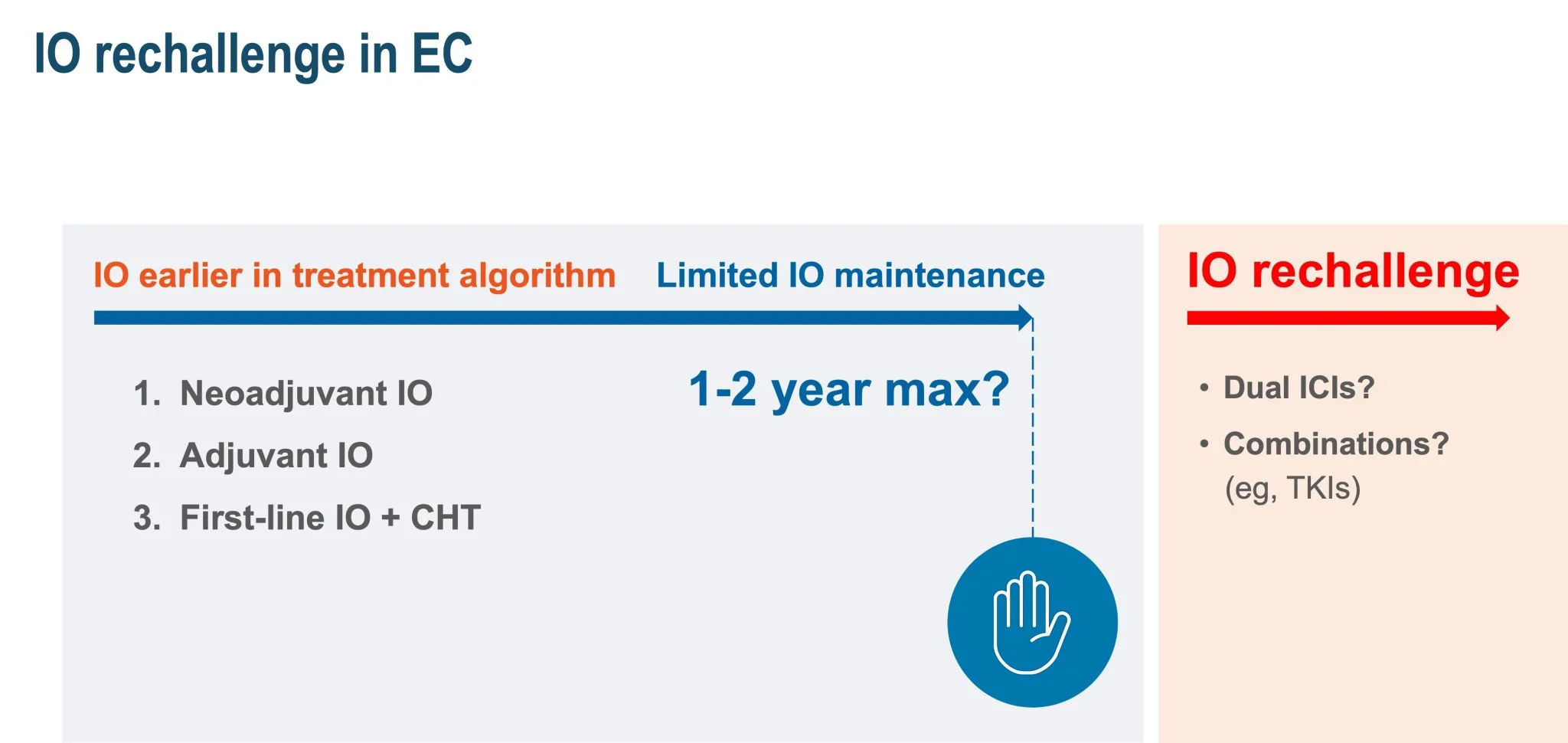
More and more of our patients with EC and CC now get immunotherapy early: first-line, adjuvant, even neoadjuvant. So at progression we’re seeing a new question more often: is IO already ‘used up’ (Picture 1)?
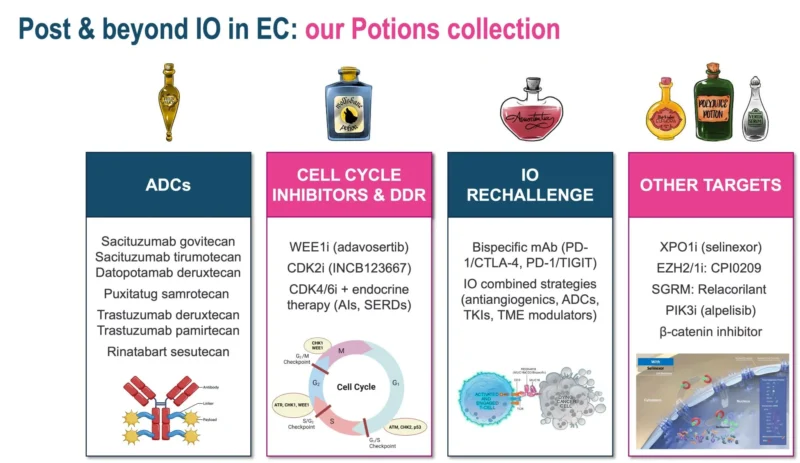
Our post-IO treatment collection keeps growing (Picture 2): ADCs, cell cycle/DDR inhibitors and new targets. But IO rechallenge is still one we shouldn’t set aside too early.
New data from the Ohio State group (Chalif et al., Gynecol Oncol 2026), expanding their earlier series. They studied 50 patients with recurrent EC (n=36) or CC (n=14) who got IO again after prior IO exposure:
- ORR: 27.8% in EC and 14.3% in CC
- Disease control rate: 55.6% in EC and 64.3% in CC
- Median PFS on the second IO: 8.1 months in EC and 9.7 months in CC, similar to the first IO exposure
- In EC, ORR was the same whether tumours were MMRp or MMRd (27.8% vs 29.4%)
- Grade 3/4 irAEs: 20%
Of course it’s another retrospective, single-centre study, responses weren’t assessed by RECIST.
Still, it adds to the growing evidence (Picture 3) that earlier IO doesn’t always rule out later IO rechallenge. What we really need now are prospective trials (eg, NRG-GY025 is ongoing) exploring novel IO combo strategies, and biomarkers to pick the right patients.”
You may also be interested in: Gynecological Cancers, Cancer Vaccines & Immunotherapy: Are We Near Elimination?