






Giuseppe Caruso, Gynecology Oncology Specialist at European Institute of Oncology, shared a post a post on LinkedIn:
“Are all MMRd endometrial cancers (EC) really the same?
We often treat MMRd ECs as a single entity — but the biology tells a more nuanced story.
MMRd is heterogeneous:
- ~70% MLH1 promoter methylation
- ~10% Lynch syndrome
- ~20% other somatic alterations
Large trials like RUBY and NRG-GY018 showed similar survival benefit from chemo-immunotherapy regardless of the mechanism of MMR loss. Yet, up to 30% of MMRd patients progress within 12 months on 1L immunotherapy — a reminder that not all MMRd ECs behave the same.
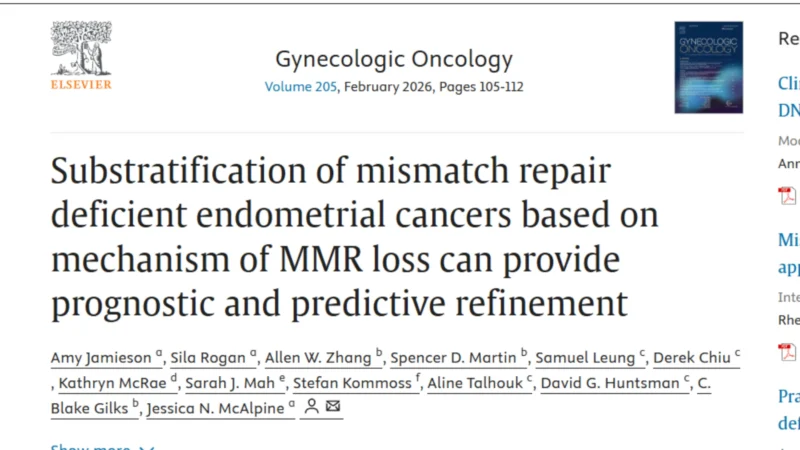
A new large cohort study adds to the debate, showing that MLH1 loss identifies a subgroup with worse outcomes, lower CD8+ TIL density, and distinct clinicopathologic features, supporting substratification within MMRd disease. Amy Jamieson – Jessica McAlpine
So where does this leave us?
- Chemo-immunotherapy is the standard for MMRd EC.
- But biology matters — mechanism of MMR loss may influence prognosis, immune landscape, and possibly response.
The next frontier: refining biomarkers beyond “MMRd” to better predict who benefits — and who doesn’t.
MMRd is a good biomarker. But it is not the whole story.”
Title: Substratification of mismatch repair deficient endometrial cancers based on mechanism of MMR loss can provide prognostic and predictive refinement
Authors: Amy Jamieson, Sila Rogan, Allen W. Zhang, Spencer D. Martin, Samuel Leung, Derek Chiu, Kathryn McRae, Sarah J. Mah, Stefan Kommoss, Aline Talhouk, David G. Huntsman, C. Blake Gilks, Jessica N. McAlpine
Read the Full Article.
Other articles featuring Giuseppe Caruso on OncoDaily.