





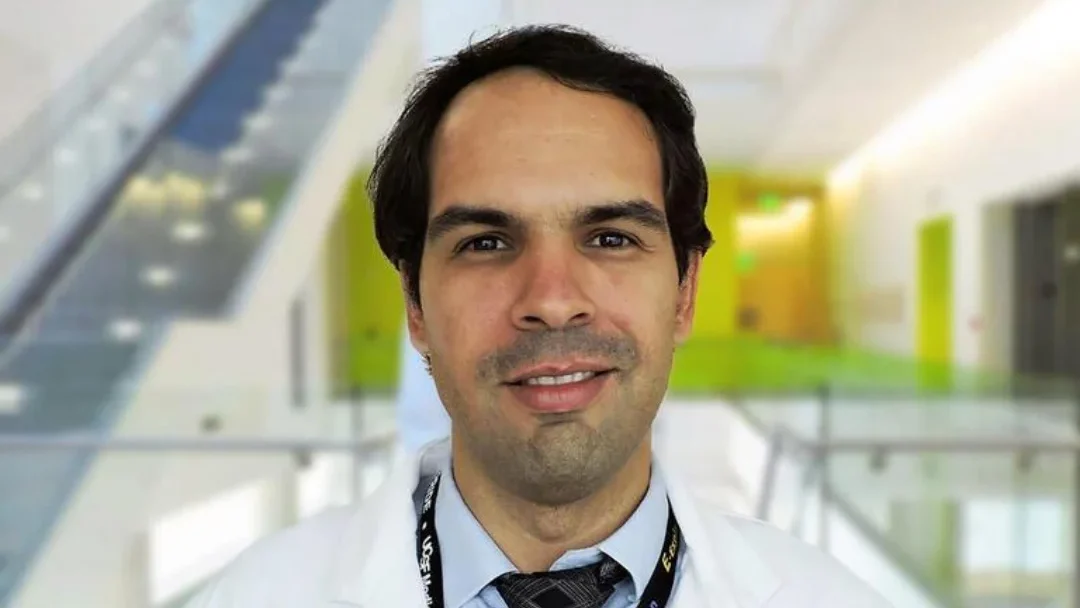
Gilmer Valdes, CEO and Founder of OncoBrain Inc., shared an article on LinkedIn:
“Approximately 30 million Americans live in counties without an oncologist.
And since ~80% of cancer patients are treated in regional, rural, or community centers, the ZIP code where a patient starts treatment can become one of the biggest predictors of 5-year survival.
Meanwhile, academic cancer centers often achieve meaningfully better outcomes—my institution, Moffitt Cancer Center, has ~4x better outcomes than the national average in some settings.
This gap is massive, and it costs lives.
We must solve this problem now.
We need a way to reliably determine the optimal, guideline-concordant plan for each patient, incorporate patient preferences, and then operationalize that plan so it can actually reach the patient (appointments, testing, authorizations, referrals, logistics).
Cancer care shouldn’t depend on where you live or how much bandwidth a clinic has that week.
Today we’re coming out of stealth to launch OncoBrain Inc.
We are very proud to have become a portfolio company for AccelerOnc Studio, the first venture studio dedicated fully to cancer.
I’m also proud to share that OncoBrain has been selected by CancerX as one of this year’s cohort companies Banting AI, CareYaya Health Technologies, Cerula Care, Cystotech, Entia, F-U Cancer, LivAi Inc, MyCareGorithm, The WiTT Group, Tono Health, and WittGen Biotechnologies.
Looking forward to working with this fantastic group.
CancerX is a national public-private initiative bringing together +40 cancer centers, industry, government, and patient advocates to accelerate innovations that can be deployed at the point of care—where patients are treated.
I, personally, didn’t fully understand the magnitude of this problem two years ago.
My training path was entirely within academic centers: medical physics at UCLA, residency in therapeutic medical physics at University of Pennsylvania, faculty at UCSF, and AI research training (NIH K08) across UCSF–UC Berkeley–Stanford, before becoming Director of Clinical AI at Moffitt. Do you see the pattern?
These are academic centers where we discuss and create the newest precision diagnostics and therapies—yet most patients won’t benefit unless that progress reliably reaches their point of care.
I learned the urgency of this problem from our clinicians at Moffitt while building our clinical AI platform (BlueScrubs)—Patrick Hwu , Karen Lu, Philippe Spiess , Robert M Wenham, Daniel Anaya, Michael Vogelbaum, Alison R. Walker, and Dr. Liu —who pushed us to confront what community teams face every day: oncology decision-making is becoming exponentially more complex.
Guidelines help, but they change too fast for any human to track, and their nested logic is very hard to apply safely at the bedside with standard AI approaches (out of the bag RAGs).
At OncoBrain we are building the first Artificial Oncologist—a peer that sits next to the clinician to help craft the optimal plan for each patient.
It must be a peer – more than an assistant or a chat – because an oncologist can’t get an answer to a question, she or he didn’t know they had to ask.
My clinical training and experience in radiation oncology shaped our approach: in radiotherapy, planning is disciplined and auditable—explicit constraints, transparent trade-offs, rigorous QA, and clinician sign-off before radiation reaches a patient.
We’re extending that planning philosophy across systemic therapy, surgery, and radiation to create the first oncology-wide treatment planning system.
And we’re building it the principled way: created by oncologists for oncologists, with prospective testing, transparency, safety guardrails, measurable endpoints, and real workflow integration—so it delivers value at the point of care while protecting patients and clinicians.
Thank you to Moffit Cancer Center for incubating this work, and especially Kamal Jethwani and Xavier Avat for believing from the beginning.
Thank you to our Mofffitt board for being future looking and truly caring about our mission to prevent and cure cancer, everywhere.
And thank you to the clinicians who keep testing our platform and holding us to the highest standard.
Thank you as well to the entire OncoBrain team for being true partners on this journey.
I’m also grateful to Moffitt’s Machine Learning Department and the Radiation Oncology Department, led by Issam El Naqa, Dana Rollison,, KosJ Yamoah, Eduardo G. Moros, where I had the privilege of serving as faculty and where many of these foundations were shaped.
Deep thanks as well to John L. Cleveland, for encouraging research at the intersection of science and entrepreneurship, and to my research collaborators who laid the groundwork:
Md Muntasir Zitu, Marcia Amnay, Monique Shotande, Luis Felipe, Ghulam Rasool , Aakash Tripathi, Phillip Reisman, Vivek Rudrapatna.
Thanks to our IT department who has put up with me for a year Jacqueline (Sissy) Schilling, Jeff Baker, Seth Peterson, Elizabeth Lindsay-Wood, and our legal team that has made sure we remain compliant in this journey Paula Kanne, Stephanie Velasquez, and Daniel Hernandez.
Our promise: we will build OncoBrain with humility and rigor—because patients deserve nothing less.
First, do no harm.”
More posts from Moffit Cancer Center.