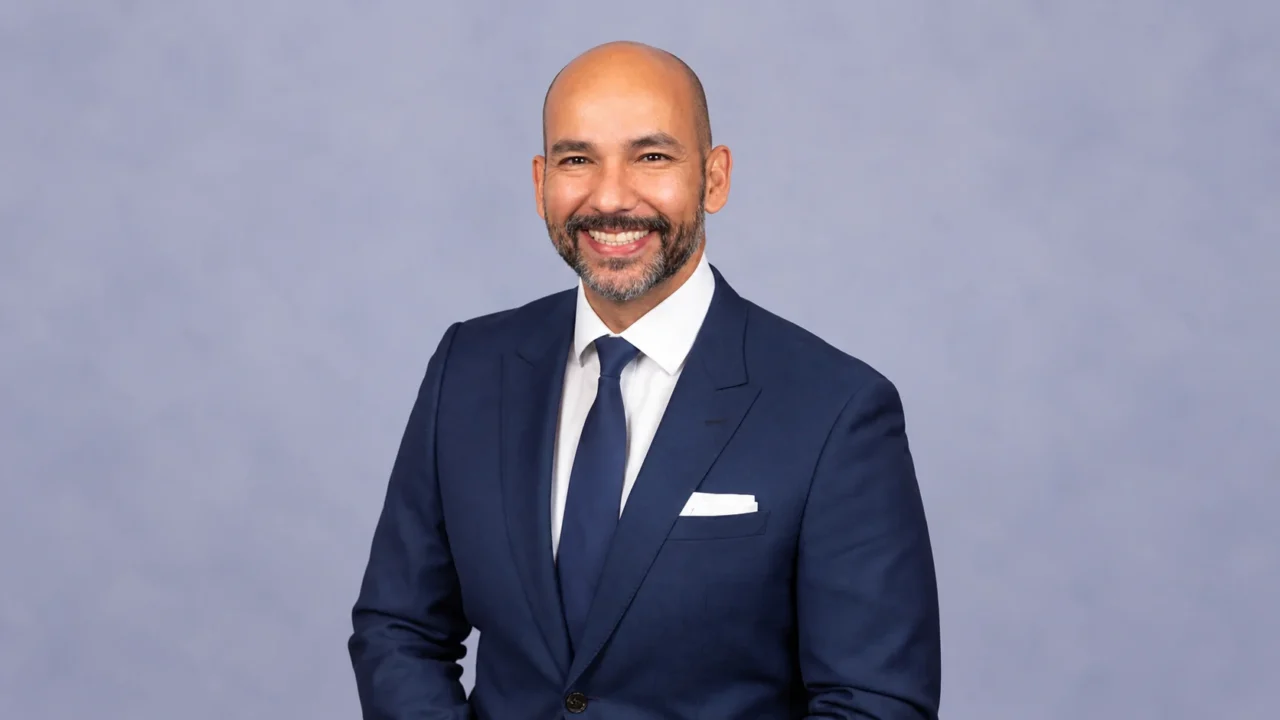
Gilberto Lopes, Professor and Chief of the Division of Medical Oncology at Sylvester Comprehensive Cancer Center, University of Miami Miller School of Medicine, shared on LinkedIn:
“In 2009, ‘decoupling‘ meant hoping Asia could grow despite an American downturn. Today, it means deliberately weakening US-China connections.
Returning to Singapore in September 2026, I reread a letter I wrote during the financial crisis-and saw what years of investment in healthcare had built. ‘The Other Decoupling‘ reflects on a lesson for families and countries alike: protection against uncertainty has to be built before it is needed.”
Then he added an article.
“In September I went back to Singapore and reread a letter I wrote there in 2009, during the global financial crisis. Days later, Xi Jinping landed in Washington.
In January 2009, I walked through a strangely quiet San Francisco. I had come for a cancer conference, four months after the collapse of Lehman Brothers and days before Barack Obama’s inauguration. On a mild winter evening, children skated on an artificial ice rink in Union Square. Inside the department stores, sales associates waited for customers who did not come. On the street, a woman asked me for ten dollars to help pay her rent. I gave it to her, only half-believing her story.
Back in Singapore, where I practiced oncology with Johns Hopkins Singapore at Tan Tock Seng Hospital, I wrote a letter to the Singapore Medical Journal about the crisis and what it might mean for medicine. I called it ‘Fin de siècle‘. Reading it again seventeen years later, I hear the uncertainty of that moment, and an assumption I did not know I was making: that the world, for all its upheavals, still shared an economic center of gravity.
I was a Brazilian physician working for an American university in a Singaporean hospital, caring for patients from across Asia and beyond. The arrangement was unusual, though to me, and many others, it felt ordinary. My working life depended on the movement of people, capital and knowledge across borders with an ease we had begun to take for granted.
One word in my letter has since changed meaning. ‘The decoupling,’ I wrote, ‘seems to be a vanished mirage by now.’ In 2009, decoupling was a hope: that China, India and the rest of emerging Asia had grown strong enough to keep expanding even as American demand contracted. They had not escaped their dependence on demand elsewhere. The shock travelled along the same connections that had built the boom.
Today decoupling names a deliberate project, the effort to cut or weaken those connections. Washington and Beijing restrict trade and technology in the name of security, each seeking room to act without being vulnerable to the other. Yet the two leaders keep meeting, a reminder of how difficult it is to pull two intertwined economies apart.
Xi’s state visit in late September, his first to Washington since 2015, showed both sides of that difficulty. The two governments extended their trade truce to January 10, agreed on recommendations for more favorable tariff treatment for about US$30 billion of goods in each direction, and established a dialogue on advanced artificial intelligence and a communication channel for incidents.
They endorsed a relationship based on respect, fairness and reciprocity. The principal disputes over chip export controls, rare earths and Taiwan remained unresolved.
For Beijing, the visit offered recognition as well as negotiation. But according to people familiar with the planning (who spoke to the South China Morning Post), proposals for broader engagement with American business leaders, students and technology executives did not make it into the program. The diplomatic welcome was expansive; the opportunities for engagement beyond it were carefully limited.
Some Chinese strategists describe the rivalry as a ‘strategic stalemate’, borrowing a phrase from Mao’s account of a prolonged struggle. I would not push that analogy too far. A state visit is not a battle plan. But it helps explain how a cordial summit can coexist with patient competition. Both sides have reasons to preserve stability while improving their position within it.
From Singapore, the cost of getting that balance wrong looks different than it does from either capital. China is a major trading partner; the United States is Singapore’s largest source of foreign direct investment. Much of Southeast Asia lives with a version of the same arithmetic. These countries cannot choose one relationship and dispense with the other. Nor can they wait for the two powers to settle their terms.
My old letter contained a detail that stayed with me. Amid falling revenues in 2009, Singapore committed S$4 billion over five years to healthcare infrastructure, including rebuilding older hospitals and constructing new medical centers. It was also developing a national electronic health record system. I praised those decisions without knowing what the subsequent buildings would look like.
Every working day I crossed the bridge from the Novena mall to Tan Tock Seng Hospital. When I crossed it again in September, the bridge was familiar, but the district around it had changed markedly: new clinical and teaching buildings, and a National Centre for Infectious Diseases that began operating in late 2018, before COVID-19 emerged.
One budget did not build it all. What struck me was the habit behind it: preparing institutions for a future no one could predict, at the very moment the pressure ran towards retrenchment.
A hospital takes years to plan, build and staff. When a crisis arrives, the capacity available to meet it depends partly on decisions made long before anyone knows its precise shape. Countries need diplomacy to reduce external dangers. They also need institutions that can protect their populations when diplomacy falls short.
Other parts of the letter I would write differently. I put considerable weight on personal responsibility and means testing. Years of caring for people with cancer have taught me how much lies beyond what any individual can manage, however responsibly they behave.
Singapore has moved too. In 2015, it introduced MediShield Life, providing lifelong basic health insurance for all citizens and permanent residents, including those with pre-existing conditions. I still believe health systems need efficiency. I now believe more strongly that they need protection already in place before illness overwhelms a family.
The two revisions turn out to be connected. In 2009, I placed greater faith in personal prudence and in the stability of the international order. I still value both. But neither is sufficient protection against shocks beyond a family’s — or a country’s — control. That protection has to be built before it is needed.
I ended that letter,
‘Good luck, President Obama. The whole world is counting on you!‘.
It was sincere. It also belonged to a moment when I thought one American president might restore an order on which much of the world depended. I am an American now, by choice, and I want my country to succeed. But I have spent much of my adult life as a foreigner somewhere, and I no longer think the rest of the world can wait for Washington, or Beijing, to put things right.
The bridge I crossed every morning was there before the district it now serves. Singapore built towards a future it could not see. Countries cannot determine the terms of great-power rivalry. They can strengthen the institutions that will help their people live through it.
The 2009 letter: Lopes G. Fin de siècle. Singapore Med J 2009;50(6):648–51.”
You can also read: ESMO Asia 2026 to Explore AI, Cancer Care Access, and Regional Guidelines in Singapore.