






Gianrico Farrugia, President and CEO at Mayo Clinic, shared a post on LinkedIn:
“In this post, we follow a patient, Emily, on a transformed healthcare journey.
Mayo Clinic is leading patient-centered healthcare transformation through our Bold. Forward. strategy, which aims to accelerate the discovery, translation, and delivery of more Cures for both chronic and acute diseases; to Connect people with data to create new knowledge and deliver scalable, end-to-end solutions; and to Transform healthcare by creating its first comprehensive, scalable, AI-enabled care transformation platform – Mayo Clinic Platform.
To accomplish true healthcare transformation, we are also transforming our physical spaces through Bold. Forward. Unbound. which reimagines space across all of Mayo Clinic’s campuses by introducing new facilities that combine innovative care concepts and digital technologies, blending inpatient and outpatient care to deliver and scale healthcare in entirely new ways.
To envision what care can look like in 2030, let’s trace a potential patient’s journey through Mayo Clinic of the future.
Meet Emily, a patient who begins her Mayo Clinic experience hundreds of miles away from Mayo Clinic in Rochester, to treat end-stage liver disease complicated by severe aplastic anemia, a condition where your bone marrow stops making enough new blood cells.
This complex diagnosis requires both a liver transplant and cell therapy for bone marrow failure. Through a virtual consultation that includes her local doctor and Mayo Clinic specialists, her care team conducts a thorough evaluation, develops a diagnostic and treatment plan, and establishes a trusted, warm relationship with her.
When it’s time to leave home to travel to Mayo Clinic, Emily receives digital directions, parking instructions, and a personalized itinerary through the Mayo Clinic digital interface. The digital interface provides step-by-step navigation from home to her assigned parking ramp, tailored to her appointment and mobility needs. Her itinerary, care team photos and contacts, and visit details are all available in the app, reducing uncertainty and supporting a seamless experience.
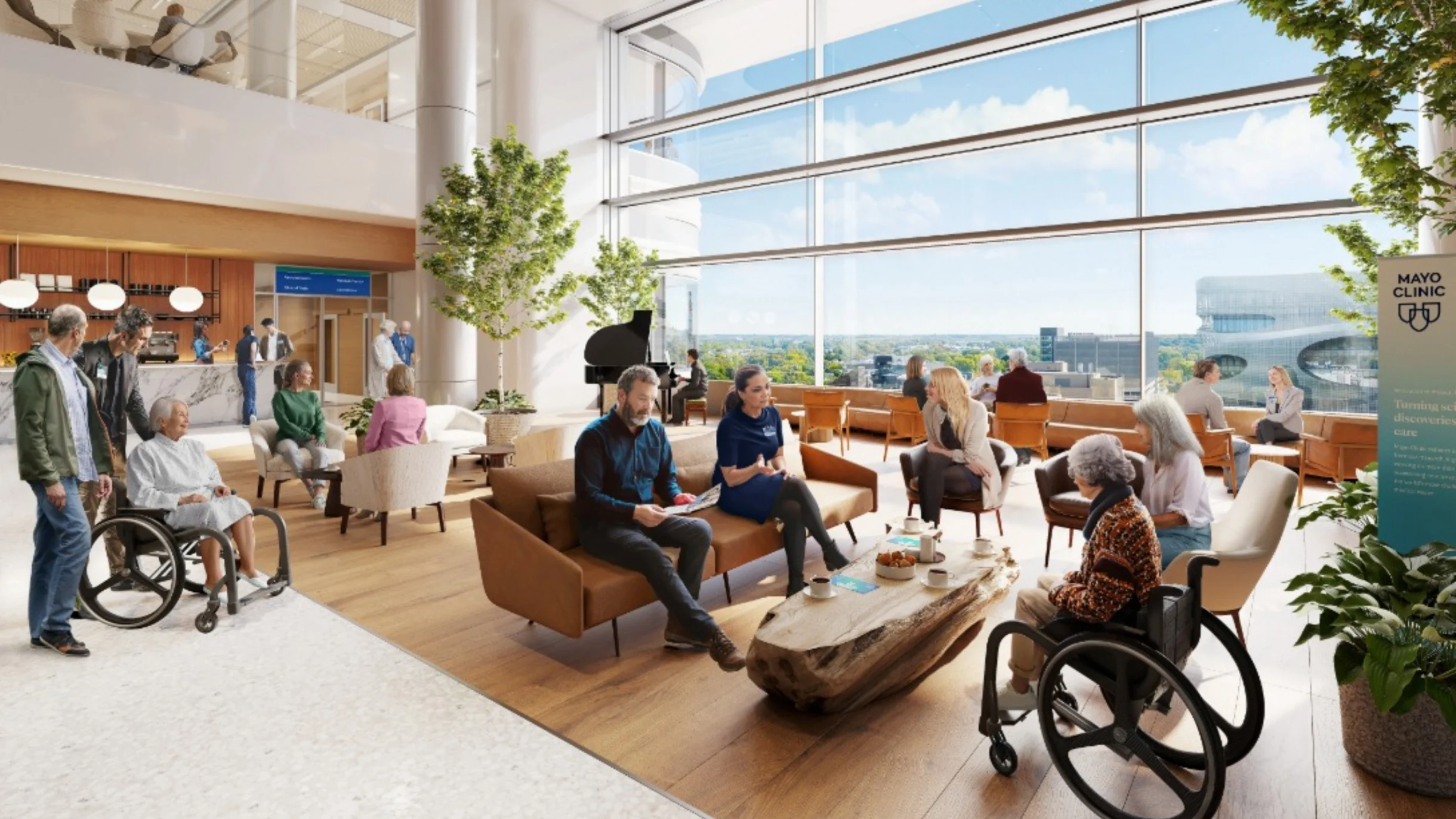
Upon her arrival, a dedicated support team easily recognizes and greets Emily, guiding her to her destination and ensuring she feels confident and cared for at every step.
While on campus, Emily becomes part of Mayo’s “Interconnected Complex Care Neighborhood,” a unique care environment specifically designed for patients with serious and complex conditions like Emily’s.
Unlike traditional healthcare settings where patients navigate between disconnected departments across a campus, neighborhoods bring together services in one centralized, welcoming environment.
The neighborhood features strategically connected, flexible spaces for the initial consultations to treatment planning to recovery support. These spaces can be reconfigured based on evolving needs.
Co-located diagnostic and treatment options mean Emily receives her imaging, lab work, and even procedures without going to another building.
Most importantly, the neighborhood includes comfortable spaces where she and her family can connect with other patients facing similar journeys, creating a supportive community during her treatment.
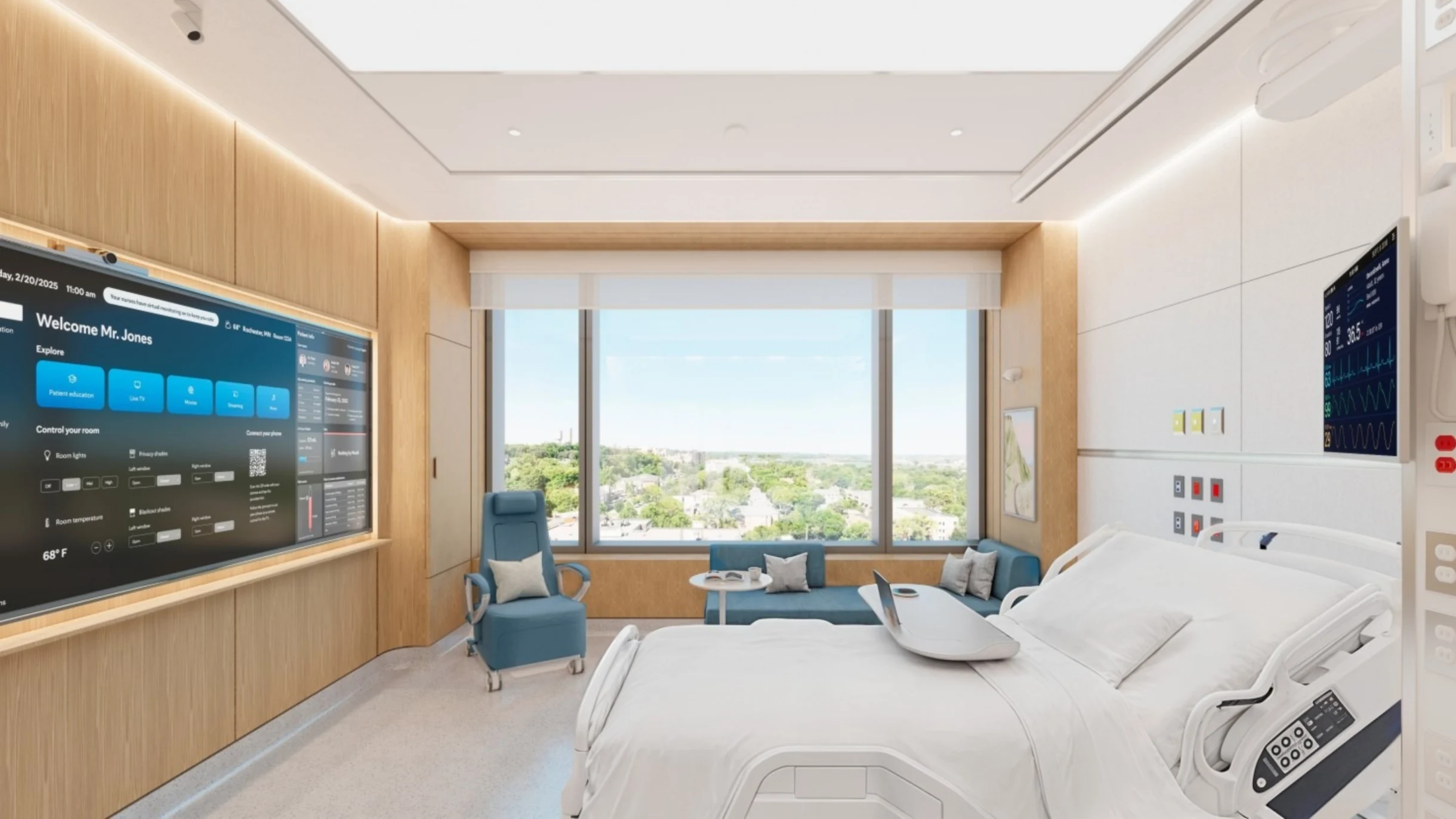
Emily’s patient room is filled with natural light and an ergonomic layout, creating a calming environment for Emily and an efficient workspace for her care team.
Before caregivers enter her room, a digital entryway display provides instant access to her personal information, with badge scanning for confidentiality.
Robotic assistants automate supply delivery for her needs and even deliver her in-room meals. In front of her, an interactive digital whiteboard displays Emily’s daily schedule, upcoming appointments, and progress toward going home.
Environmental controls allow Emily to adjust the room’s lighting and sound for her comfort, and advanced camera systems quietly monitor her safety and enable virtual visits with loved ones.
Meanwhile, digital technologies and AI operate seamlessly in the background to support Emily and her care team, enhancing rather than interrupting human connections.
For example, AI optimizes appointment timing across multiple specialists and digitally delivers relevant patient education material as her care journey progresses, helping her trust and feel confident in the care plan.
AI also assists Emily’s care team by organizing clinical information, transcribing and summarizing relevant conversations, and surfacing relevant clinical insights into her complex medication regimen. This technological support means Emily’s team can deliver both compassionate and data-driven care, and she and her family experience a deeply personal, human touch throughout her treatment, recovery, and beyond.
After her stay at Mayo Clinic, Emily returns home to continue her post-treatment monitoring, thanks to support from her local doctor and connected devices that allow her team to monitor her health status from afar.
Digital AI health tools track her vital signs and medication adherence, with alerts sent to her care team when values fall outside normal ranges, when doses are missed or when AI tools detect changes not visible to the human eye. During her virtual check-ins, the team reviews trends in her data and symptoms to identify changes that might indicate complications, prompting adjustments to her monitoring schedule or in-person evaluations. Between visits, her care team stays connected through digital tools, enabling early intervention when concerning patterns emerge – either through in-person support or care from a distance.
Emily’s journey in 2030 underscores the transformative power of fully integrated physical and digital healthcare services for both patients and care teams. Mayo Clinic continues to build this future through the choices and investments we make today.”
More posts featuring Gianrico Farrugia.