






Gertjan Rasschaert, Medical Doctor and Consultant specializing in Gastrointestinal Oncology and Gastroenterology at UZ Leuven, shared a post on LinkedIn:
“A lot is moving and buzzing in colorectal cancer (CRC) these days. I think this is good for our patients in the first place. Not only do we have plenty of exciting ongoing and future neoadjuvant approaches, we also have this new ‘post-adjuvant ctDNA+ space’, and lastly there are a ton of major first-line allcomers studies with bispecific IO in pMMR/MSS CRC.
I am happy to see that both our community and the industry dare to move earlier faster. This matters! Because cure is what we’re after. However, one would almost forget that the chemorefractory setting still holds a high unmet need as well. With current established and approved treatment options beyond 3L that are mostly only bad and toxic.
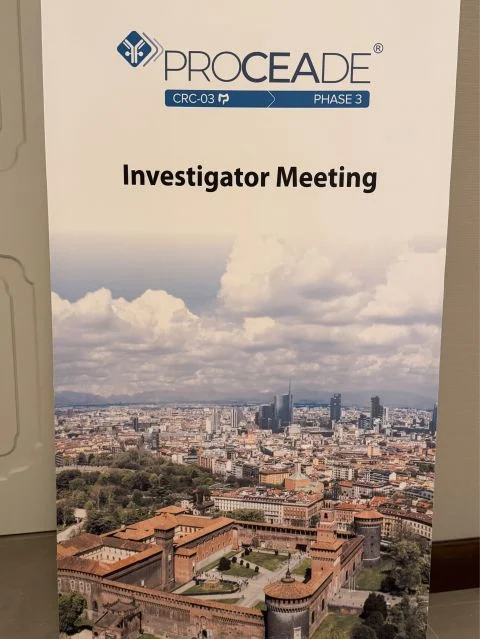
This week, I attended the investigator meeting for the phase III PROCEADE-CRC-03 study in Milan. I am happy that at UZ Leuven we will soon have two major phase III trials for patients with refractory mCRC: AndroMETa-CRC-064 from AbbVie and PROCEADE-CRC-03 from Merck.
Both studies evaluate antibody–drug conjugates (ADCs), sometimes described as a “Trojan horse” approach: an antibody with a linked warhead recognizes a tumor-associated surface protein, next it gets internalized, and ultimately its cytotoxic payload is delivered inside the cancer cell. Nothing but fancy chemotherapy or a true promising avenue? Examples across cancer types are at least encouraging. However, let’s be honest not all ADCs have been success stories in the past.
AndroMETa evaluates telisotuzumab adizutecan, a c-Met-directed ADC. Among 122 patients with late-line mCRC, the response rate was 15.6%, the disease-control rate 74.6%, and median progression-free survival 4.6 months.
PROCEADE evaluates precemtabart tocentecan, a CEACAM5-directed ADC carrying exatecan. In a phase I study of 40 heavily pretreated, irinotecan-refractory patients, the confirmed response rate was 7.5%, with a median progression-free survival of 5.9 months. These early-phase, single-arm results require confirmation in randomized studies.
Nevertheless, it is encouraging to see the ADC field moving forward in CRC—and, most importantly, to be able to offer additional trial options to patients facing a high unmet medical need.
For now, let’s stay humble about what to expect and simply embrace the additional options that are emerging. Time will tell.”
Other articles about GI Oncology on OncoDaily.