





Cancer has officially become a top-tier global strategic priority. For the first time, G7 leaders have issued a joint declaration dedicated to the fight against cancer. Spearheaded by the French presidency at the Evian Summit, this historic step shifts cancer policy from a purely clinical issue to a matter of global strategy, economic resilience, and cross-border data sharing. The declaration outlines three major priorities: pediatric cancers, poor-prognosis tumors, and universal access to care.
Reacting to the announcement:
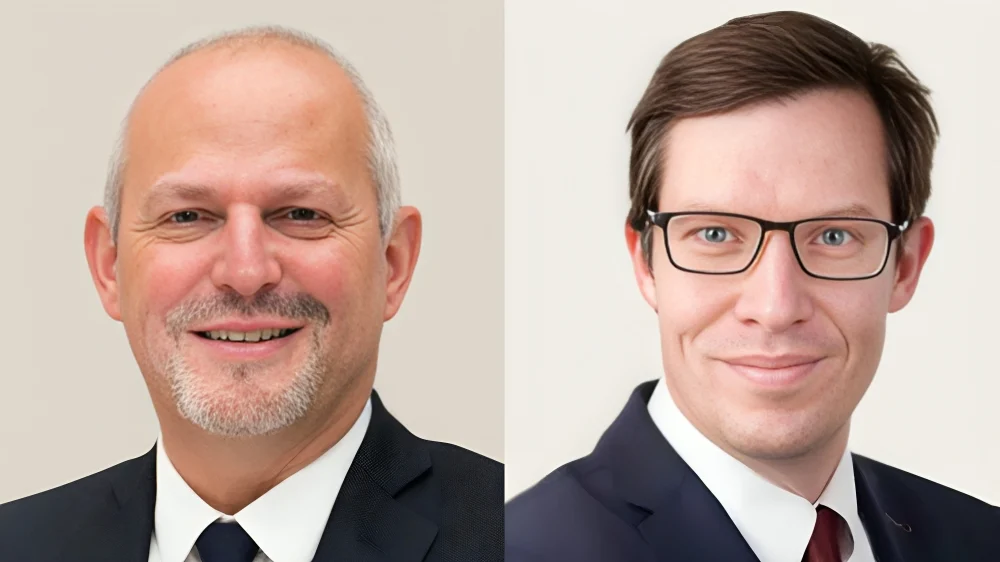
Jérôme Salomon, Chief Medical and Science Officer at Zoī, emphasized the historic significance of the declaration, highlighting its focus on pediatric cancers, poor-prognosis tumors, and equitable access to quality cancer care worldwide. He described the initiative as a major step toward strengthening international cooperation, data sharing, and scientific excellence in the global fight against cancer.
“A world first in G7 France! The Evian Summit goes down in the history of the fight against cancer.
It’s official and historic. The heads of state and government issued the first G7 declaration dedicated to cancer.
At the initiative of President Emmanuel Macron and under the French presidency of the G7, leaders officially affirmed their shared commitment to accelerate the fight against cancer, with three priorities highlighted:
- Pediatric cancers: promoting data sharing, because no country alone has the volume of data necessary to make sufficient progress.
- Poor-prognosis cancers (lung, liver, and pancreatic cancers): establishing common definitions, strengthening screening efforts, improving stage 1 diagnosis, and reducing lung cancer mortality over the next ten years.
- Universal access to quality care in both high-income and developing countries, recognizing that no effective fight against cancer can ignore equity.
Congratulations to everyone whose efforts and mobilization made it possible to achieve this historic declaration in just a few months for a disease that claims 10 million lives worldwide every year.
Today, France is bringing its ideas and commitments to the highest international level in a spirit of cooperation and scientific excellence.
The World Health Organization (WHO), the WHO Regional Office for Europe, the European Union, governments, and institutions such as the French National Cancer Institute will benefit from these important commitments for the benefit of patients worldwide.”
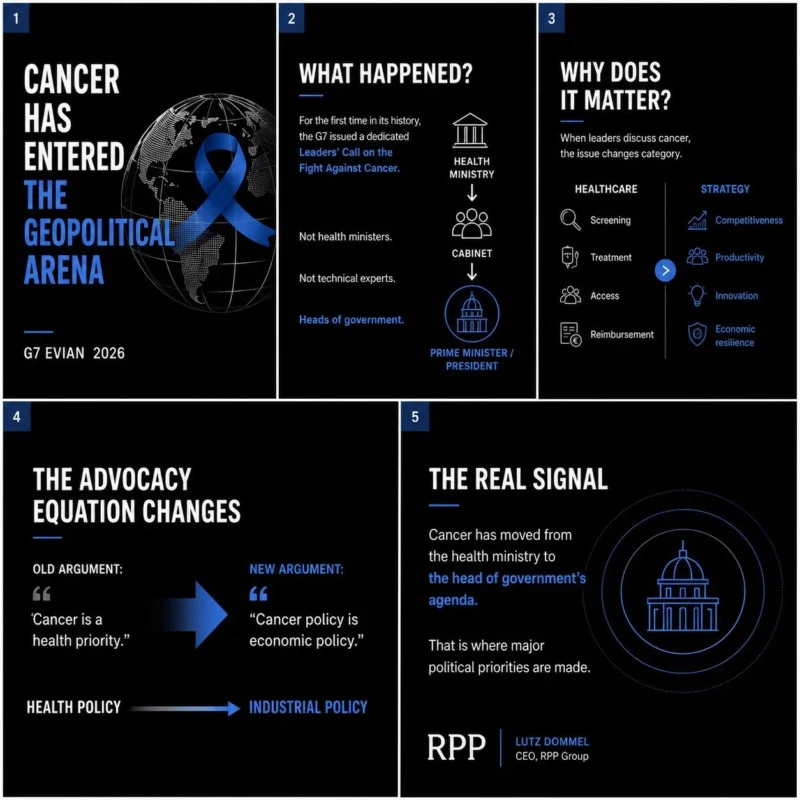
Lutz Dommel, CEO of RPP Group, pointed to the broader implications of the G7 declaration, arguing that cancer has now moved beyond the boundaries of healthcare policy and entered the geopolitical arena. According to Dommel, the decision reflects growing recognition that cancer affects not only health systems but also economic resilience, innovation, productivity, and national competitiveness, elevating cancer control to a strategic priority for governments worldwide.
“Cancer Has Entered the Geopolitical Arena
For the first time in its history, the G7 issued a dedicated Leaders’ Call on the Fight Against Cancer.
That may sound symbolic.
I think it is anything but.
The moment heads of government start discussing cancer, the issue leaves the confines of health policy.
It becomes a question of competitiveness, productivity, innovation, industrial strategy and economic resilience.
In short: cancer moves from being a healthcare issue to becoming a strategic issue.
This changes the advocacy equation.
Healthcare stakeholders who continue to argue only in clinical terms may miss the opportunity.
The winners will be those who can connect cancer policy to the broader priorities that keep presidents, prime ministers and finance ministers awake at night.
Cancer has just moved up the political food chain.
And that may prove to be one of the most consequential healthcare developments emerging from this year’s G7 summit.
I think it’s fair to mention a few advocates (and there are many many more!) and influencers who over years and decades haven’t stopped pushing this topic every day, so it can’t be ignored.”
Other articles about G7 on OncoDaily.