





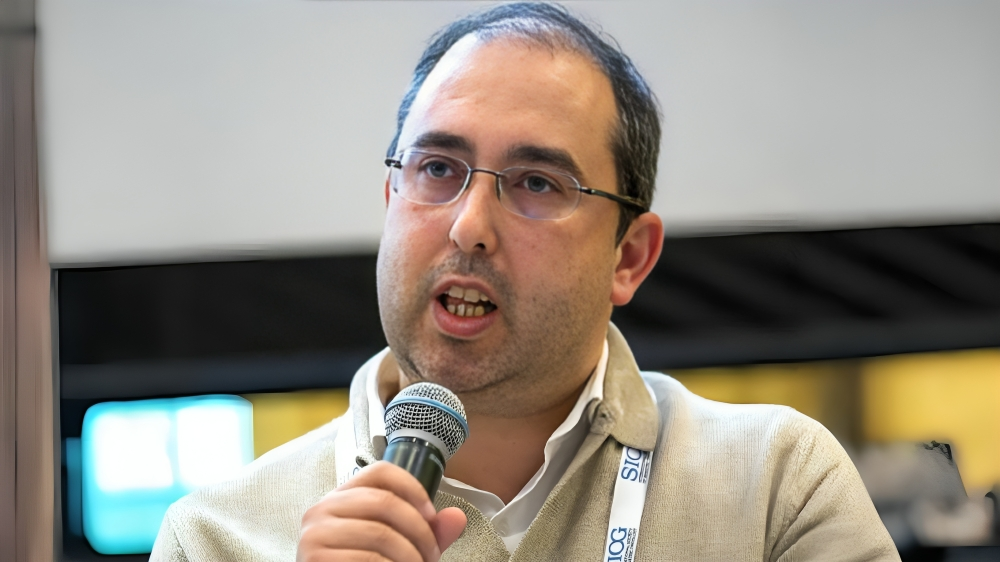
Filipe Coutinho, Founder & Coordinator of Geriatric Oncology Working Group of SPO, shared a post by Kerri Winters-Stone,Co-Founder of FIT Together, adding:
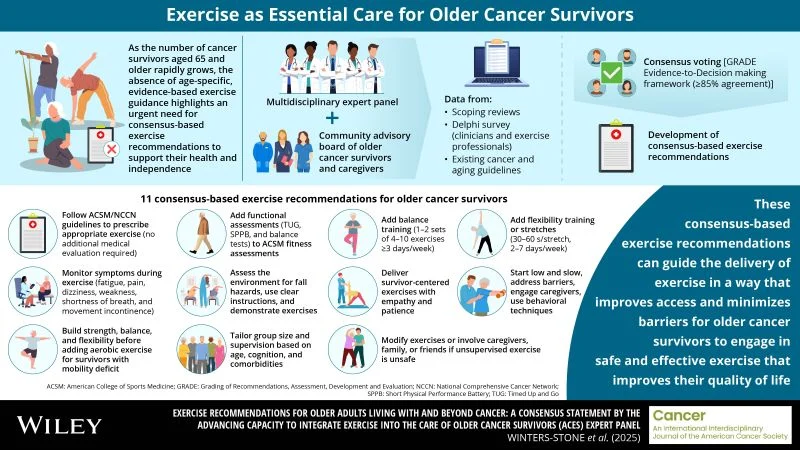
“Exercise as Essential Care for Older Cancer Survivors
The number of older cancer survivors is increasing rapidly, yet age-specific, evidence-based exercise guidance has long been missing from routine oncology care.
A new international consensus statement now provides 11 evidence-based recommendations for delivering safe, personalised and effective exercise programs for older cancer survivors, using a rigorous GRADE methodology and involving a multidisciplinary expert panel, clinicians, survivors and caregivers.
Key highlights include:
- Systematic functional assessment (e.g., TUG, SPPB, balance testing)
- Active monitoring of symptoms such as fatigue, pain, dizziness or dyspnoea
- Structured strength, balance and flexibility training
- Survivor-centred programs with slow progression, contextual adaptation and caregiver involvement when needed
- Clear focus on fall prevention, functional independence and quality of life
These recommendations clearly show that exercise is not an “add-on”, but a true pillar of care in older cancer survivorship — with direct impact on autonomy, safety and well-being.
This field offers a major opportunity to strengthen collaboration between oncologists, nurses, physiatrists, physiotherapists, nutritionists, exercise professionals and caregivers.
We must continue building bridges between oncology and geriatrics. Older adults living with and beyond cancer deserve care that is as personalised as their disease.”
Quoting Kerri Winters-Stone‘s post:
“I’m thrilled to share our newly published consensus-based recommendations on exercise for adults aged 65+ living with and beyond cancer just published in Cancer.
Despite strong evidence supporting exercise in oncology, existing guidelines have offered limited, non-specific direction for older adults. Given the rapid growth of this population, this gap has real clinical consequences. To address this, our multidisciplinary expert panel developed 11 best-practice recommendations spanning:
• Medical evaluation and clearance
• Pre-exercise assessment
• Exercise prescription
• Safety and tolerance
• Program delivery
• Behavioral support
These recommendations were informed by the evidence base, a Delphi survey of clinicians and exercise professionals, our ACES expert panel (Kristin Campbell, Andrea Cheville, Kathryn Schmitz, Karen Mustian, Supriya Mohile, Gabrielle Meyers, Margie Mcneely, Sarah Neil-Sztramko, Anna Schwartz, Jose M. Garcia, Laura Q. Rogers, Robert Smith, Jessica Sitemba, Elizabeth Eckstrom) and direct input from older survivors and caregivers. Importantly, all guidance was designed to be feasible in real-world settings and to minimize barriers to participation.
Our central message: appropriately prescribed exercise should be considered an essential component of cancer care for older adults—not an optional add-on. With thoughtful assessment and programming, exercise can be both safe and highly beneficial in this population.
We hope these recommendations support clinicians in integrating exercise more confidently and consistently into care for older patients.
This work was supported by our NCI 1R21CA280996.”
More posts featuring Filipe Coutinho.