





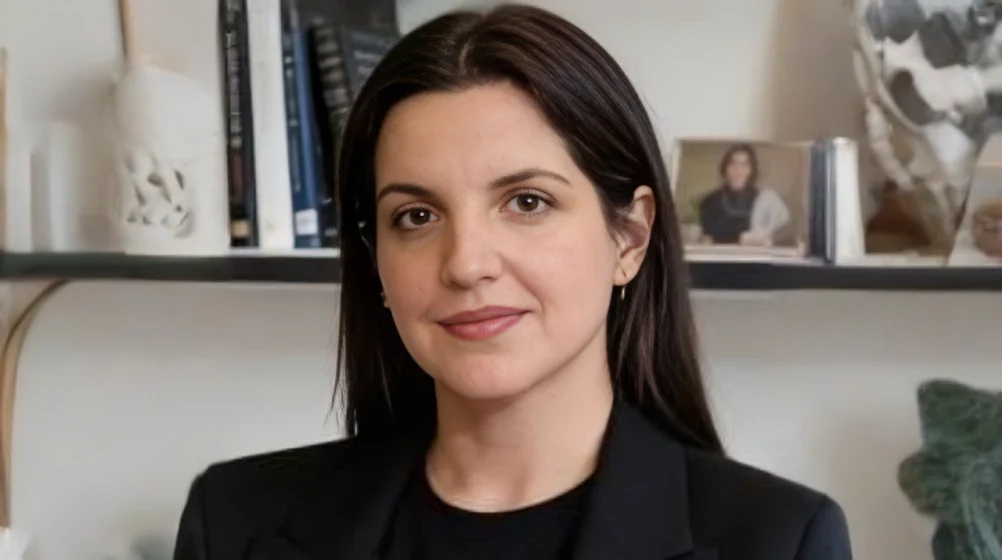
Ermelinda Damko, Sr. Scientist at Regeneron, shared on LinkedIn:
“Translational biotech loves the word ‘platform.’ We rarely admit when the platform is starting to think for us.
The Nature Biomedical Engineering paper CRISPR-GPT for agentic automation of gene-editing experiments is a clean test case of that discomfort. It does not simply add another software layer to the CRISPR toolkit; it builds a multi-agent, LLM-centered system that decides how gene-editing experiments should be planned, executed, and analyzed, then asks whether junior scientists can obtain real results in mammalian cells by mostly following the agent’s logic.
They can. On the first attempt. The uncomfortable part is not that this works. It is what the paper reveals about who is now carrying the experimental logic in the room.
When ‘tool’ becomes ‘orchestrator’
The field still talks about AI as a tool. In Qu et al., it is structurally much closer to an orchestrator.
CRISPR-GPT is built around four agent roles: a Planner that decomposes user intent into tasks, a Task executor that walks through state machines for each task, a User-proxy that helps carry the scientist’s side of the interaction, and a Tool provider that connects the system to external resources such as Primer3, CRISPRitz, CRISPResso2, literature search, and web search.
That architecture matters because the scientific work is no longer sitting only in the user’s head. It is encoded into the workflow logic of the system itself.
Qu et al. are doing more in this paper than building an AI assistant for CRISPR. They are formalizing gene-editing experiment design as a sequential decision problem: not simply guide selection, but a chain of interdependent choices spanning modality selection, delivery, guide or pegRNA design, off-target analysis, protocol generation, validation assay design, and downstream data interpretation. That depth matters because it reveals what the authors believe ‘experimental design’ actually is-an ordered set of decisions that can be decomposed, encoded into state machines, and executed by an agentic system. The paper is therefore not just a demonstration of LLM competence; it is an attempt to translate the logic of genome engineering into a machine-operable grammar. Its real contribution is not merely that CRISPR-GPT can help a junior scientist get a knockout or CRISPRa experiment to work in A549 or A375 cells, but that it exposes how much of routine gene-editing practice is already structured enough to be externalized from the scientist and relocated into an orchestration layer.
That is the quiet shift the paper documents: the field is no longer asking AI to complete plans. It is beginning to ask AI to decide what counts as a plan for a given piece of biology.
Benchmarks that pretend to be neutral
To their credit, Qu et al. do not evaluate CRISPR-GPT with a handful of cherry-picked prompts. They build Gene-editing bench, a 288-case benchmark spanning experiment planning, CRISPR system selection, delivery selection, sgRNA design, off-target prediction, troubleshooting, protocol generation, validation and primer design, and data analysis.
Human experts then score CRISPR-GPT against GPT-3.5-turbo and GPT-4o on accuracy, completeness, conciseness, and reasoning/actionability. The result is what one would expect from a specialized, tool-wired system: baseline LLMs hallucinate sequences and protocols, omit key details, and struggle to take actions, whereas CRISPR-GPT is rated as more complete, more concise, and substantially more actionable across most task categories.
But the benchmark also encodes a philosophy of scientific work. The tasks it measures are the things the field has already agreed are legible units of CRISPR practice: Cas choice, delivery, guides, protocols, validation, data analysis. There is no explicit metric for whether the experiment is the right causal question, whether the biological context is adequately specified, or whether a technically successful perturbation has translational meaning beyond the immediate assay.
So even here, the paper presents a revealing asymmetry: it is deep on procedural competence and shallow on causal adequacy. It measures how well the agent performs the experiment we already know how to define. It does not measure whether the experiment itself is the right intellectual instrument.
Wet-lab success as a narrow kind of truth
The strongest part of the paper is the wet-lab section, because it moves beyond AI rhetoric and into biology.
A junior researcher unfamiliar with gene editing used CRISPR-GPT to design and execute multiplex CRISPR-Cas12a knockout of TGFβR1, SNAI1, BAX, and BCL2L1 in A549 lung adenocarcinoma cells. The system selected an enhanced Cas12a strategy, recommended lentiviral delivery, designed sgRNAs under user-specified preferences, generated cloning and viral workflows, drafted validation steps, and analyzed the resulting NGS data with CRISPResso2. Editing efficiencies were confirmed across all four genes by NGS.
The paper becomes deeper still because the authors do not stop at editing percentages. They connect the perturbations to functional EMT biology: after TGFβ induction, TGFβR1 and SNAI1 knockout A549 lines showed up to roughly 9-fold reduction in CDH1 expression change and up to roughly 34-fold reduction in VIM expression change relative to wild type. That is important because it moves the system from ‘AI can generate a guide‘ to ‘AI can support a perturbation that lands in a biologically coherent phenotype.’
The second experiment extends this to epigenetic activation. A junior researcher used CRISPR-GPT to activate NCR3LG1 and CEACAM1 in A375 melanoma cells using CRISPR-dCas9, with successful upregulation confirmed by flow cytometry.
That is also why the wet-lab validation in the paper deserves to be read carefully rather than celebrated generically. The knockout and CRISPRa demonstrations are not trivial, and the authors strengthen them by tying editing outcomes to biologically coherent phenotypes rather than stopping at indel percentages or sequence outputs. But the depth of the paper is uneven in a revealing way: it is deep on procedural competence, architecture, and task decomposition, and shallower on the biology that becomes difficult precisely when translational relevance begins-context dependence, redundant circuitry, clonal selection, delivery-linked constraints, and the possibility that a technically successful perturbation still answers the wrong mechanistic question. In that sense, the paper is strongest exactly where contemporary CRISPR workflows are already structured, standardized, and legible to tools. It is less able to tell us what happens when those workflows encounter the parts of biology that are still poorly formalized, and therefore still genuinely scientific.
Agency by convenience
One of the more subtle design choices in Qu et al. is the User-proxy agent. On the surface, it is a convenience feature: instead of forcing the scientist to manually respond to every step, the system drafts the interaction and allows correction.
But this changes agency in a meaningful way. Once the Planner has decomposed the request and the Task executor has begun stepping through the workflow, the User-proxy becomes the default voice of the scientist. In practice, the path of least resistance is to accept most of what the proxy says unless something obviously looks wrong.
That matters because well-structured outputs create a strong illusion of correctness. A polished workflow with tool-generated sequences and complete protocols can look like scientific judgment, even when it is only scientific formatting. The paper recognizes ease of use. It says much less about how ease of use might reassign scientific responsibility.
Validation is now a scientific problem
One reason this paper matters for translational teams is that it makes validation harder, not easier.
Traditional validation frameworks assume relatively static systems: software versions are locked, tests are run, and qualification is treated as something that can be completed. CRISPR-GPT is a moving stack of model behavior, retrieval corpora, external tools, state-machine logic, and human interaction. That means the object under validation is not just the model. It is the entire coupled system.
The paper proves that CRISPR-GPT works in a narrow, well-instrumented slice of CRISPR practice. But scaling such a system into translational biology would require a more difficult form of validation: not simply showing that it can reproduce known workflows, but stress-testing where its implicit priors break; primary cells, heterogeneous models, fragile phenotypes, delivery-linked tradeoffs, and biological contexts in which technical success is not the same thing as mechanistic clarity.
In that sense, the paper is ahead of the field technically and behind the field institutionally. It demonstrates that AI-guided experimental design is possible. It leaves open the harder question of how such systems should be trusted, bounded, and monitored as the biology becomes less standardized.
Integration is a semantics problem
The translational appeal of a paper like this is obvious: a domain-aware agent can sit on top of fragmented R&D infrastructure and make it feel coherent. But integration is not mainly a software problem. It is a problem of preserving experimental meaning.
Most biotech organizations already have ELNs, LIMS, assay databases, analysis scripts, and data warehouses. What they often lack is a machine-readable representation of what experiments actually are: cell state, perturbation type, treatment schedule, assay context, QC status, provenance, downstream interpretation. CRISPR-GPT works because much of that meaning is standardized enough to be made legible to the agent.
That is one of the paper’s quiet lessons. LLM agents only become useful when experimental semantics are explicit enough to be surfaced as structured context. Otherwise the model is left reasoning over strings, file names, and fragments of informal human memory. A data-rich organization can still be profoundly insight-poor if the meaning of its experiments is trapped in local conventions and undocumented assumptions.
Where the paper becomes most important
The value of Qu et al. is not that they prove AI can help with CRISPR. That point was always coming. The value is that they show, in unusually concrete form, how much of gene-editing practice has already become formalizable.
That is exactly why the paper should make translational scientists uneasy. Once experimental design can be decomposed into state machines, routed through tools, and handed to junior scientists with first-pass success, the scientific bottleneck is no longer only technical execution. It shifts toward the layers of biology that remain resistant to formalization: causal framing, context dependence, model relevance, long-term safety, and the difference between perturbing a system and understanding it.
That is where Data-Rich, Insight-Poor actually bites.
The real risk is not that these systems fail visibly. It is that they succeed beautifully in domains where the workflows are already legible, and tempt the field to confuse procedural fluency with biological understanding.”
Other articles about AI in Oncology on OncoDaily.