





European Organisation for Research and Treatment of Cancer shared Anne-Sophie Eyméoud’s, Managing Director at Rothschild & Co, post on LinkedIn, adding:
“A conversation on independent cancer research and the role of academic collaboration in oncology.
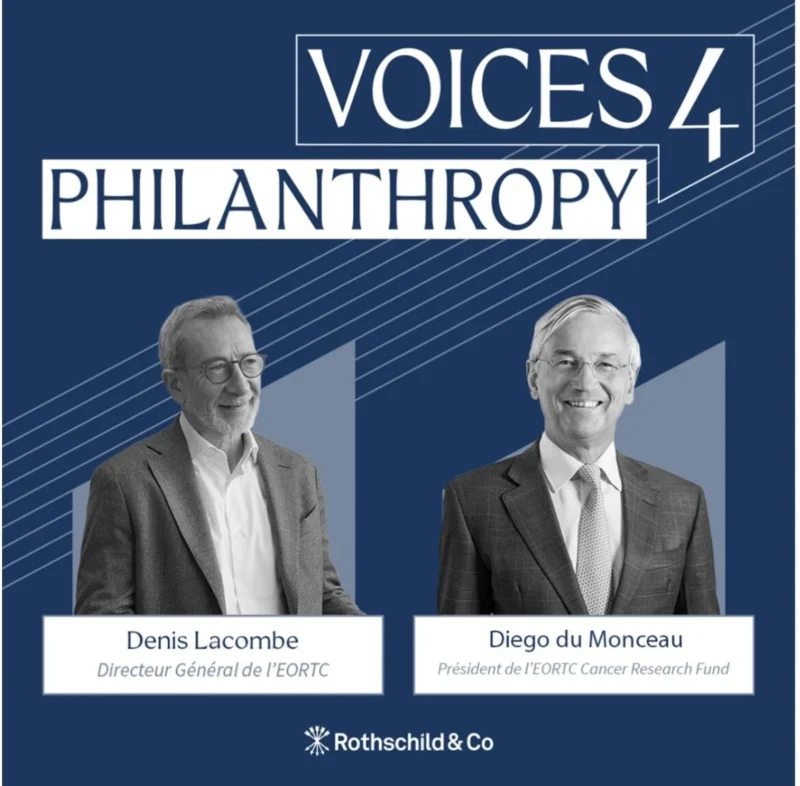
In this episode of Voices4Philanthropy (a podcast by Rothschild & Co Belgium), Denis Lacombe, EORTC CEO, and Diego Du Monceau, Chair of the EORTC Cancer Research Fund (ECRF), share perspectives on the importance of academic clinical research in addressing unmet needs in oncology and why independent funding is what makes it possible.
From rare cancers and underrepresented patient populations to treatment optimisation and de-escalation of treatment trials, the science is there.
Promising research is in the pipeline. Bringing it to patients requires sustained investment.”
Quoting Anne-Sophie Eyméoud’s post:
“Leaving no one behind! The power of EORTC in oncology research!
For this new episode of Voices4Philanthropy, I had the privilege of sitting down with two people whose paths had no reason to ever cross.
Diego Du Monceau spent his career between international finance and major European companies. One day, he was asked if he would chair the EORTC Cancer Research Fund.
He had until dessert to answer.
He said yes.
Denis Lacombe is a physician. He trained in Marseille, then in Buffalo, before joining EORTC in 1993. He has led the organisation since 2015.
European Organisation for Research and Treatment of Cancer has been, since 1962, the largest independent cancer research network in Europe. 4,000 investigators across around 40 countries. 250 people in Brussels.
And every day, Diego and Denis work side by side.
Because of one shared conviction.
There is research that the market alone cannot do.
The rare cancers that affect too few patients. The older patients too fragile for standard trials. The adolescents whose cancers fall between adult and pediatric protocols. The treatments that should be optimised, combined, lightened over time – not only launched.
This is the territory EORTC has worked in for over sixty years.
A conversation, I hope, that helps bring EORTC out of the discretion it has worked in for far too long.”
Other articles featuring EORTC on OncoDaily.