






Drew Moghanaki, Professor, Chief of Thoracic Oncology at the Department of Radiation Oncology and Stanley Iezman and Nancy Stark Endowed Chair in Thoracic Radiation Oncology Research at David Geffen School of Medicine at UCLA, and Chief Medical Officer of Respirati, shared a post on LinkedIn:
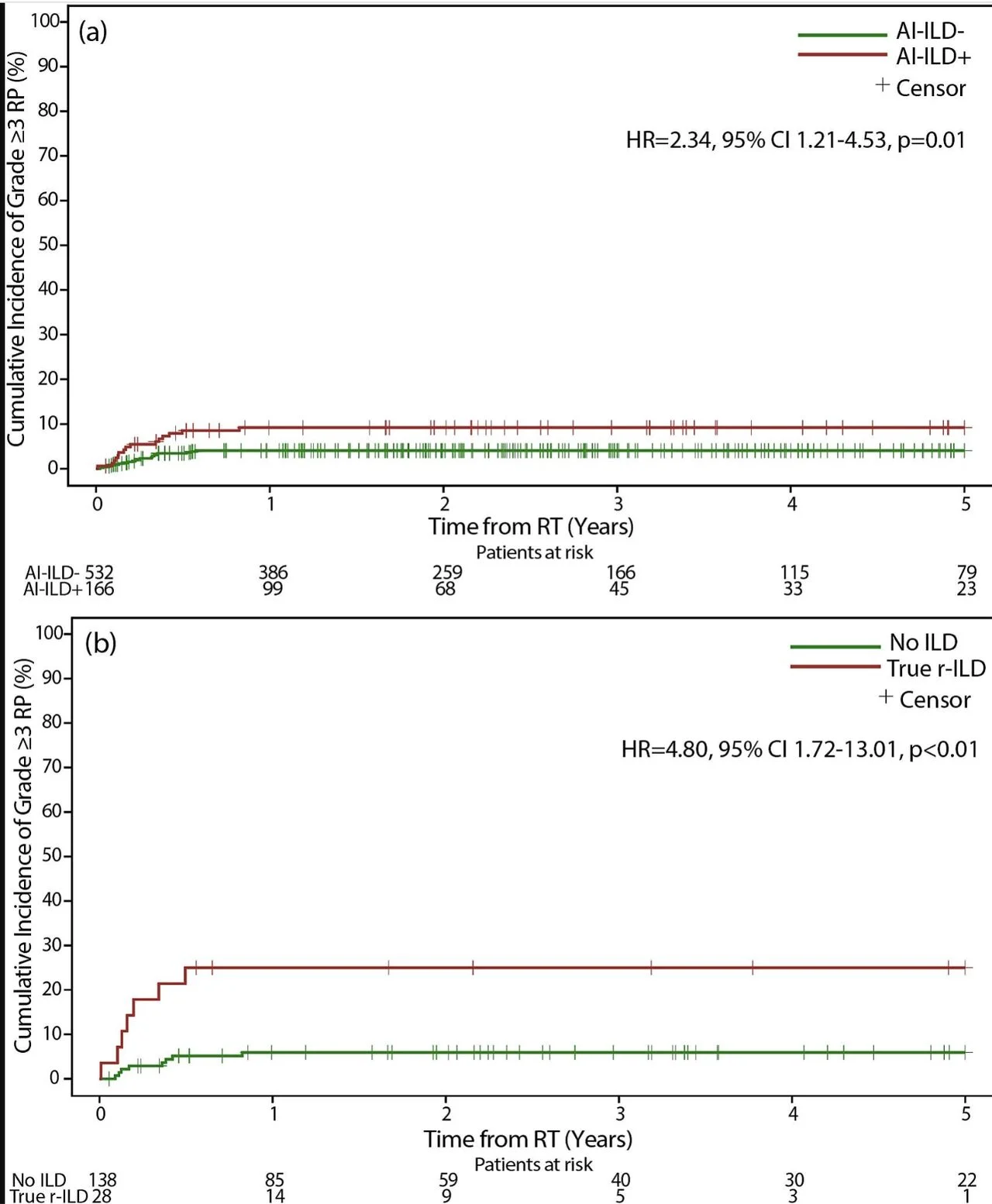
“A potentially paradigm-changing study from the University of Toronto highlights the power of AI in radiation oncology. Using a convolutional neural network to identify interstitial lung disease (ILD) on chest CT scans, investigators were able to predict the risk of grade 3 radiation pneumonitis in patients with NSCLC.
On its own, the AI model modestly stratified risk (~10%), but when paired with expert review by a thoracic radiologist, predicted risk approached 30%.
If validated, this type of AI-augmented risk modeling could meaningfully influence upfront treatment decisions for patients with locally advanced NSCLC referred for radiation therapy—prompting consideration of alternative strategies such as modified sequencing of systemic therapy followed by radiation therapy, presenting surgical options knowing the risk of complications are higher in pts with ILD, or in select biomarker-defined cases recommendinv systemic therapy alone until progression.”
Title: Association of artificial intelligence-screened interstitial lung disease with radiation pneumonitis in locally advanced non-small cell lung cancer
Authors: Hannah Bacon, Nicholas McNeil, Tirth Patel, Mattea Welch, Xiang Y. Ye, Andrea Bezjak, Benjamin H. Lok, Srinivas Raman, Meredith Giuliani, B.C. John Cho, Alexander Sun, Patricia Lindsay, Geoffrey Liu, Sonja Kandel, Chris McIntosh, Tony Tadic, Andrew Hope
More posts featuring Drew Moghanaki on OncoDaily.