





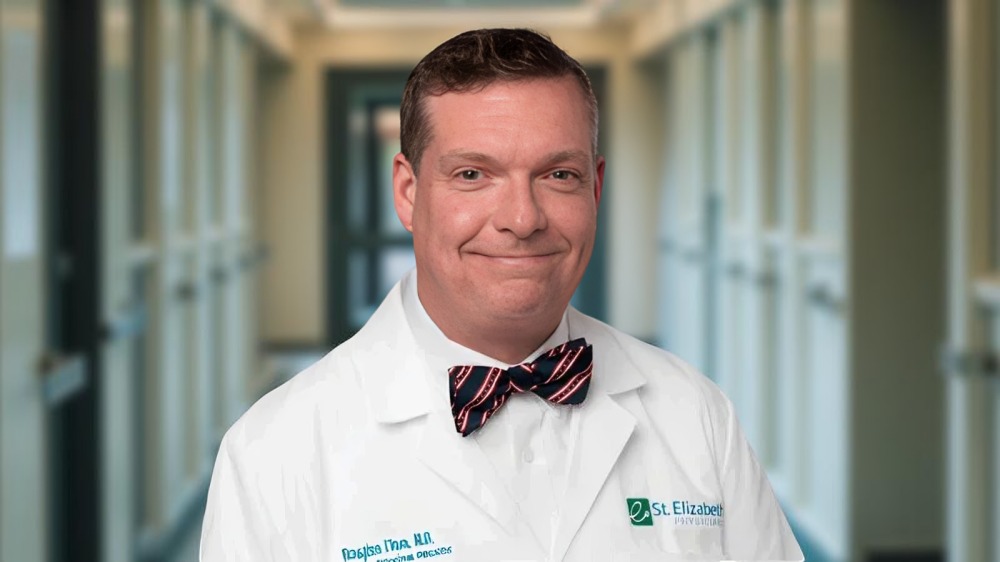
Douglas Flora, Executive Medical Director of Yung Family Cancer Center at St. Elizabeth Healthcare, President-Elect of the Association of Cancer Care Centers, and Editor-in-Chief of AI in Precision Oncology, shared Association for Value-Based Cancer Care’s post on LinkedIn, adding:
Remote monitoring is about to become the standard of care. Most of us aren’t ready.
“Whether doctors want to get on board now or later, this is going to be the future. It’s going to be standard of care in managing patient side effects. And if we’re not involved now, we’re going to be behind.”
That’s David Wenk, MD of Florida Cancer Specialists, in a new AVBCC advisory board paper on precision remote monitoring in oncology, and I could not agree more. I’ve been making this argument at every panel and podium that would have me over the past year or two, and this paper makes a great case for why I keep pushing.
We all say we care about reducing complications of care, avoiding unwarranted ED visits, and preventable hospitalizations, but it is 2026, and we are still just asking our patients,
“So, how did this last cycle go?”
We can be so much better. We need to be.
The Basch data has been sitting in plain sight since 2017: electronic patient-reported outcomes improve quality of life, reduce ED visits, and extend survival. What’s changed is the stakes. Use of bispecific antibody therapy among eligible myeloma patients in community settings increased from near zero to 54% in roughly two years. CAR-T and ADCs are following the same path. These therapies produce toxicities that emerge at home, on their own schedule, between the visits where we actually lay eyes on our patients.
The math makes the case urgent. More than 2 million new cancer diagnoses are projected in a single year for the first time in American history. 100,000 fewer registered nurses than we had at the start of this decade. More patients on more complex therapy, monitored by fewer people. No amount of clinician effort closes that gap. Tools do.
So here is my ask. If you lead a cancer program and remote monitoring is not on your 2026 agenda, put it there this quarter. Read this paper first. Bring it to your next operations meeting and ask one question: what happens to our patients between visits?
We already know the answer. Now we have to act on it.
Well done, Burt Zweigenhaft and Misha Kaur. Keep them coming.
Quoting Association for Value-Based Cancer Care’s post:
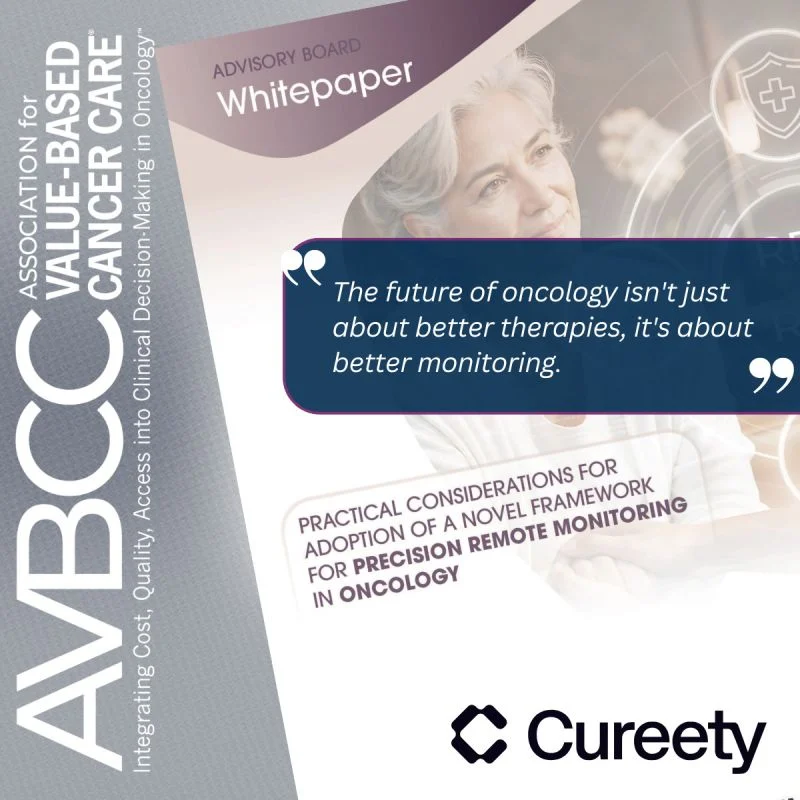
“As cancer care becomes increasingly complex, community oncology practices face a growing challenge: more patients, more advanced therapies, and fewer clinical resources to monitor them between visits.
Our latest whitepaper, developed by the Association for Value-Based Cancer Care in collaboration with Cureety, explores why the next evolution of remote patient monitoring must go beyond traditional electronic patient-reported outcomes (ePROs).
Key insights include:
- Why traditional ePRO and remote monitoring approaches are often falling short – and the recurring challenges identified by clinicians who have implemented them
- How oral oncolytics and advanced therapies such as CAR-T, bispecific antibodies, and antibody-drug conjugates (ADCs) are creating new monitoring requirements
- How intelligent triage can improve clinical workflows while reducing unnecessary alerts
- Practical considerations for successful implementation in community oncology
The evidence is clear: remote monitoring has become a clinical necessity. The next challenge is implementing monitoring solutions that are fit for the future of oncology – those that deliver meaningful, actionable intelligence – not simply more alerts.
Download the whitepaper to learn how precision monitoring can help improve patient outcomes while supporting oncology care teams”
Read other articles about AVBCC on OncoDaily.