





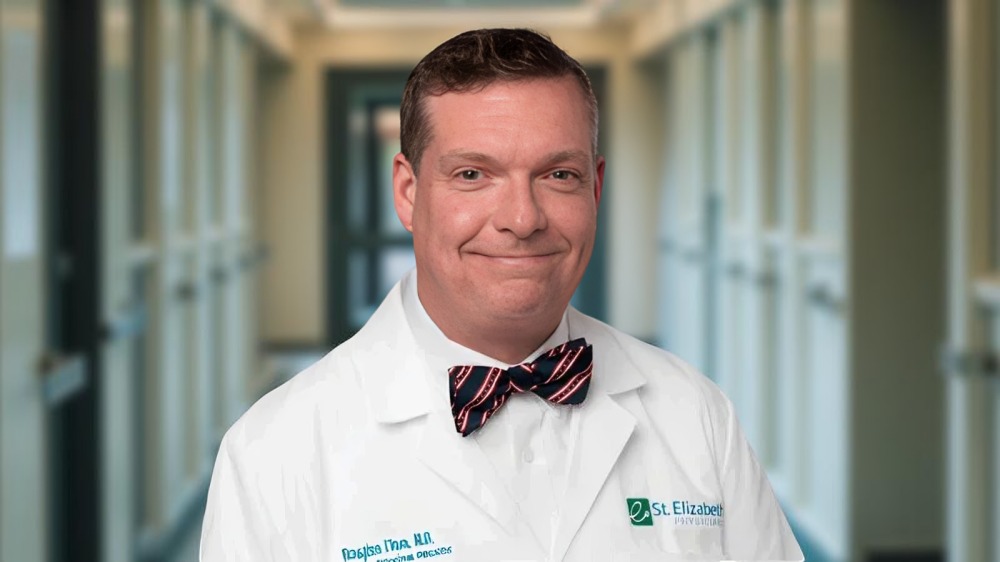
Douglas Flora, Executive Medical Director of Yung Family Cancer Center at St. Elizabeth Healthcare, President-Elect of the Association of Cancer Care Centers, and Editor in Chief of AI in Precision Oncology, shared a post on LinkedIn:
“Listening to the Future: AI Is This Generation’s Stethoscope-and most doctors do not yet know it
Paris, 1816. A physician named René Laennec rolls twenty-four sheets of paper into a cylinder to listen to a patient’s heart. He calls it a ‘stéthoscope.’ The medical establishment was horrified. Senior doctors called it a barrier to intimacy, a mechanical intrusion that reduced medicine to ‘acoustic engineering.’ They insisted that the ear God gave them was enough. They were wrong. The stethoscope didn’t replace the doctor; it rebuilt the doctor. It turned a silent chest into a map of sound, allowing physicians to hear pneumonia, valve disease, and tuberculosis with a precision never before imagined.
Today, we are standing in a similar moment with artificial intelligence. There is a ‘low-frequency hum’ of anxiety in our clinics. We worry about being replaced by algorithms. But history suggests a different outcome. Technology that augments human cognition doesn’t reduce the number of people working; it redistributes the work and, if we are lucky, returns us to the work we actually came here to do. What if it all goes right? What might happen if we can move from the passive consumption of technology to the active stewardship of our own professional joy?
In 1816, the senior physicians at the Hôtel-Dieu in Paris refused to use René Laennec’s new ‘cylinder.’ They viewed the stethoscope as a barrier to the personal encounter-a mechanical intermediary that would destroy the intimacy of the bedside. Two centuries later, that ‘barrier’ is the universal icon of our profession. The stethoscope is not just a tool; it is the emblem of presence and listening. We are currently witnessing a similar pattern of resistance and adaptation with artificial intelligence. The fear of replacement is real, but as I discuss in my latest piece, the historical pattern is unambiguous: technologies that augment cognition do not eliminate the worker; they invent new categories of work and render old workflows ridiculous.
Fabien Curto Millet, Chief Economist at Google, states it perfectly:
‘The biggest barrier to unlocking AI’s potential is simply granting permission to prompt, providing the necessary training and cultural confidence for employees to bring AI into their daily workflow.’
This ‘permission to prompt’ is the bridge between professional vertigo and the next generation of clinical excellence. To prompt is to move from being a spectator of technology to being its steward. The augmented physician is the one who uses AI to scaffold her expertise—letting the model handle the ‘scut work’ of administrative justifications and data synthesis so that she can focus on the irreplaceable inventory: clinical intuition, pattern recognition, and the capacity to guide a frightened family through a consultation.
AI is going to happen through us, to us, or With us. Only the third option gives us a say in what stays protected and what gets automated.”
Other articles featuring Douglas Flora on OncoDaily.