





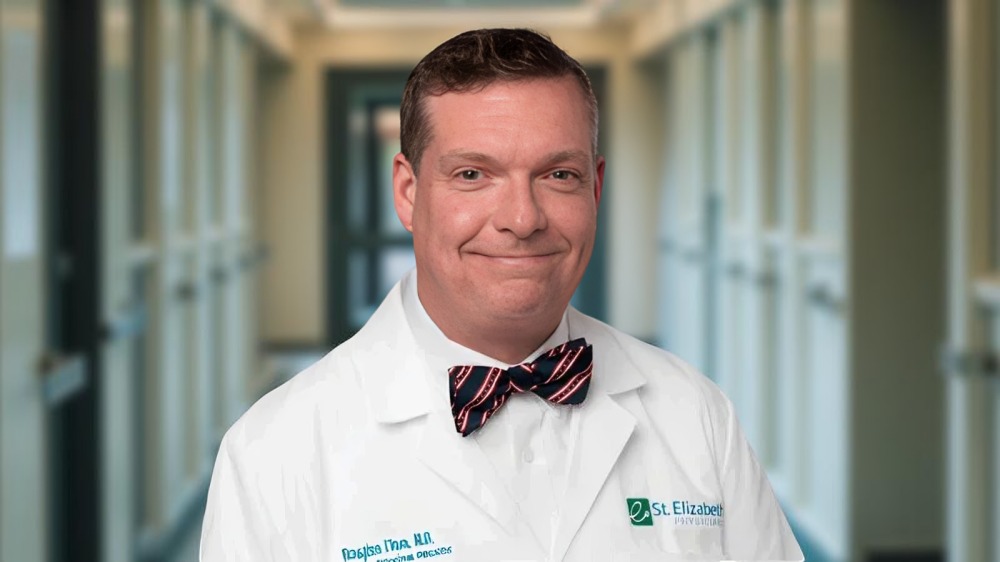
Douglas Flora, Executive Medical Director of Yung Family Cancer Center at St. Elizabeth Healthcare, President-Elect of the Association of Cancer Care Centers, and Editor in Chief of AI in Precision Oncology, shared a post on LinkedIn:
“It is Time to Reboot Mental Health.
Cancer care has mastered the hardware. We sequence tumors down to individual mutations. We target therapies to specific genetic aberrations. We monitor treatment response using SUV values on PET scans, accurate to the decimal point.
Then we send patients home to process existential terror with a photocopied handout about “managing stress.”
The disparity is absurd. We apply precision medicine to malignant cells while treating the human mind experiencing this trauma with approaches unchanged since the 1980s. Antidepressants are prescribed by trial and error. Fifteen-minute psychiatry check-ins. Screening questionnaires that ask patients to rate their sadness on a scale of one to ten.
Pharmacogenomics could tell us which antidepressant a patient’s liver will actually metabolize before we waste eight weeks discovering sertraline does nothing for them. Neuropsychological testing could establish cognitive baselines before chemotherapy, giving us objective data instead of dismissing “chemo brain” as subjective complaint. Quantitative EEG could show us what’s happening in a depressed patient’s prefrontal cortex rather than asking them to describe their mood in adjectives.
These tools exist. We simply haven’t decided the mind deserves the same diagnostic rigor as the tumor.
This isn’t about technology for technology’s sake. A patient who cannot sleep, cannot eat, cannot think clearly because untreated depression has hijacked their hypothalamic-pituitary axis will not adhere to treatment. They will miss appointments. They will end up in emergency rooms at three in the morning because panic feels like a heart attack when you’re already terrified of dying.
The science is clear: psychological distress is a biological phenomenon with measurable consequences. High cortisol affects wound healing. Chronic stress activates inflammatory pathways that may influence tumor microenvironments. This is not soft science. This is physiology.
This weeks pod guests, Jennifer Bires and Kyle Bonesteel have been pushing this conversation forward in our latest podcast on rebooting psycho-oncology. They understand that treating cancer without treating the terror is like repairing half a broken machine and wondering why it still won’t run.
The hardware needs the software. Both deserve precision. More today, on episode #107 of our podcast. Check out prior episodes—we are trying to carefully curate the things you need to know.
(Join the more than 85k colleagues already subscribing to the pod on YouTube or find all of them here:).”
Josh Myers, Co-Founder and CEO of Adjuvant Behavioral Health, shared a post by Douglas Flora, adding:
“Huge thanks to Douglas Flora, Sanjay Juneja, Jennifer Bires and Kyle Bonesteel for highlighting this critical work and the massive disparity in how we treat the “hardware” vs. the “software” of cancer care.
This is exactly why Adjuvant Behavioral Health Inc exists. We believe that providing care to cancer patients means treating the whole human, not just the pathology. Precision medicine shouldn’t stop at the tumor; the mind deserves the same diagnostic rigor and dedicated support.”
Other articles featuring Douglas Flora.