





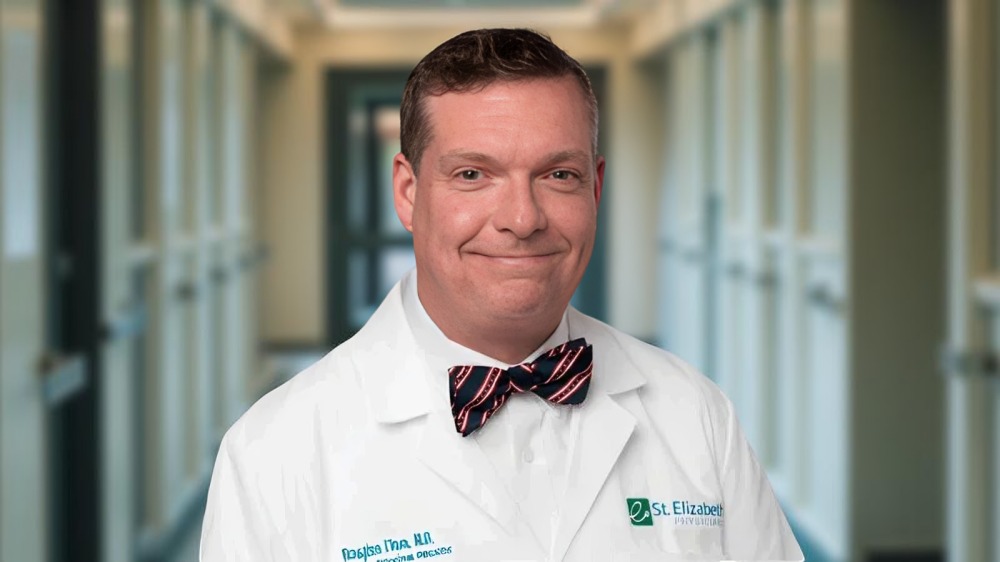
Douglas Flora, Executive Medical Director of Yung Family Cancer Center at St. Elizabeth Healthcare, President-Elect of the Association of Cancer Care Centers, and Editor in Chief of AI in Precision Oncology, shared a post on LinkedIn:
“We are watching drug discovery get rebooted in real time.
‘Form follows function – that has been misunderstood. Form and function should be one, joined in a spiritual union.’ – Frank Lloyd Wright.
Every single day now, another piece of science fiction becomes reality. When Demis Hassabis and John Jumper won the Nobel Prize in Chemistry in 2024 for AlphaFold’s protein structure prediction, I called it my top AI in Medicine moment of the year. That almost pales in comparison to what just happened.
Isomorphic Labs – the Alphabet drug discovery company born from DeepMind – just unveiled the Isomorphic Labs Drug Design Engine (IsoDDE). Not an incremental upgrade. A paradigm shift. IsoDDE more than doubles AlphaFold 3’s accuracy on the hardest protein-ligand structure predictions. It predicts binding affinity better than gold-standard physics-based methods at a fraction of the time and cost. And it identifies hidden ‘cryptic’ binding pockets on proteins using nothing but the amino acid sequence – pockets that took experimental scientists 15 years to find in the lab!
AlphaFold gave us the map. This is the engine that lets us drive.
Guys, what we’re witnessing is a phase shift – from predicting molecular structure to reasoning about molecular behavior. When a model can generalize across pocket discovery, binding affinity, and novel structure outside its training data, it’s no longer interpolating known biology. It’s learning the rules of the chemical game itself.
As I wrote in Chapter 9 of my book, Rebooting Cancer Care,
‘The algorithmic architect is taking its place at the drawing board, offering the potential to fundamentally reboot the entire engine of how we conceive, create, and refine cancer medicines.’
The ambition I described then – to make drug discovery faster, more resource-efficient, and more predictive, allowing us to ‘fail faster and cheaper’ with weak candidates while creating therapies precisely attuned to the molecular drivers of each patient’s cancer – is exactly what IsoDDE now makes tangible.
Wright understood that form and function aren’t separate pursuits. Neither are structure and behavior in molecular biology. IsoDDE joins them in something approaching that spiritual union – where seeing a protein and understanding how to drug it become one act. Targets we called ‘undruggable’ don’t disappear. They become designable. ‘Rare’ and ‘never tried before’ stop being scientific dead ends and start becoming queue positions.
This is what it looks like when AI stops merely describing life and starts collaborating with it. And the question is no longer whether this transforms cancer drug discovery. It’s whether our systems – regulatory, clinical, organizational – can keep pace with what the science.”
Other articles featuring Douglas Flora.