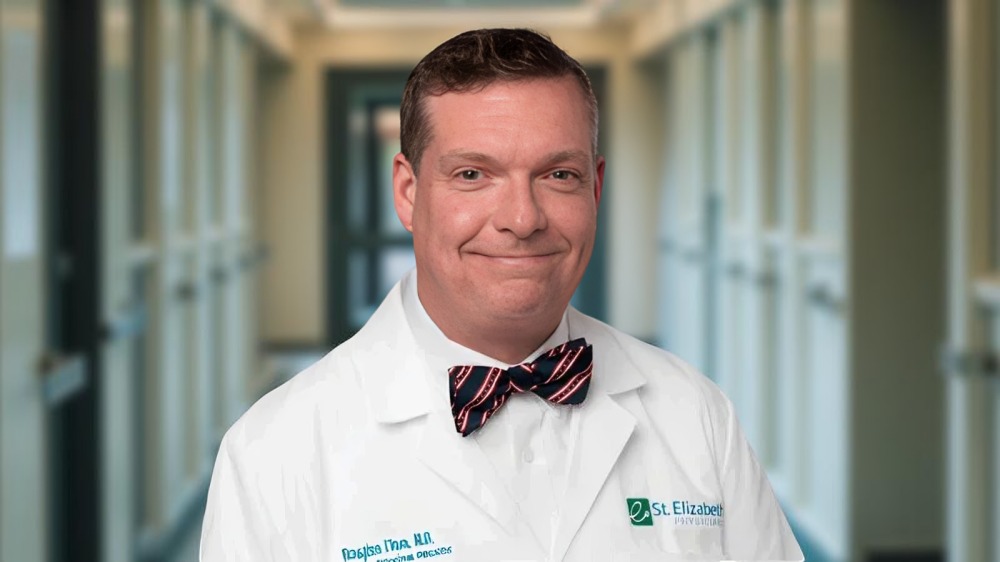
Douglas Flora, Executive Medical Director of Yung Family Cancer Center at St. Elizabeth Healthcare, President-Elect of the Association of Cancer Care Centers, and Editor in Chief of AI in Precision Oncology, shared a post on LinkedIn:
“Before AI, There Was the Thermometer.
‘AI is today’s Washington Manual—faster, smarter, infinitely more comprehensive, but serving the same essential function: extending the physician’s cognitive reach beyond what any single mind can hold.’
In 1868, a German physician named Carl Wunderlich published a book that rattled his colleagues.
He had spent fifteen years taking temperature readings—more than a million of them—using a foot-long thermometer that required twenty minutes per measurement.
His conclusion: fever was not a disease. It was a symptom.
The medical establishment did not applaud. For centuries, physicians had relied on what they called ‘the educated hand’—the trained touch of a clinician who could gauge fever by pressing palm to forehead. The thermometer threatened to reduce this sacred act to a number on a scale.
If anyone could read a thermometer, what made the physician special?
I remember my own version of this anxiety. The Washington Manual, spiral-bound, stuffed in my white coat pocket. Every intern carried one.
Some attendings looked down on us. You should know this by now. You shouldn’t need to look it up.
The physician-historian Andrew Lea, traces this fear across centuries—from pocket manuals to filing systems to digital tools.
I love his stuff, including a very wise piece in a December issue of NEJM AI reminding us that ‘What counts as human skill is, itself, historically situated and constantly renegotiated in the context of changing technologies.’
The educated hand is no longer taught. Few would call palpating a forehead the pinnacle of diagnostic skill. The skill didn’t disappear. It transformed.
The question isn’t whether AI will change medicine. It’s what skills will matter on the other side.
I explore more concepts like this in my new book, Rebooting Cancer Care—available at DougFlora.com, Amazon, and tensorblack.ai.”
More posts featuring Douglas Flora.