





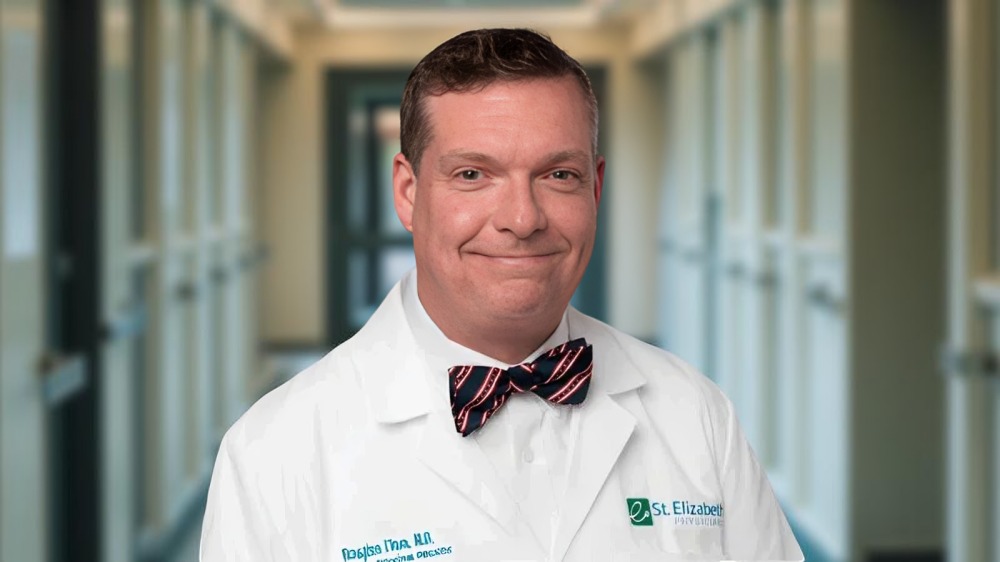
Douglas Flora, Executive Medical Director of Yung Family Cancer Center at St. Elizabeth Healthcare, President-Elect of the Association of Cancer Care Centers, and Editor in Chief of AI in Precision Oncology, shared a post on LinkedIn:
“Mental Health Can’t Be an Afterthought in Oncology Anymore
We’ve sequenced tumors. We’ve mapped biomarkers. We’ve built AI systems that can predict treatment response from a tissue slide. Precision oncology has transformed cancer care.
And yet.
1 in 3 cancer patients has a diagnosable mental health condition. 60% never receive a referral for screening. 2 in 5 who ask for support don’t get it.
We’ve applied extraordinary rigor to the molecular signature of disease. We haven’t come close to applying that same rigor to the psychological experience of the people living with it.
That’s starting to change.
I’m a decent oncologist. I can talk your ear off about minimal residual disease testing and cytokine release syndrome protocols.
But data-driven mental health care? I’m learning alongside everyone else.
Medical school didn’t teach me measurement-based psychiatric care. I can order an NGS panel in my sleep, but ask me to interpret a longitudinal PHQ-9 trajectory and I’m reaching for help.
This isn’t a criticism. It’s an opportunity.
We need our mental health professional colleagues to educate us. What does precision mental health care actually look like? How do we build it into cancer care the way we’ve built in tumor boards and molecular testing?
The Emerging Landscape
Tech-Enabled Collaborative Care. The Collaborative Care Model—backed by over 90 randomized trials—is getting a digital upgrade. Behavioral health care managers and psycho-oncologists are integrating directly into oncology practices, tracking symptoms in real time. Early adopters are seeing 58% improvements in depression scores within three months. Depression remission in 86 days versus 614 days in usual care. That’s nearly two years of suffering addressed through better process engineering.
Early Warning Systems. AI tools are scanning clinical notes and portal messages for linguistic markers of distress—identifying patients who need support before crisis hits. We’re shifting from reactive callbacks to proactive outreach.
Virtual Care Without Borders. Geography no longer dictates access. Digital therapeutics deliver evidence-based cognitive behavioral therapy directly to a patient’s phone. These aren’t meditation apps—they’re prescription-grade interventions calibrated to the cancer journey.
24/7 Support That Works. AI-enabled platforms offer round-the-clock symptom monitoring with escalation to oncology-trained clinicians. A patient waking up terrified at 2 AM can reach out and get a response.
The common thread? Technology isn’t replacing human empathy. It’s scaling it.
I’m organizing a Virtual Summit on the Future of Oncology Mental Health Care—bringing together national thought leaders on where we are and where we’re headed.
I’m looking for collaborators. If you’re a digital health innovator, or clinician doing this work—I want to learn from you. If you represent an organization aligned with this mission and interested in sponsoring or partnering—let’s talk.”

More posts featuring Douglas Flora.