





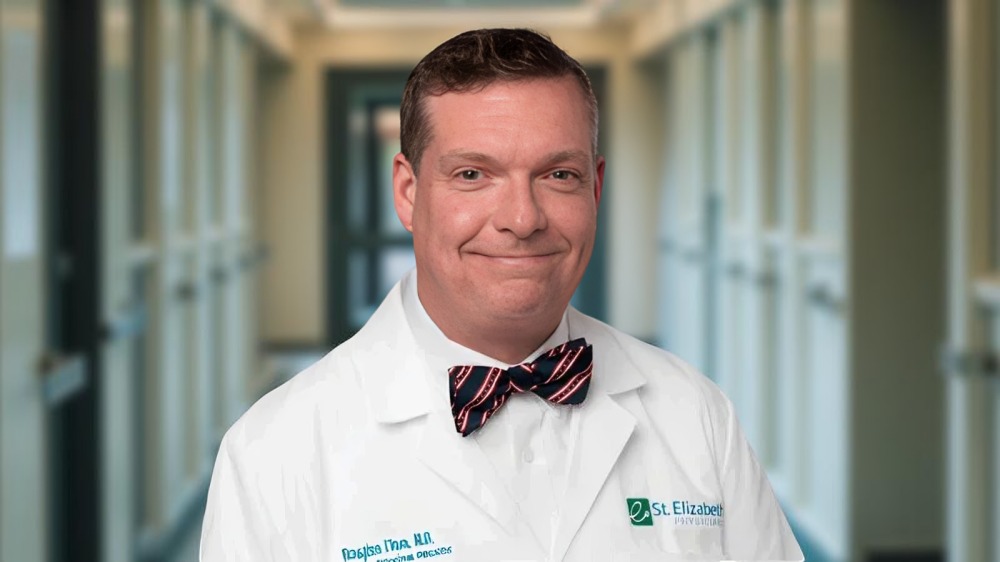
Douglas Flora, Executive Medical Director of Yung Family Cancer Center at St. Elizabeth Healthcare, President-Elect of the Association of Cancer Care Centers, and Editor in Chief of AI in Precision Oncology, shared a post by tensorblack on LinkedIn, adding:
“Work the Problem: Digital Twins in Oncology
“Let’s work the problem, people.” – Gene Kranz, Apollo 13
I joined my own “digital twin,” Sanjay Juneja, M.D., for Episode 105 of “AI and Healthcare by TensorBlack.” featuring global experts on this important topic, Jim St. Clair and James Fargason.
We discuss the evolution of the Digital Twin – from the simulations that helped bring Apollo 13 home to the real-time analytics driving Formula 1 – and ask the inevitable question: Is this coming to an oncology trial near you?
We may be approaching a time when our control groups are not other patients, but our own digital twins. Imagine a future where drug complications and toxicities are predicted in silico and intercepted before an infusion ever begins.
Find this episode at tensorblack.ai or on YouTube. While you are there, sign up for our upcoming newsletter, OncPulse (and follow our new page below.) We are curating the AI news that matters most—vetted by people who have spent decades fighting cancer themselves.
Join our growing community!”
Quoting tensorblack‘s post:
“What if we could test treatments on a perfect virtual replica of a patient—before ever touching the real person?
In Episode 105 of the AI and Healthcare Podcast — “How Digital Twins Could End Medical Guesswork” — Sanjay Juneja, M.D., and Douglas Flora, MD, LSSBB sat down with two extraordinary experts, Jim St. Clair and Professor James Fargason.
They explored how digital twins are moving from engineering and aerospace into medicine, creating dynamic, data-driven models of individual patients that can simulate physiology, predict outcomes, and guide personalized treatment decisions.
They discuss:
- Real-world applications already improving chronic disease management and surgical planning.
- The critical role of data standards, privacy, and trust.
- What it will take to move from today’s prototypes to tomorrow’s standard of care.
If you’re passionate about the future of precision medicine, this conversation is a must-listen.
Watch/listen to the full episode here and subscribe to the AI and Healthcare channel.
We would love to hear your thoughts: Are digital twins the key to ending trial-and-error medicine, or are there hurdles we’re underestimating?
Drop a comment below and tag someone who needs to see this.”
Proceed to the video attached to the post.
More posts featuring Douglas Flora on OncoDaily.