





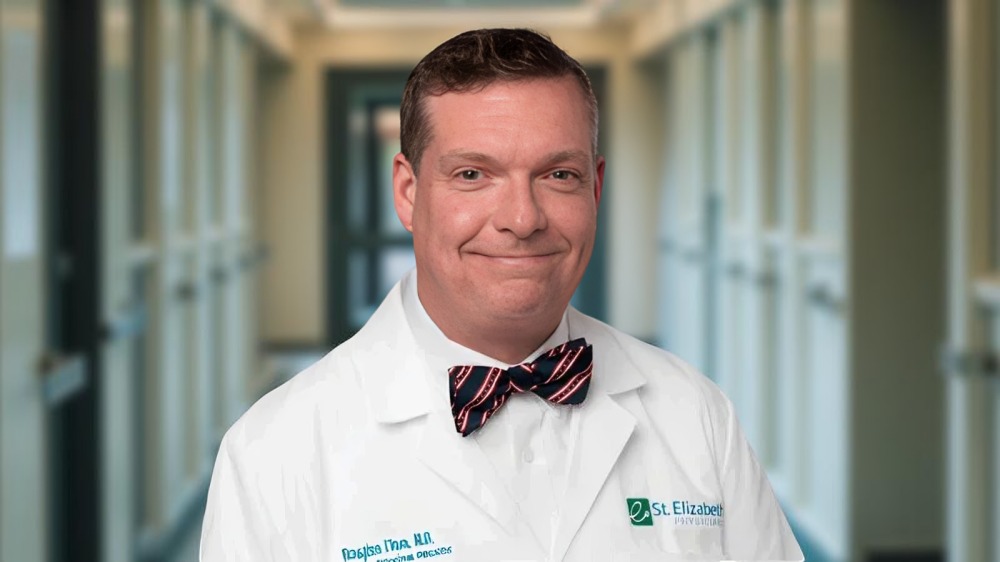
Douglas Flora, Executive Medical Director of Yung Family Cancer Center at St. Elizabeth Healthcare, President-Elect of the Association of Cancer Care Centers, and Editor in Chief of AI in Precision Oncology, shared a post on LinkedIn:
“The IV League: Why Elite Cancer Care Depends on Nurses, Not Just Doctors
In 1854, Florence Nightingale walked into a military hospital where the mortality rate was 42%. Within six months, she reduced it to 2%. The physicians received acclaim. Nightingale had orchestrated the miracle.
This pattern has repeated itself across medical history, a truth so constant it has become invisible.
I’ve written extensively about physician burnout and innovative technologies helping us reclaim time for what matters. But there’s a parallel crisis we discuss far less—one that may be even more dire. Oncology nurses are leaving the profession in alarming numbers. And we’re treating it like a staffing problem when it’s actually an existential threat to cancer care itself.
Consider a typical chemotherapy infusion. The nurse accessed the port that morning. She administered pre-medications, watching for subtle signs of allergic reaction. She hung the chemotherapy and monitored its infusion over hours. When the patient vomited, panicked, wept—she was there. Tomorrow when side effects peak. Next week when fever strikes. For years. This isn’t ancillary work. This is the work that keeps people alive through cancer treatment.
The Math That Should Terrify Us
- 18M cancer survivors today (26M by 2050)
- 2M new diagnoses annually (2.4M by 2040)
- 50,000 additional oncology nurses needed by 2030
- 40% of oncology nurses emotionally exhausted
- 40% of their shifts spent on documentation, not patient care
Higher patient-to-nurse ratios directly correlate with increased mortality, more infections, medication errors, worse outcomes.
We’ve embraced tech solutions for physicians. Nurses need them desperately:
Ambient AI documentation. Remote patient monitoring. Smart medication systems. Clinical decision support. The technology exists. We need the will to implement it.
But we also need: compensation reflecting actual value created, career pathways rewarding bedside excellence, evidence-based staffing ratios, and support systems for a workforce bearing witness to mortality daily.
As we integrate more AI into oncology, the most valuable capabilities are precisely those human dimensions that have always been nursing’s province. AI can read scans, predict responses, synthesize literature. But it cannot sit with a frightened patient at 3 AM.
These human capabilities don’t become less valuable as medicine grows more technological. They become MORE valuable.
We’re heading toward far more patients and fewer nurses. The infrastructure holding cancer care together is failing.
Oncology nurses aren’t support staff. They’re essential infrastructure. When we fail to invest, everything else—all our advances, technology, innovation—becomes impossible to deliver.
We’ve invested in physician solutions and celebrated medical innovation.
Now it’s time to extend that same energy to the professionals who make it all actually reach patients.”
More posts featuring Douglas Flora.