





Douglas Flora, Executive Medical Director of Yung Family Cancer Center at St. Elizabeth Healthcare, President-Elect of the Association of Cancer Care Centers, and Editor in Chief of AI in Precision Oncology, shared a post on LinkedIn:
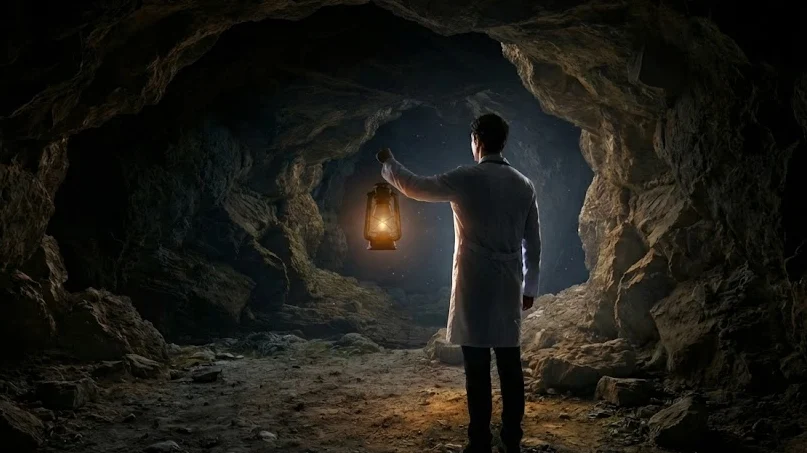
“Enter the Cave: On Administering Medicine vs. Practicing It
To receive a diagnosis of cancer is to be separated, instantly and often violently, from the world of the well. The patient is cast into a solitary darkness – a cave where the familiar physics of life no longer apply. For us, the physicians standing on the outside, the temptation is always to remain at the threshold. It is safer there. From the entrance, we can shout our instructions downward into the shadows – prescribing the regimen, explaining the staging, outlining the toxicities – and the medicine will still work. The science remains valid even if we never step foot inside.
But when I consider the oncologists I most admire – the ones whose practice seems immune to the erosion of burnout, the ones whose patients speak of them with a reverence reserved for healers rather than technicians – I realize they are making a different choice. They understand that technical mastery is merely the price of admission. The true art of oncology begins only when we pick up the lantern and choose to descend. This is where we start practicing Medicine instead of just administering it.
This choice is becoming increasingly difficult. We work within a system that is actively hostile to depth. The electronic health record demands our gaze; productivity metrics demand our speed. We are measured by relative value units and efficiency, pushed to treat the clinic like an assembly line. In this environment, choosing to sit down, to listen to the silence between the words, and to bear witness to suffering we cannot fix is an act of resistance. It is exhausting work because it requires us to remain porous and available in a structure designed for emotional distance.
This is where we arrive at the central paradox of our time, and the core of what it means to Reboot Cancer Care. For years, we have feared that technology would sever the human connection in medicine. I believe the opposite is true. I have been thinking lately that artificial intelligence may be the very tool that allows us to return to the bedside. If an algorithm can shoulder the crushing weight of administrative burden – if it can synthesize the labs, generate the documentation, and navigate the prior authorizations – then it hands us back the one thing the system has stolen: time.
We are not developing these tools to replace the physician. We are building them to reclaim the fifteen minutes required to truly descend into the cave. We are using the most advanced technology in human history to protect the most ancient human practice: the act of sitting with another person in the dark, waiting for the answer beneath the answer.
It is not just about better molecules or sharper imaging; it is about creating a clinical environment where the technology handles the data so that we can handle the human. It is the promise that we can stop shouting from the entrance and finally, fully, walk alongside.
“Walking with a friend in the dark is better than walking alone in the light.” — Helen Keller
There exists, in the architecture of modern oncology, a subtle but profound distinction that determines whether we are merely administering medicine or truly practicing it. It is the difference between being a chemotherapist and being an oncologist – between standing at the threshold and stepping into the depths.
The metaphor of the cave is, of course, ancient. Plato used it to describe the human condition, the shadows we mistake for reality, the painful journey toward enlightenment. But for our patients, the cave is neither metaphor nor philosophy. It is the actual space they enter the moment we speak those words that cleave their lives into before and after. The diagnosis. The staging. The prognosis. They descend into darkness while the world above continues in sunlight, oblivious.
And we who care for them discover, if we pay attention, that we have a choice about how we will meet them there.
The Medicine We Know
The technical work of oncology represents a genuine triumph. The protocols matter deeply. The dose reductions, the molecular pathways, the targeted therapies, the immunologic checkpoints – all of this is the hard-won knowledge of decades of clinical trials and laboratory investigation. When we select the proper regimen, adjust for renal function, and monitor for toxicity, we are practicing medicine at a level of sophistication that would have seemed miraculous even a generation ago.
This is essential work. This is lifesaving work.
And yet, when I think about the oncologists I most admire – the ones whose patients speak of them with a particular quality of gratitude, the ones who seem to carry their calling with grace even after decades of practice—they are doing something in addition to this technical excellence. They are practicing an art that isn’t included in treatment guidelines but may be equally therapeutic.
They understand that we can stand at the cave’s entrance and call our instructions downward into the shadows – take this regimen, follow this protocol, return in three weeks for restaging – and the medicine will still work. The interventions are carefully calibrated, evidence-based, and often lifesaving.
But there is something profoundly different about choosing to descend, to carry the light into the darkness, and to walk alongside.
When We Are at Our Best
At our best, we understand that technical mastery is the foundation, not the ceiling. The deeper work begins when we choose to sit down rather than stand. When we ask a question and then remain quiet long enough to hear the answer beneath the answer. When we notice the tremor in the hand, the spouse who has stopped speaking, the teenager who won’t make eye contact.
This requires something our training scarcely prepares us for: a willingness to enter into suffering we cannot always ameliorate, to bear witness to fear we cannot always assuage, to remain present in the face of uncertainty that disturbs us as much as it disturbs our patients.
Real listening – and I mean the listening that is almost archaeological in its patience, that excavates layers of meaning from silence and gesture and the things people cannot yet bring themselves to say – is an art unto itself. When we truly listen, we hear the questions our patients are actually asking: not just “What’s the response rate?” but “Will I see my daughter graduate?” Not just “What are the side effects?” but “Will I still recognize myself?”
The Quality of Light
What we bring into the cave matters enormously. We bring, of course, our knowledge- the accumulated wisdom of clinical trials and molecular biology, the pattern recognition honed over thousands of patient encounters. We bring our experience in toxicity management and supportive care, along with our familiarity with the trajectories these diseases follow.
But we bring something else too, something more challenging to quantify but no less essential. We bring our attention, undivided and unhurried, when we can manage it. We bring our willingness to sit with what is difficult. We acknowledge that we do not have all the answers, that medicine remains an uncertain art despite our proliferating technologies, and that we will learn this journey together.
We bring kindness.
Not kindness as sentiment or softness, but kindness as a rigorous clinical practice. Kindness as the recognition that the person before us is the ultimate authority on their own life, even as we are the authority on their cancer. Kindness as the insistence that hope and honesty are not opposites but rather depend upon each other – that real hope requires clear-eyed acknowledgment of reality, and that reality is always more complex and more humane than our worst fears suggest.
Kindness as the willingness to fight for our patients in ways that never appear in the medical record: the calls to insurance companies squeezed between clinic visits, the creative problem-solving around transportation and childcare and financial toxicity, the small acts of attention that communicate you matter and you are not alone.
This work exhausts us precisely because it asks us to remain emotionally available in a system designed to produce emotional distance. The electronic health record measures our clicks, not our compassion. The productivity metrics reward speed, not depth. We are encouraged to see more patients in less time, to maximize relative value units, and to demonstrate efficiency.
And yet I see oncologists every day who resist this tide. Those who insist on sitting down. Who protect the space for real conversation even when the schedule is running behind. Who remember that efficiency, while necessary, is not the highest virtue in oncology. That presence matters. That the quality of attention we bring to the bedside is itself therapeutic.
An Ancient Practice, A New Possibility
I have been thinking lately about how technology – particularly artificial intelligence – might paradoxically return us to this older, deeper model of oncology. Not by replacing the human work, but by reclaiming the time it requires.
If an algorithm can handle prior authorizations, generate draft notes, and synthesize laboratory data, then perhaps we receive as a gift what we have lost to administrative burden: the fifteen minutes to actually sit down. The space to ask the question and wait for the answer. The margin to notice what is unspoken. The freedom to descend into the cave rather than merely calling from its entrance.
This is what I mean when I say we are evolving faster than cancer for the first time in human history. We are not just developing better treatments—though we are doing that. We are creating the possibility of recovering what was best in medicine before it was industrialized: the attention, the relationship, the shared journey through darkness toward whatever light can be found.
Choosing the Depths
We stand now at a peculiar juncture. We possess therapeutic capabilities our predecessors could scarcely imagine—immunotherapies that teach the body to recognize and attack its own malignancies. These cellular therapies can be engineered in laboratories and infused like medicine, targeted agents that exploit the molecular vulnerabilities of specific cancers with remarkable precision.
And yet for all this firepower, for all this scientific sophistication, our patients still need something utterly ancient and fundamentally human: someone to go with them into the fearful places.
Not to fix everything – we cannot always do that. Not to have all the answers – we often do not. But to be present. To witness. To walk alongside.
When we practice this kind of accompaniment, something changes in the room. The clinical encounter becomes less transactional and more relational. The disease remains the same, the prognosis may be unchanged, but the patient is no longer alone with it.
This is not soft medicine. This is essential medicine. This is what it means to practice oncology rather than merely administer chemotherapy – to bring both scientific rigor and human presence to the bedside, to understand that healing is never only biological, that caring for the whole person means we must be willing to enter the darkness ourselves.
The choice remains constant, made new each day, with each patient: Will we stand at the threshold and call our instructions into the shadows? Or will we pick up the light and descend?
The cave is always there. The darkness is always absolute. The fear never entirely dissipates.
But neither does our capacity to meet it – not with false promises or empty reassurance, but with the steadfast willingness to accompany another human being through the most difficult journey they will ever take.
This is the work. This is what we signed up for, even if we didn’t fully understand it when we began.
To carry the lamp into the cave.
To step past the threshold.
To practice medicine not from a distance but from within the depths, where our patients wait for us, where they have always waited – not for perfection, not for miracles, but for someone brave enough to join them in the darkness and walk with them toward whatever light remains to be found.”
More posts featuring Douglas Flora on OncoDaily.