





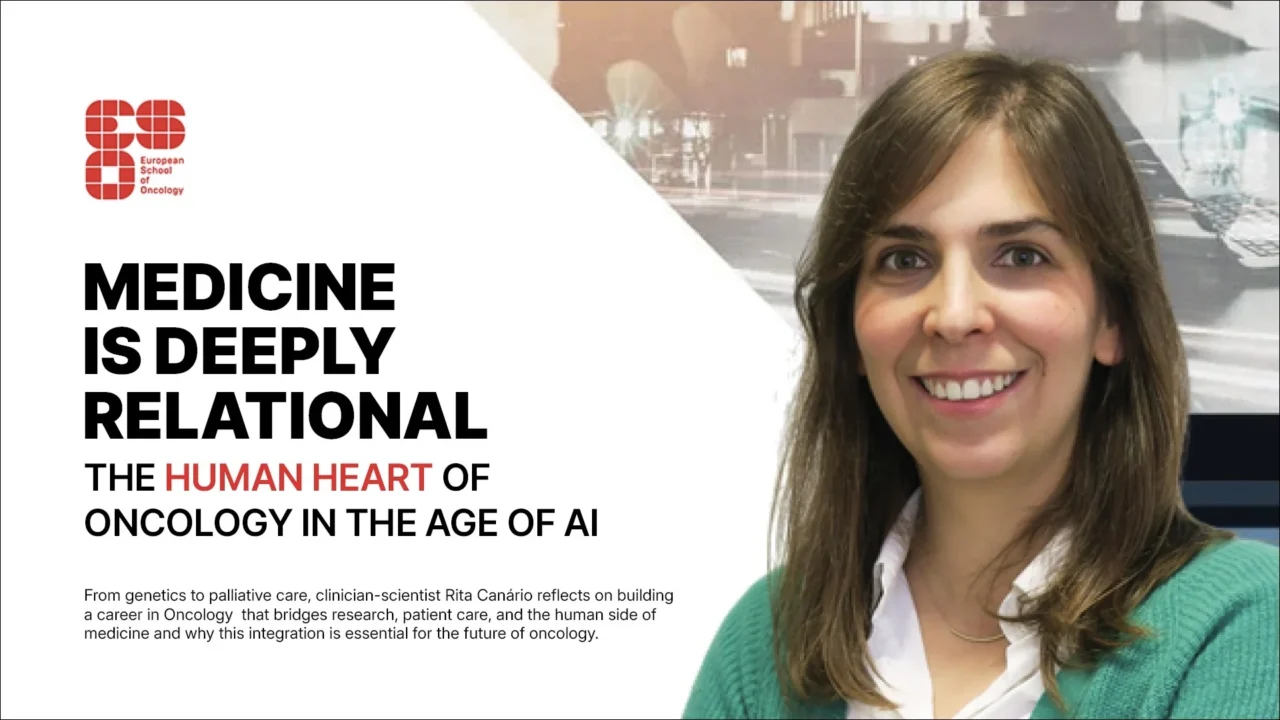
CancerWorld shared a post on LinkedIn:
“‘Medicine is deeply relational and in the age of AI, that matters more than ever.’
In this article we explore the perspective of Dr. Rita Canário, a clinician-scientist whose career bridges oncology, hereditary cancer research, and palliative care.
Her journey highlights an important truth for the future of healthcare:
Integration—not separation—between research, clinical care, and teaching is essential to delivering meaningful patient outcomes.
As oncology continues to evolve through advances in genetics, digital pathology, and AI, one message stands out clearly: technology will transform how we practice, but not why we practice.
Dr. Canário reminds us that:
- Patients are not just recipients of care, they shape the questions we ask in research.
- Evidence-based medicine extends beyond treatments to communication and relationships.
- Empathy, listening, and human connection are core clinical competencies, not soft skills.
In a fast-paced, technology-driven environment, the human dimension of medicine becomes even more critical.
The patient–doctor relationship is not an optional part of care, it is its foundation.
Read the full CancerWorld article by Knarik Arakelyan.”
More posts about CancerWorld.