This week’s top 10 opportunities are heavily weighted toward pipeline-building—especially summer cancer research placements and meeting-based scholar awards that get trainees into the field quickly. The deadline pressure is real: most of this list closes between January 4 and January 21, with a second wave in February–early March.
On the training side, multiple programs fund full-time, mentored summer research across major cancer centers: MD Anderson (June 1–Aug 7), Georgia Cancer Center (June 3–July 15), USC/CHLA’s NIH-supported SORF (aimed at medical students between MS1 and MS2), and the Mays Cancer Center program for undergraduates (10 weeks, $5,000 stipend, small cohort). Collectively, these opportunities emphasize early exposure, structured mentorship, and tangible research skill-building over a single summer.
Beyond summer training, the list includes several pathways that move researchers and clinicians toward longer-term impact: the MUSC Hollings Graduate Fellowship (up to two years for doctoral trainees), Cancer Research KI translational seed funding (to generate early clinical-facing data and position teams for larger grants), and LUNGevity’s Career Development Award ($300,000 over 2 years) aimed at accelerating independence in lung cancer research. Rounding out the week are recognition and access-oriented awards—AACR’s Women in Cancer Research and Undergraduate Scholar awards for Annual Meeting participation, plus the Connie Henke Yarbro Excellence in Cancer Nursing Mentorship Award, highlighting mentorship as a measurable driver of better cancer care.
1. MD Anderson Summer Program in Cancer Research
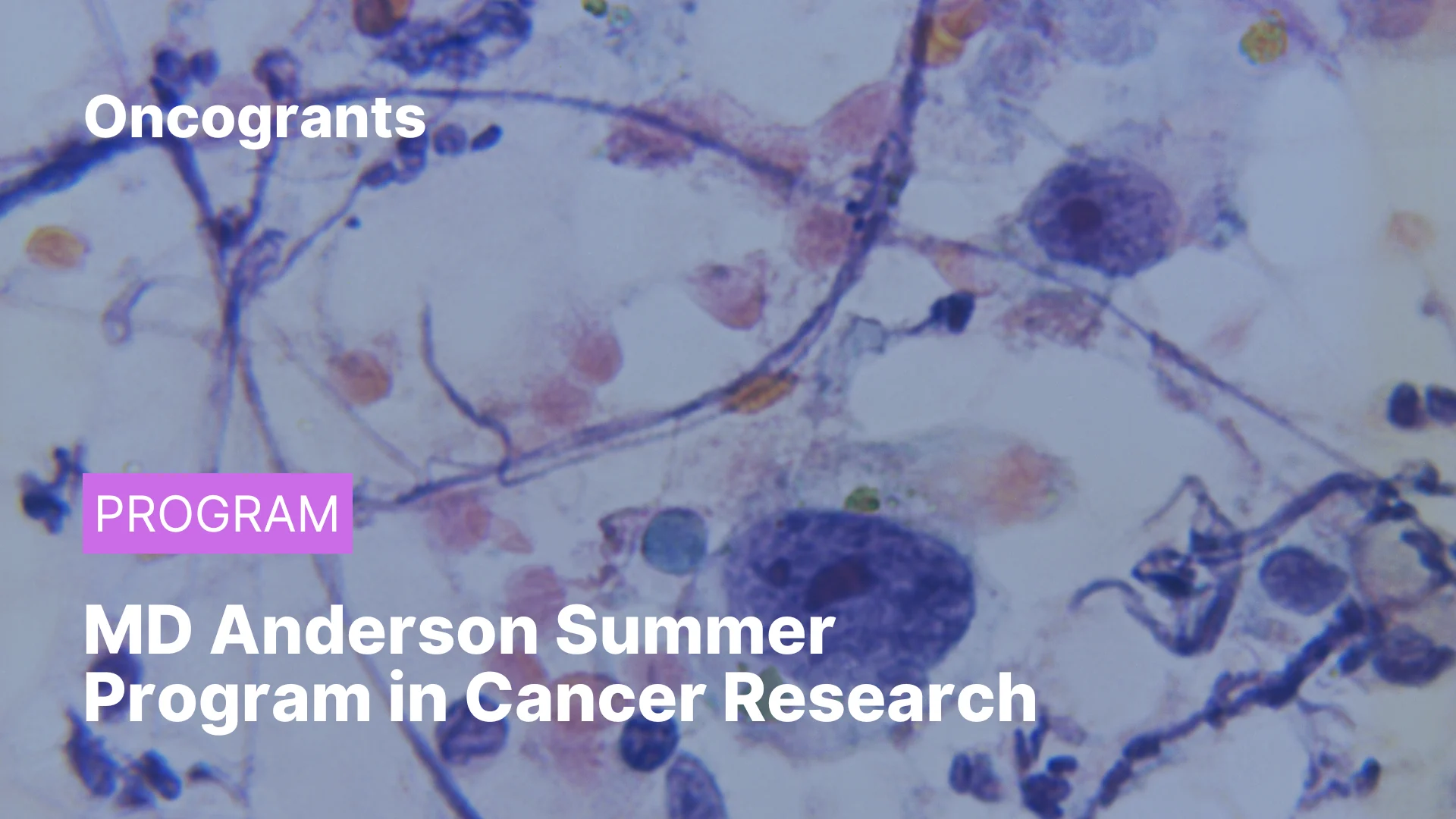
MD Anderson’s Summer Program in Cancer Research provides a structured summer research experience in cancer research environments at MD Anderson, designed to build research skills through mentored projects.
Eligibility Criteria:
- Applicant categories and prerequisites are defined on the program page (program is part of MD Anderson early-career pathway summer programs).
- Participants should be available for full-time summer research during the stated program dates.
Funding Details:
- Summer research program (support/stipend details are program-specific; see program page).
- Program dates: June 1, 2026 – August 7, 2026.
Deadline:
- January 14, 2026.
Where to go for further information:
2. LUNGevity Foundation Career Development Award

LUNGevity Foundation – Career Development Award (2026). A prestigious award designed to launch the careers of promising lung cancer researchers. LUNGevity’s Career Development Award supports early-career scientists (typically junior faculty or postdocs transitioning to independence) who have novel ideas to improve lung cancer detection, diagnosis, or treatment. This program nurtures the next generation of lung cancer experts by providing significant funding and mentorship opportunities, ultimately helping ensure a vibrant pipeline of new discoveries in the field.
Eligibility Criteria:
- Early-career investigators (e.g. within 5 years of first faculty appointment or equivalent). Applicants may be advanced postdoctoral fellows or assistant professors pursuing independent research.
- Research must be lung cancer-focused, with clear potential to impact early detection, targeted therapy, immunotherapy, or patient outcomes.
- Candidates should have fewer than 10 years of postdoctoral research experience. All applicants require a faculty-level mentor or supervisory support if not yet independent. Open to U.S. and international researchers.
Funding Details:
- Duration: 2 years of support.
- Amount: $300,000 USD total (disbursed as $150K per year). Funds cover salary, supplies, and other research expenses; a portion can support a research staff or equipment as needed.
- Mentorship: LUNGevity may facilitate mentorship and professional development for awardees, enhancing their career trajectory.
Deadline:
- February 15, 2026 – Full application due by this date. (The online application portal opens January 12, 2026, and applicants are encouraged to register early. All proposal materials and letters must be submitted by the deadline.)
Where to go for further information:
3. Cancer Research KI Translational Seed Funding Grant

The Cancer Research KI Translational Seed Funding Grant 2026 provides seed funding for translational cancer research projects at Karolinska Institutet, with an emphasis on early‑stage work that bridges experimental and clinical cancer research and positions teams for larger external grants.
Eligibility Criteria:
- Applicants must be eligible to apply through Karolinska’s Cancer Research KI mechanisms (typically KI‑affiliated researchers; see call text on the KI site).
- Project must be clearly translational and cancer‑focused (e.g., moving mechanistic findings toward clinical application, biomarker validation, or patient‑oriented implementation).
- Other detailed eligibility requirements (e.g., PI status, co‑applicant rules) are specified in the full call on Cancer Research KI.
Funding Details:
- Mechanism: Seed funding for translational cancer projects; budget cap and allowable cost categories are defined in the Prisma call documentation linked from the KI page.
- Project start: June 1, 2026 (earliest start date).
- Funds are intended to support personnel time, consumables, and other direct costs necessary to generate data for follow‑on applications.
Deadline:
- Call opens: December 1, 2025.
- Application deadline: February 2, 2026.
Where to go for further information:
4. MUSC Hollings Cancer Center Graduate Fellowship

The MUSC Hollings Cancer Center Graduate Fellowship provides up to two years of fellowship support for doctoral students at the Medical University of South Carolina who are conducting cancer‑focused research. The program is designed to deepen cancer research training and help top students move toward independent cancer research careers.
Eligibility Criteria:
- Doctoral student at MUSC (any discipline) with a cancer‑related research proposal prepared by the applicant.
- Must achieve PhD candidacy before the fellowship is activated (award can be deferred up to 6 months until candidacy is reached).
- U.S. citizenship not required, but applicant must hold a valid U.S. visa.
- Only one application per Hollings mentor per cycle; each applicant may apply at most twice.
- Mentor/department must commit to covering student health insurance.
Funding Details:
- Duration: Up to 2 years of support.
- Support: Two‑year research fellowship including stipend and research support; since inception, the MUSC College of Graduate Studies has contributed USD 5,000 per year toward stipend support for each fellow (current specifics in the internal call).
- Expectations: External fellowship application (e.g., F31) submission, peer‑reviewed publications, annual progress reports, and participation in Hollings trainee activities (including the LOWVELO ride).
Deadline:
- January 9, 2026, 5:00 pm (Graduate Fellowship applications).
Where to go for further information:
5. Georgia Cancer Center Summer Research Experiences
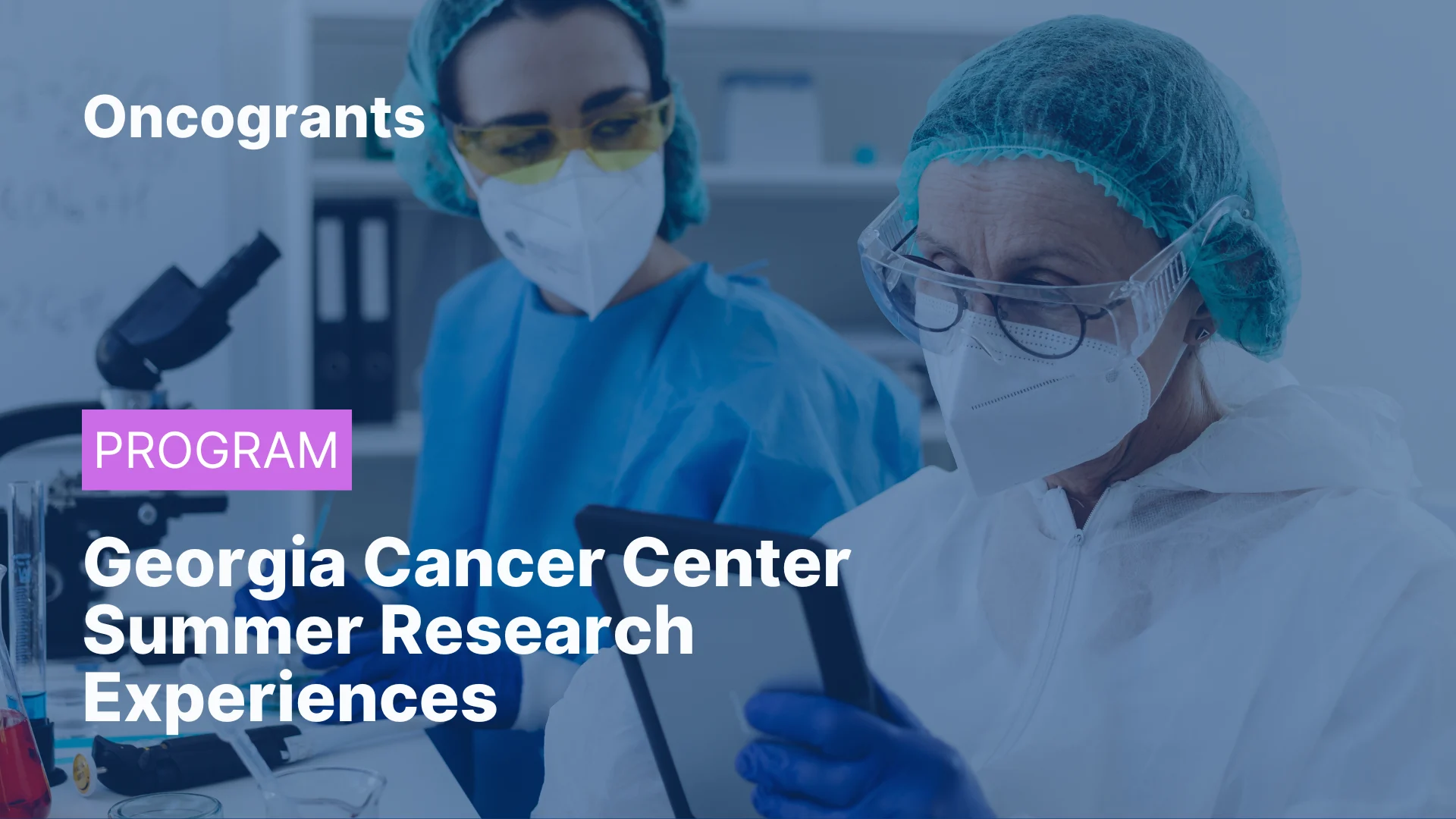
The Georgia Cancer Center Summer Research Experiences (SRE) program offers an intensive summer research experience with defined program dates and a structured application cycle.
Eligibility Criteria:
- Eligibility (student level, required documents, and any location requirements) is defined in the program’s application materials.
- Applicants must be available for the full program period (weekday schedule).
Funding Details:
- Program dates: June 3, 2026 – July 15, 2026 (6 weeks, Monday–Friday).
- Application is submitted via the program’s online application system.
Deadline:
- January 15, 2026
Where to go for further information:
6. USC/CHLA Summer Oncology Research Fellowship Program
The USC/CHLA Summer Oncology Research Fellowship (SORF) is an NIH-supported cancer research fellowship designed primarily for medical students between their first and second year who are considering cancer research careers.
Eligibility Criteria:
- Designed for medical students (summer between MS1 and MS2).
- Research is conducted at Children’s Hospital Los Angeles and USC Norris Comprehensive Cancer Center.
- Applicants must meet program-specific requirements listed on the application page.
Funding Details:
- NIH-supported research fellowship (R25-supported; additional philanthropic/institutional support noted by program).
- Mentored research project with structured experience (stipend/support details are provided by the program).
Deadline:
- January 4, 2026 (11:59 PM PST) (regular deadline).
Where to go for further information:
7. Mays Cancer Center Summer Research Mentorship Program
The Mays Cancer Center Summer Research Mentorship Program provides mentored cancer research training for undergraduates with a defined stipend and 10-week summer program dates.
Eligibility Criteria:
- Targets undergraduate students (selection and eligibility details per program listing).
- Applicants must be available full-time for the full program dates.
Funding Details:
- Duration: 10 weeks (June 1 – August 7, 2026).
- Stipend: $5,000.
- Cohort size: 8 undergraduate trainees (as listed).
Deadline:
- March 2, 2026
Where to go for further information:
8. Connie Henke Yarbro Excellence in Cancer Nursing Mentorship Award
This award recognizes exceptional mentorship in oncology nursing and is designed to highlight concrete, high-quality mentorship impact within cancer care.
Eligibility Criteria:
- Nominees must meet all eligibility requirements defined by the Oncology Nursing Foundation (ONF).
- Nominations must include at least three specific examples of the nominee’s mentorship and qualities (per ONF requirements).
Funding Details:
- Recognition award presented in connection with ONS Congress activities (recipient engagement and recognition details outlined by ONF).
- Nomination is submitted online via ONF’s application system.
Deadline:
- January 21, 2026
Where to go for further information:
9. AACR Annual Meeting Women in Cancer Research Scholar Awards
The AACR Women in Cancer Research (WICR) Scholar Awards support scholars attending AACR Annual Meeting programming, with criteria focused on career stage and WICR alignment.
Eligibility Criteria:
- Must meet AACR WICR Scholar Award criteria as defined in the AACR portal (career stage, applicant category, and documentation requirements).
- Must be able to attend the AACR Annual Meeting as required by the award.
Funding Details:
- Scholar award support (travel/registration components are defined by AACR for the specific award).
- Application submitted via AACR’s award portal.
Deadline:
- January 12, 2026
Where to go for further information:
10. AACR Annual Meeting Undergraduate Scholar Award in Cancer Research
This AACR scholar award supports undergraduate participation in AACR programming and professional development tied to the AACR Annual Meeting.
Eligibility Criteria:
- Intended for undergraduate applicants in cancer research (specific eligibility rules and required documents are defined in the AACR award portal).
- Applicants must meet AACR award-specific trainee and attendance requirements.
Funding Details:
- Scholar award intended to support participation in AACR Annual Meeting activities (support components defined by AACR).
- Application submitted through AACR’s award application portal.
Deadline:
- January 12, 2026
Where to go for further information:
As you evaluate this week’s opportunities, prioritize fit and feasibility: align the mechanism to your career stage (undergraduate, medical student, graduate trainee, early-career investigator), confirm eligibility early, and engage mentors and letter writers well ahead of submission. Several of these calls cluster in mid‑January, so a clear plan and complete application package will matter more than last‑minute polishing.
Before applying, review the official program pages for final requirements, allowable costs, and any institutional or attendance expectations, as details can change between announcement and submission. We’ll continue tracking high-value oncology funding opportunities each week—follow OncoDaily’s OncoGrants series for the next roundup.