





The Institute of Cancer and Crisis (ICC) shared a post on LinkedIn about a paper by Lucas Leite Cunha et al. published in Frontiers in Public Health:
“Cancer survivorship doesn’t end with treatment — and in times of crisis, survival becomes even more fragile.
A recent open-access study published in Frontiers in Public Health (2025) highlights the growing challenges faced by cancer survivors in low- and middle-income countries, where health systems are often under strain from economic, political, and humanitarian crises.
The study shows that survivorship outcomes worsen not because cancer is different — but because support systems fail when resources are limited and instability persists.
Cancer survivors in crisis-affected settings often face:
• Disrupted follow-up care and monitoring.
• Limited access to essential medications and rehabilitation.
• Financial toxicity and out-of-pocket health expenses.
• Unmet psychosocial and mental health needs.
• Weak survivorship programs within national health systems.
Key insights from the study:
• Cancer survivorship is increasingly shaped by systemic inequality and resource scarcity.
• Fragmented care after treatment leads to preventable complications and reduced quality of life.
• Survivors in low-resource settings are disproportionately affected, widening global health disparities.
• Strengthening survivorship-focused, resilient health systems is essential for long-term outcomes.
Why this matters:
Surviving cancer should not depend on income level, geography, or system stability.
Ensuring continuous, comprehensive survivorship care is not a luxury — it is a global public health priority.”
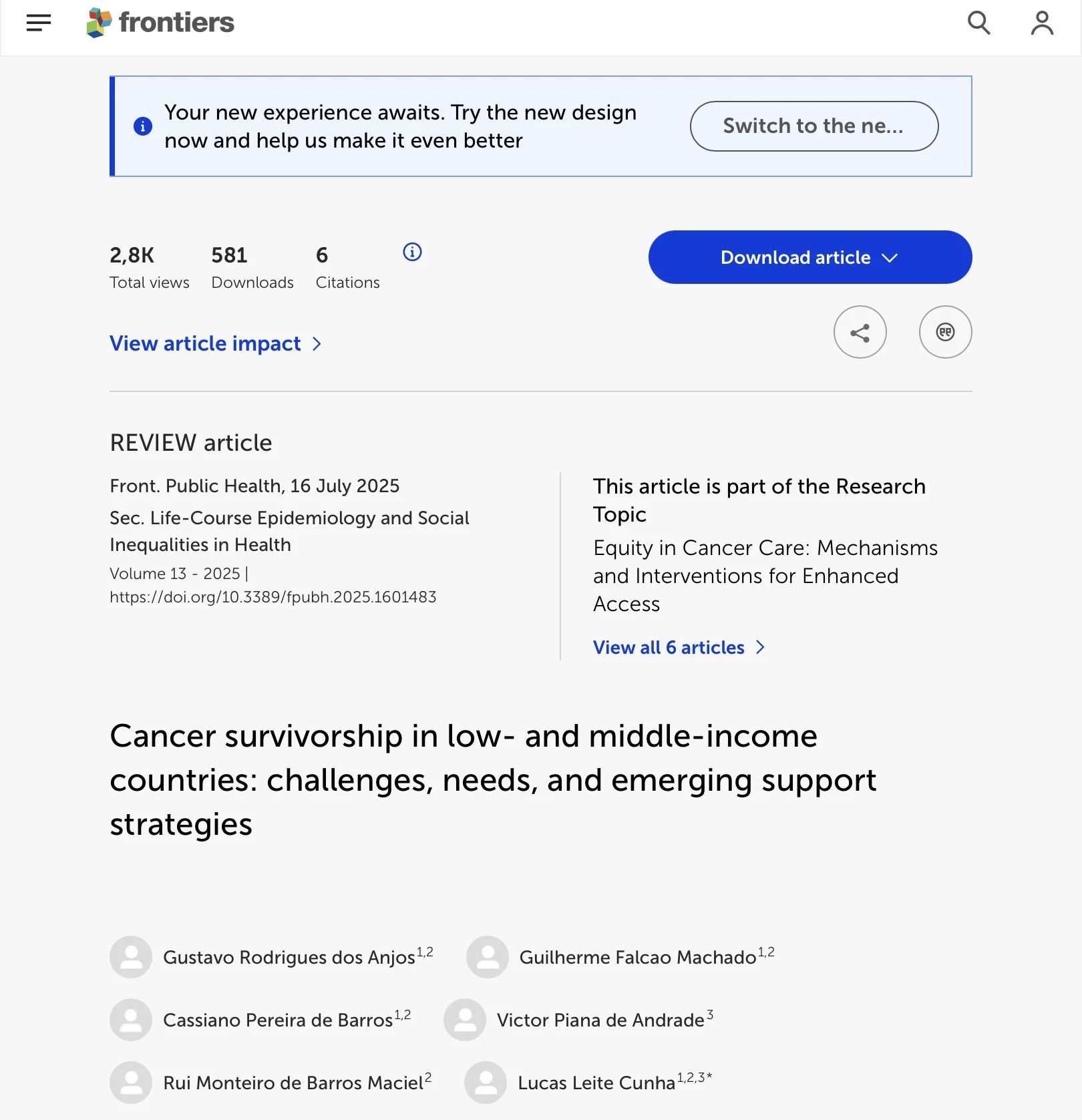
Title: Cancer survivorship in low- and middle-income countries: challenges, needs, and emerging support strategies.
Authors: Gustavo Rodrigues dos Anjos, Guilherme Falcao Machado, Cassiano Pereira de Barros, Victor Piana de Andrade, Rui Monteiro de Barros Maciel, and Lucas Leite Cunha.
You can read the whole article in Frontiers in Public Health.
More posts from ICC on OncoDaily.