By Carmen Monge, Lead Lived Experience Advocacy Hub
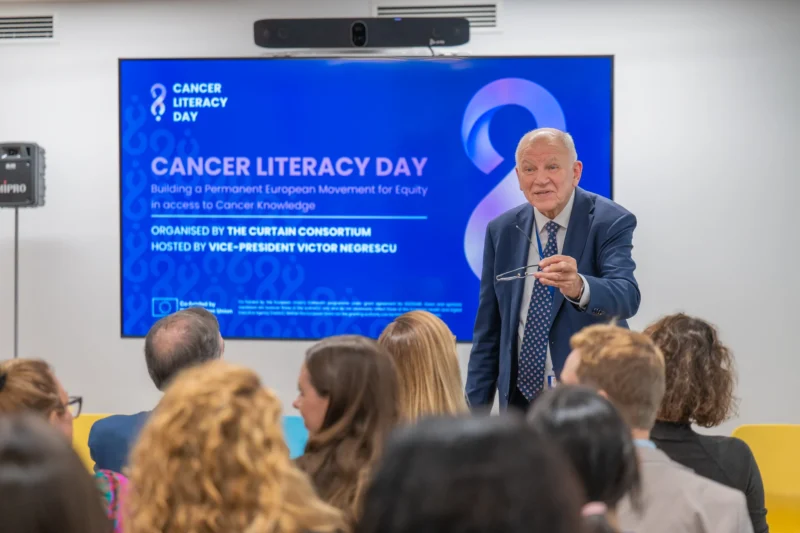
On 14 October, the first Cancer Literacy Day was celebrated at the European Parliament Hub, organised by the CURTAIN consortium. But what exactly is cancer literacy, and why is it important for the entire oncology ecosystem to understand it, especially the general public, people with lived experience of cancer, and patient advocates?
“Cancer Literacy Day is not just a date on the calendar. It is the beginning of a permanent European commitment. By making cancer knowledge accessible, understandable, and culturally appropriate for every citizen, we take a decisive step toward a more equitable future for cancer care in Europe.”
– Dr. Marius Geantӑ, Coordinator of the CURTAIN Project
According to the project, “Cancer Literacy is the ability to find, understand, evaluate and use information about cancer”. This initiative aims to educate people and empower them to make informed decisions about prevention, vaccination and screening, even before a cancer diagnosis. This also applies to the healthcare ecosystem during diagnosis, treatment and follow-up.
This initiative also aims to reduce inequalities in cancer care by ensuring that underrepresented and underserved communities also have access to information that could improve diagnosis, screening, treatment and outcomes.
“Cancer Literacy connects scientific progress with informed decisions in everyday life.”
The Commissioner highlighted the fifth edition of the European Code Against Cancer, which provides 14 evidence-based recommendations and is available in all EU languages.
The importance of cancer literacy was also emphasised at the institutional level, with statements from the Vice-President of the European Parliament and the European Commissioner for Health, highlighting the relevance of this initiative for cancer care across Europe.
Watch their statements:
The programme addressed cancer literacy at three levels: citizens and patients, healthcare professionals, and organisations and health systems, highlighting the shared responsibility of individuals and institutions to ensure access to clear, trustworthy information and support informed decision-making. It also explored the role of digital health, AI and large language models in making cancer information more accessible and understandable, while emphasising the importance of addressing digital inequalities to ensure that underserved communities are not left behind.
From the OncoDaily Lived Experience Advocacy Hub, we recognise the importance of initiatives such as Cancer Literacy Day in making cancer information more accessible, understandable and inclusive. Cancer literacy and lived experience advocacy go hand in hand, as access to information is essential for meaningful patient participation in healthcare decisions. By bringing together scientific knowledge and lived experiences, we can help bridge the gap between information and patient empowerment, contributing to more equitable and patient-centred cancer care.
You may also find this interesting: