






In Nepal, cancer does not affect only the person whose name appears on the medical record. Sometimes, the person sitting beside the hospital bed is quietly becoming a patient, too.
At 2 a.m. in a hospital corridor in Kathmandu, a husband sits beside his sleeping wife. She has breast cancer. He has learned the names of her medicines, the timing of her chemotherapy, how to help her walk to the bathroom and how to smile when she asks,
“Will I be okay?”
What he has not learned is how to answer a different question:
“What will happen to me?”
He does not ask it aloud. He cannot afford to.
Back home in a village several hours away, his children are waiting. He has already missed weeks of work. The family’s savings are disappearing into transportation, food, investigations and treatment-related expenses. Relatives occasionally send money, but everyone has their own problems. So he keeps going.
This is what cancer caregiving can look like in Nepal.
We often describe cancer in terms of the patient: the diagnosis, stage, chemotherapy, radiation, surgery, survival and quality of life. But behind almost every patient is another person whose life has been rearranged around the illness. That person may be a spouse, daughter, son, parent or sibling. They become the person who remembers appointments, carries reports, buys medicines, manages money, communicates with doctors, prepares food, provides emotional reassurance and stays awake through the night. And slowly, caregiving can become toxic. Not because the caregiver is toxic.
Because the burden is.
Recent evidence from Nepal makes this difficult to ignore. A study among cancer caregivers at a tertiary hospital in Kathmandu found anxiety in more than half of participants and depression in nearly one-third. Another recent study from B.P. Koirala Institute of Health Sciences in Dharan found clinically significant distress among more than nine in 10 caregivers, with almost half experiencing severe distress.
These numbers should disturb us. But numbers cannot show what distress looks like. Distress can look like a father who stops talking because he does not want his children to worry. It can look like a daughter who cries silently in a hospital bathroom before returning to her mother’s bedside with a smile. It can look like a husband who has not slept properly for months but says,
“I am fine.”
It can look like irritability, hopelessness, constant fear, exhaustion or guilt.
And sometimes it looks like nothing at all. That may be the most dangerous part. Cancer care frequently asks caregivers to sacrifice their own health without formally recognizing that sacrifice as part of cancer care.
The healthcare system checks the patient’s blood pressure, weight, laboratory results and treatment response. But who checks whether the caregiver has slept? Who asks whether they can still afford the journey home? Who asks whether they are frightened? Who asks whether they have someone to talk to? In many Nepali families, caregiving is considered an expression of love-and it is. But love does not make a person invulnerable. A caregiver can love someone deeply and still be exhausted. They can be grateful and still be depressed. They can be hopeful and still be terrified. They can want their loved one to survive while quietly wondering whether they themselves can survive the financial and emotional consequences of the disease. This is why cancer care must expand its definition of the patient. The caregiver should not be treated as an extra pair of hands standing beside the real patient.
The caregiver is part of the cancer-care ecosystem.
If we want better cancer outcomes, we must begin asking about caregiver distress routinely. Hospitals should consider caregiver screening, psychosocial counselling, social-work support, financial-navigation services, respite support and clear information about treatment and home care. Most importantly, healthcare professionals should ask one simple question:
“How are you coping?”
Not as a courtesy. As clinical care. Because sometimes the person answering “I am fine” is the person who most desperately needs help. Cancer has already taken enough from families. It should not take the caregiver’s mental health unnoticed. The next time we look at a cancer ward, we should look beyond the patient lying in the bed. Look at the person sitting beside them. They may be the invisible patient. And they deserve care, too.
Divya Karki, Public Health Officer, Lalbandi Municipality, Nepal
Dinesh Raj Neupane, Public Health Officer, Diktel Rupakot Majhuwagadhi Municipality, Nepal
You can also read a related article from CancerWorld:
What About Them, the Caregivers?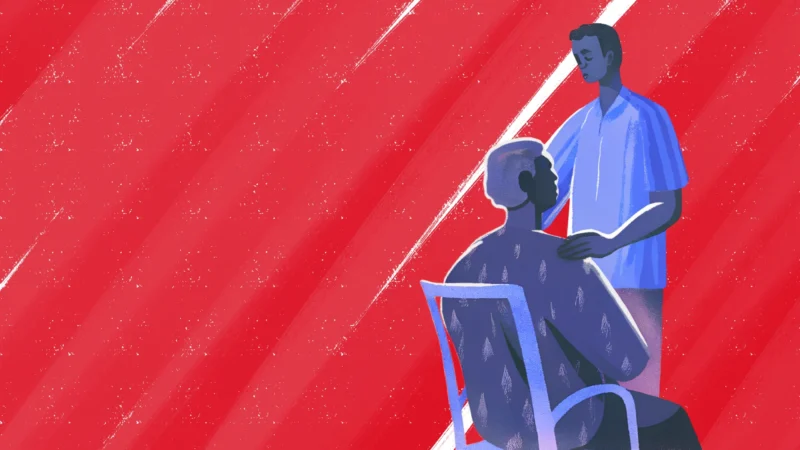
Other article about cancer caregivers on OncoDaily.