






Brian Lawenda, Radiation Oncologist at Advocate Radiation Oncology, shared a post on LinkedIn:
“Women 65+ with low-risk invasive breast cancer or DCIS often ask me the same questions after lumpectomy:
‘Do I really need radiation?’
‘If I do radiation, do I still need 5–10 years of hormone pills?’
‘Can I safely simplify this plan?’
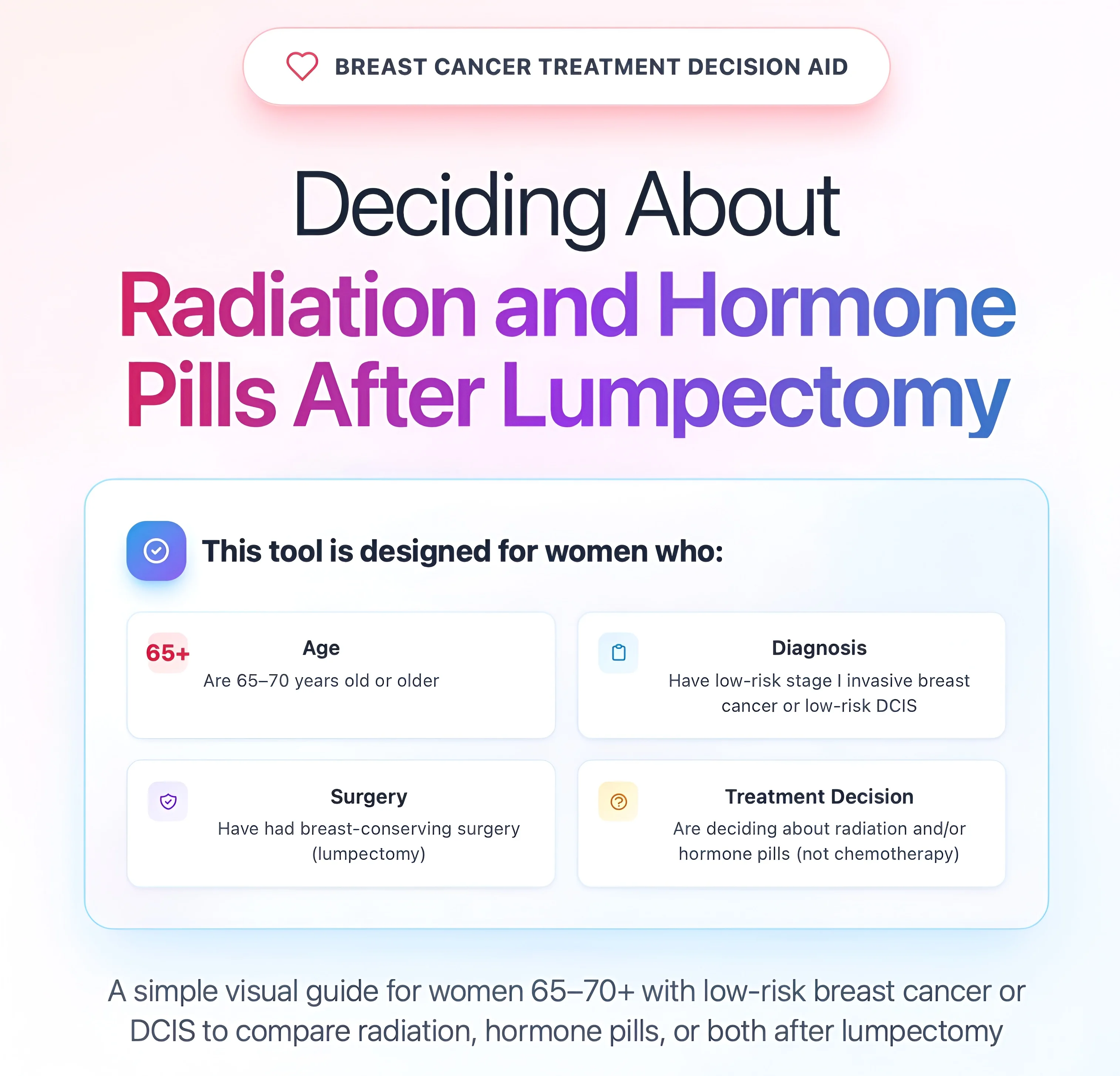
The evidence exists, but it’s scattered across trials, guidelines, and real-world adherence data. So I built a neutral, visual decision aid to put it all in one place for this specific group of patients.
The Breast Cancer Treatment Decision Aid shows, in people-out-of-100:
What happens over 5–10 years with surgery alone, surgery + radiation, surgery + hormone pills, or both?
How risks differ for low-risk invasive cancer vs low-risk DCIS in women 65+?
The small but real benefit of endocrine therapy in preventing new second primary breast cancers.
The reality of long-term pill adherence in the real world vs completion of a short course of RT.
What modern breast radiation actually looks like in 2025 (shorter, more targeted, more heart-sparing)?
The tool does not tell anyone what they ‘should’ do. It is designed to support shared decision-making, so patients and clinicians can look at the same numbers and decide together which evidence-based plan best fits the patient’s health, values, and tolerance for treatment.
If you care for older women with low-risk breast cancer or DCIS, or you’re navigating these decisions yourself, you can explore the app and full write-up.”
More posts about Breast Cancer.