






Sergio Cifuentes Canaval, Medical Oncologist at Las Américas Auna Clinic, shared a post on LinkedIn:
“Persistent Disparities in Breast Cancer Treatment Decisions
A major analysis of 504,937 women with early-stage HR+/HER2- breast cancer published in JAMA Network Open reveals significant shifts in adjuvant chemotherapy use following landmark clinical trials—but troubling treatment disparities persist across racial, socioeconomic, and institutional lines.
Key Findings from 2010-2022 National Cancer Database Analysis:
Post-RxPONDER Treatment Shifts:
- Premenopausal women with node-positive, low/intermediate genomic risk saw chemotherapy use nearly double from 2019-2022 (12.7% → 25.7% for low risk; 38.1% → 48.9% for intermediate risk)
- Node-negative and postmenopausal patients continue to see declining chemotherapy use, reflecting successful treatment de-escalation
Persistent Racial Disparities:
Black Women – Evidence of Potential Undertreatment:
- 16% less likely to receive chemotherapy despite high genomic risk vs. White women (aOR 0.84)
- 15% less likely as premenopausal patients with low/intermediate risk (aOR 0.85)
Hispanic Women – Evidence of Potential Overtreatment:
- 13% MORE likely to receive chemotherapy for low genomic risk disease (aOR 1.13)
Insurance-Based Barriers:
- Uninsured, Medicaid, and Medicare patients were significantly less likely to receive chemotherapy even with high genomic risk
- Medicare patients with unclear chemotherapy benefit were 45% less likely to receive it (aOR 0.55)
Institutional Variation in Care:
- Community cancer programs were 13% MORE likely to prescribe chemotherapy in low-risk cases vs. academic centers
- Academic and integrated network centers demonstrated better adherence to guideline-concordant care
Strong Clinical Predictors (As Expected):
- Node-positive disease: 5.2x greater likelihood of chemotherapy receipt
- Higher recurrence scores, tumor grade, and advanced T stage all strongly predictive
Clinical Implications:
- Personalized medicine is working —we’re better tailoring treatment to genomic risk
- Systemic inequities persist —treatment decisions shouldn’t depend on race, insurance status, or treatment facility type
- Standardization needed —variation across institutions suggests opportunities for improved guideline implementation
- Equity interventions required —targeted efforts needed to ensure Black patients receive appropriate treatment and Hispanic patients avoid overtreatment.”
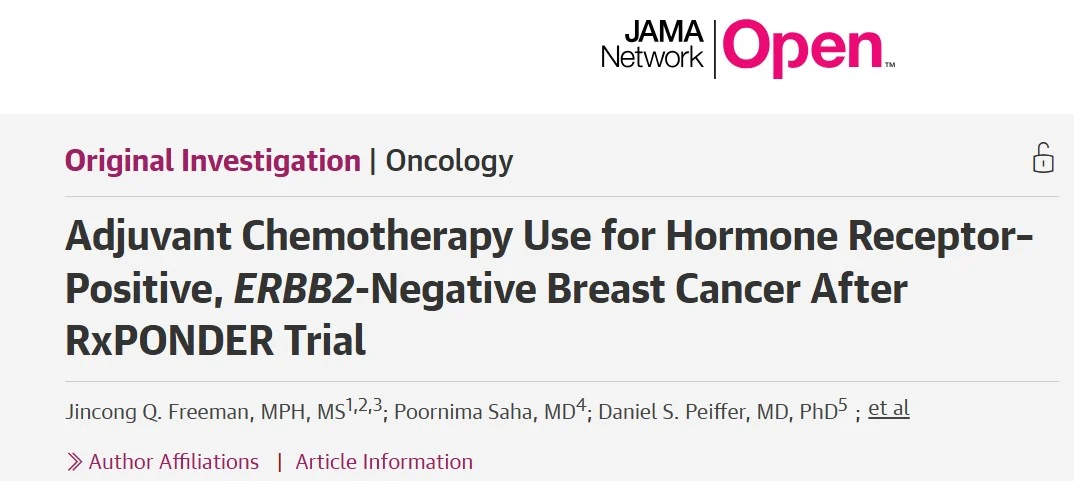
Title: Adjuvant Chemotherapy Use for Hormone Receptor–Positive, ERBB2-Negative Breast Cancer After RxPONDER Trial
Authors: Jincong Q. Freeman, Poornima Saha, Daniel S. Peiffer
You can read the full article in JAMA Network Open.
More posts about Breast Cancer.