Bishal Gyawali, Associate Professor at Queen’s University, shared Giovanni Maria Iannantuono’s post on LinkedIn, adding:
“Proud to have been a part of this important study led by Giovanni Maria Iannantuono under the mentorship of Gennaro Daniele. Friendship turned into collaboration. Happy about this meaningful work, even happier about the friendship.”
Quotin Giovanni Maria Iannantuono’s post:
“A provocative scenario
- A young man with a metastatic solid tumor. Three standard lines exhausted. No approved options left.
- He presents at your clinic with a borderline ECOG PS 2, driven entirely by high disease burden.
- At your center, a phase 3 trial is open. A highly promising drug. No other trials available nationwide. He cannot travel abroad—he wants to stay close to his family. He meets all eligibility criteria except one: the trial only allows ECOG PS 0–1.
So I’ll ask the uncomfortable question:
What would you do?
- Tell him there are no experimental options left;
- “Reclassify” a borderline PS 2 as PS 1 and enroll him.
In 2025, we showed that only ~25% of trials leading to FDA approval in solid tumors allowed enrollment of PS 2 patients.
With this new study, we looked at what actually happens when these patients are included.
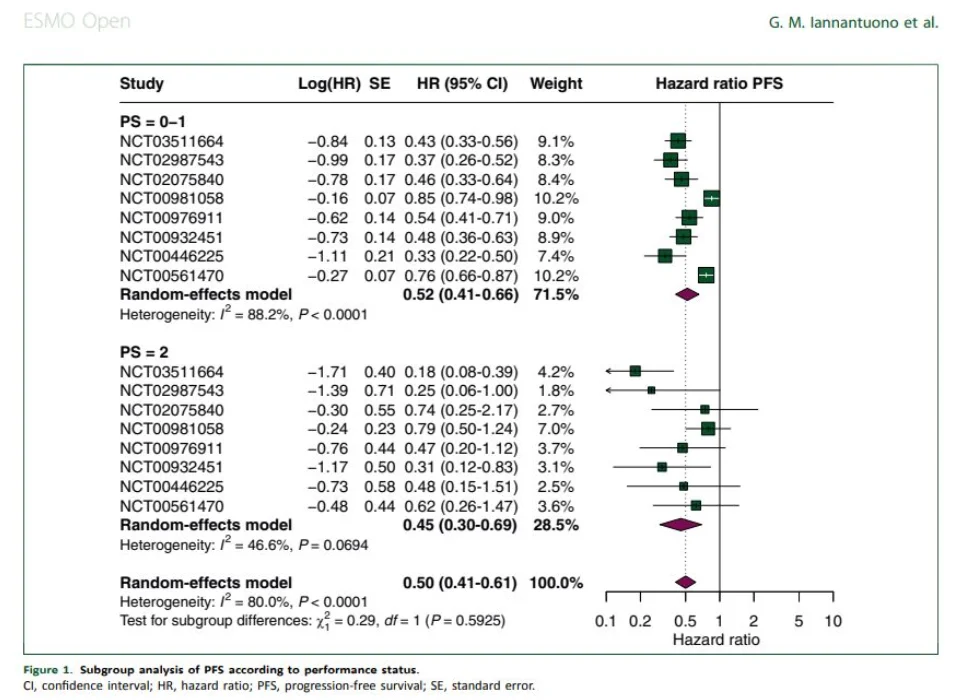
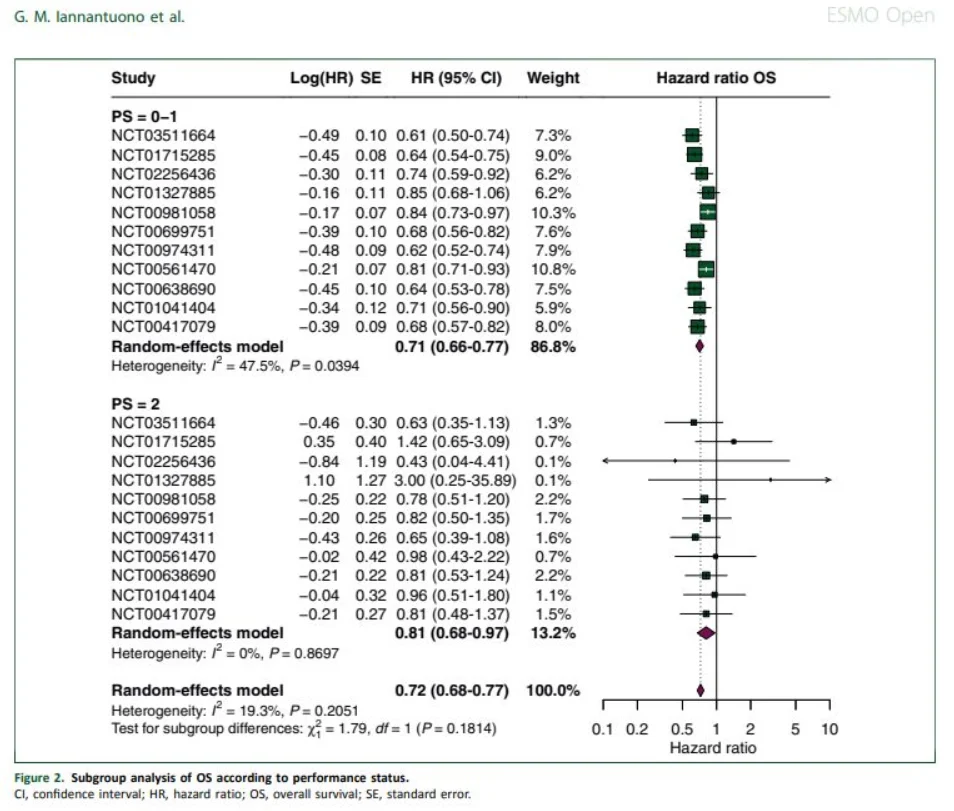
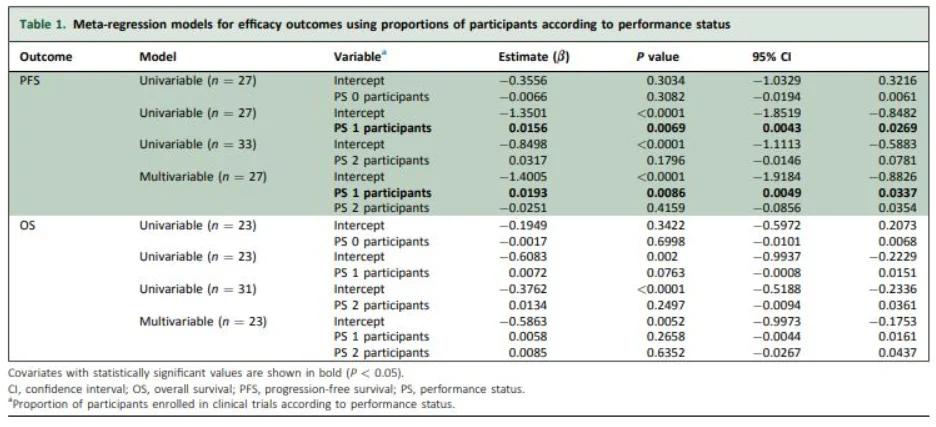
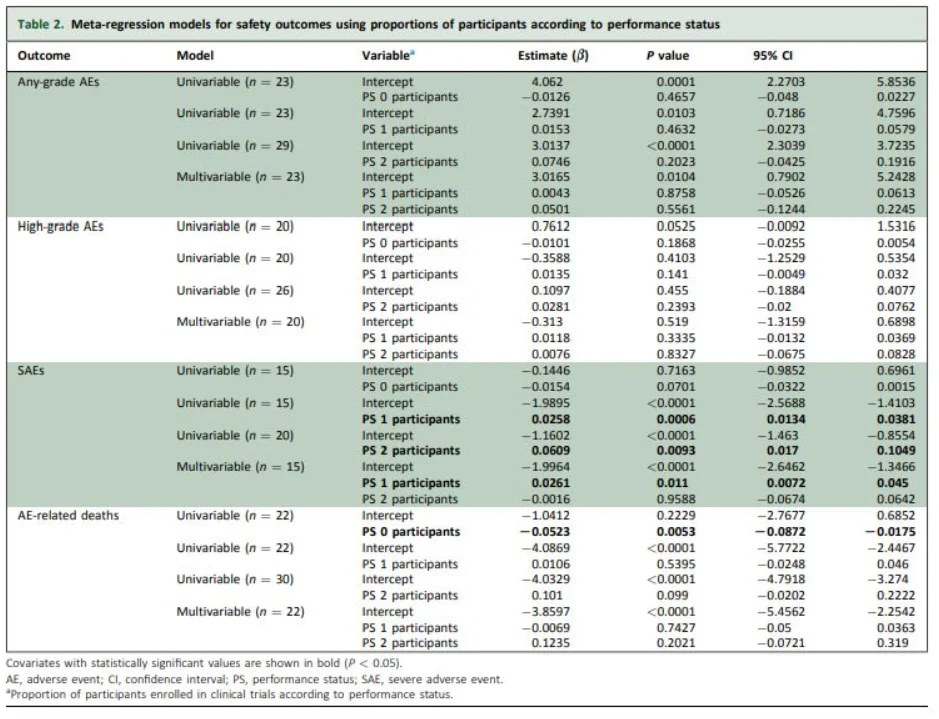
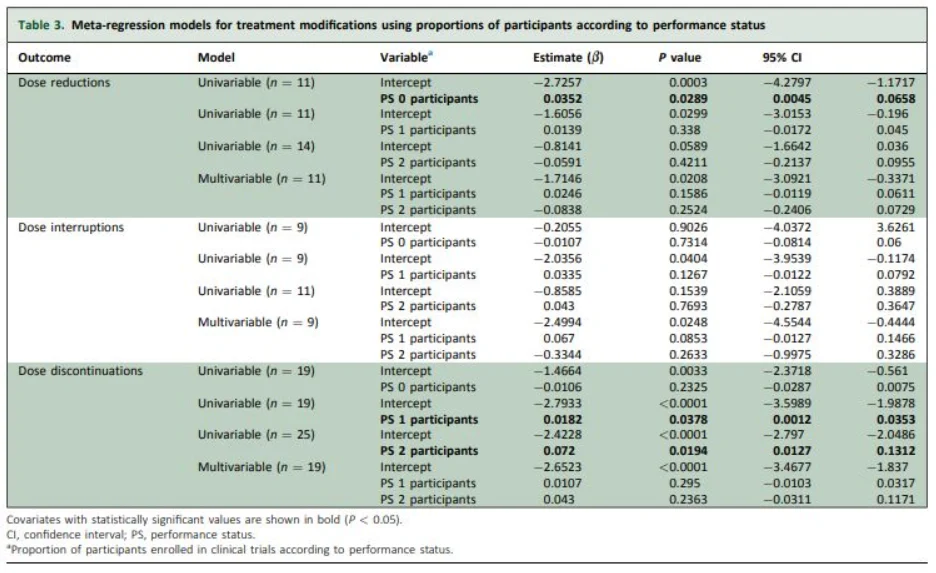
We assessed the impact of enrolling PS 2 patients on efficacy and safety outcomes in pivotal phase 3 trials using a meta-analysis and multiple meta-regression models.
What did we find?
- No significant differences in OS or PFS between ECOG PS 0–1 and PS 2 patients.
- Higher PS 2 representation in trials was associated with increased SAEs, treatment discontinuations, and treatment-related deaths.
Why does this matter?
- Because excluding PS 2 patients limits trial generalizability and may deny access to treatments from which they could benefit.
- Because excluding PS 2 patients a priori is increasingly hard to justify, considered the subjectivity and risk for misclassification of PS.
Designing clinical trials that generate broadly applicable evidence is not just a scientific responsibility, it is a clinical and ethical imperative.
Grateful to all co-authors:
Stefano Sganga, Diana Giannarelli, Marco Filetti, Andrea Spinazzola, MD PhD, Francesca Lo Bianco, Elena Giudice, Antonio Vitale, James Gulley, MD PhD FACP, Pierluigi Navarra, Emilio Bria.
A special thanks to:
- Bishal Gyawali, a true leader in this field – it was a honor to learn from you.
- Charalampos (Harris) Floudas, for always being there despite the distance, with constant support and trust.
- Tommaso Giovagnoli & Luca Mastrantoni, two friends and exceptional talents – this work would not exist without your support.
- Gennaro Daniele, for his guidance and inspiring vision and for pushing me beyond my limits with wisdom and foresight.”
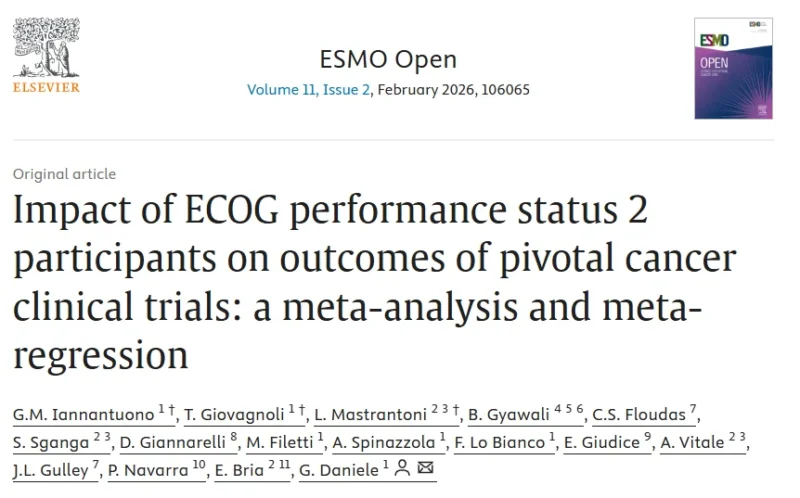
Title: Impact of ECOG performance status 2 participants on outcomes of pivotal cancer clinical trials: a meta-analysis and meta-regression
Authors: G.M. Iannantuono, T. Giovagnoli, L. Mastrantoni, B. Gyawali, C.S. Floudas, S. Sganga, D. Giannarelli, M. Filetti, A. Spinazzola, F. Lo Bianco, E. Giudice, A. Vitale, J.L. Gulley, P. Navarra, E. Bria, G. Daniele
More posts featuring Bishal Gyawali and Giovanni Maria Iannantuono